search-icon
Swooping Mantas

As I clambered dripping onto the boat after our second dive of the day on the west side of Huon Atoll, I was greeted by a cacophony of dive chatter- a sure sign that something eventful had been seen.

To me this had been a fairly average dive. Staring at my transect line laid across a seafloor, I meticulously noted the assortment of corals, algae and sponges. Such is often the lot of the benthic ecologist, but I was completely unaware as a manta ray swooped above.
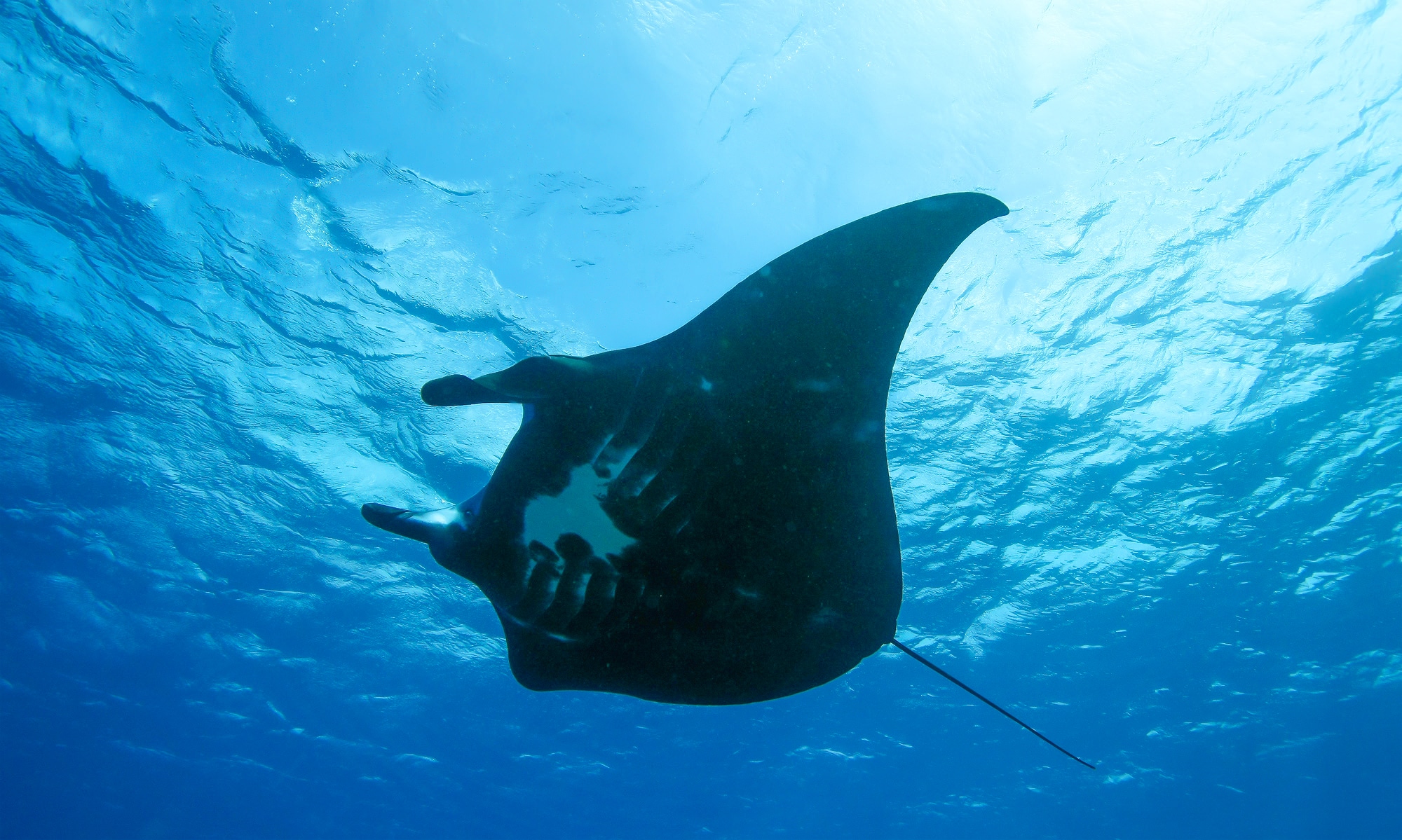
Mantas, the largest of the eagle rays, strain zooplankton near Huon Atoll via gill rakers.

As the manta swooped over, the gill rakers used to strain zooplankton from the water column can clearly be seen.
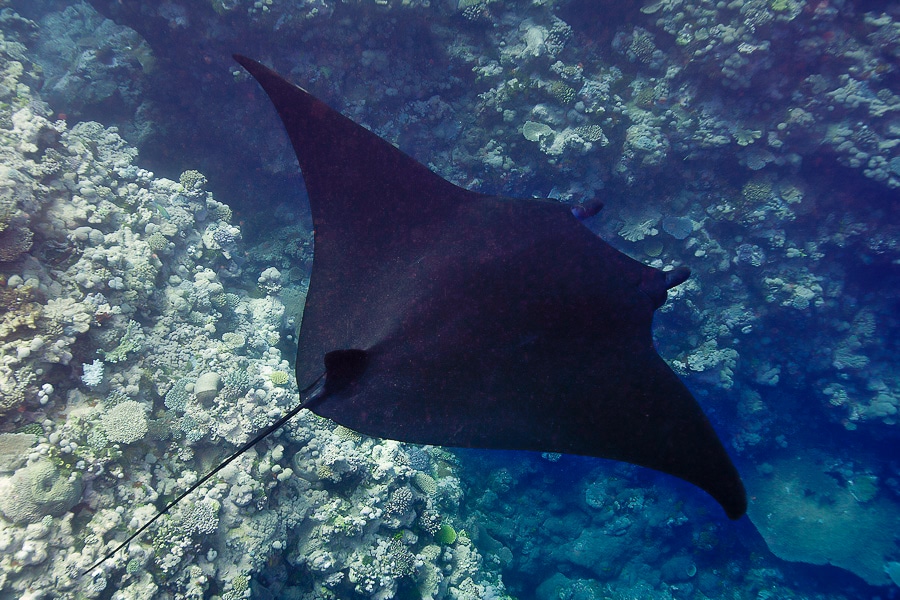
The manta ray passed only a few meters below scientific diver Ken Marks, affording this excellent topside view of one of the most iconic of reef creatures.

The manta ray passed only a few meters below scientific diver Ken Marks, affording this excellent topside view of one of the most iconic of reef creatures.

Other members of the dive team who are surveying fish, or searching for marine invertebrates, often look forward and scan the water column. These divers were treated to a magnificent marine wildlife experience, as the manta ray glided between and around them.
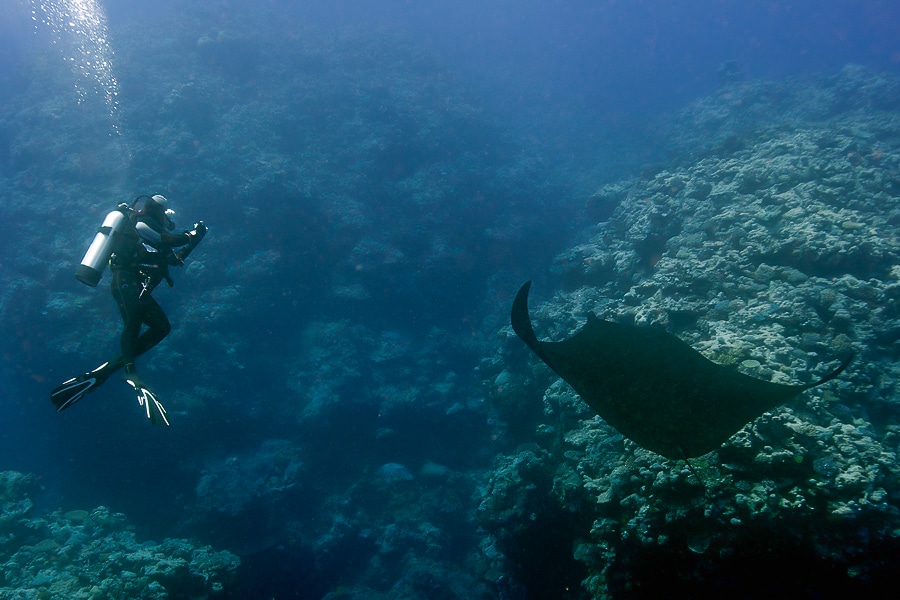
Scientific diver Daphné Grulois is treated to a fantastic view as the manta glides past.
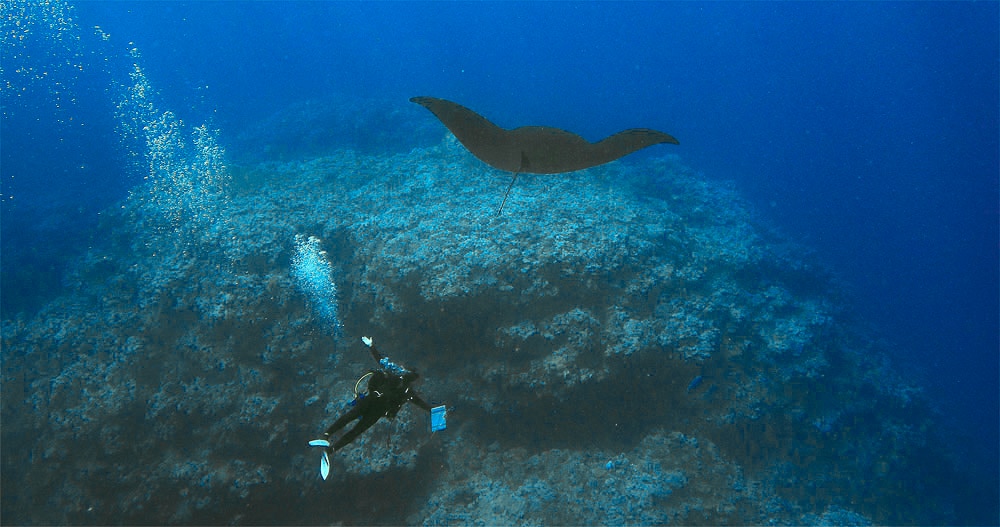
Scientific diver Daphné Grulois is treated to a fantastic view as the manta glides past.

The manta ray swoops over scientific diver Badi Sameniego, who expresses his obvious delight.

The manta ray swoops over scientific diver Badi Sameniego, who expresses his obvious delight.

Mantas are the largest of the eagle rays and actually consist of two different species, Manta birostris and Manta alfredi. The larger of these two species can have a wingspan up to 7 meters! Their size, coupled to their grace and elegance of movement, help to make mantas iconic marine reef creatures. Though the manta is a large ray, none of the divers felt threatened. At only a couple of meters across this particular manta ray was relatively small, but more importantly mantas are docile reef creatures with no teeth. They strain their food from the water, microscopic animals known as zooplankton, using their gill rakers.
MantaBlog-2

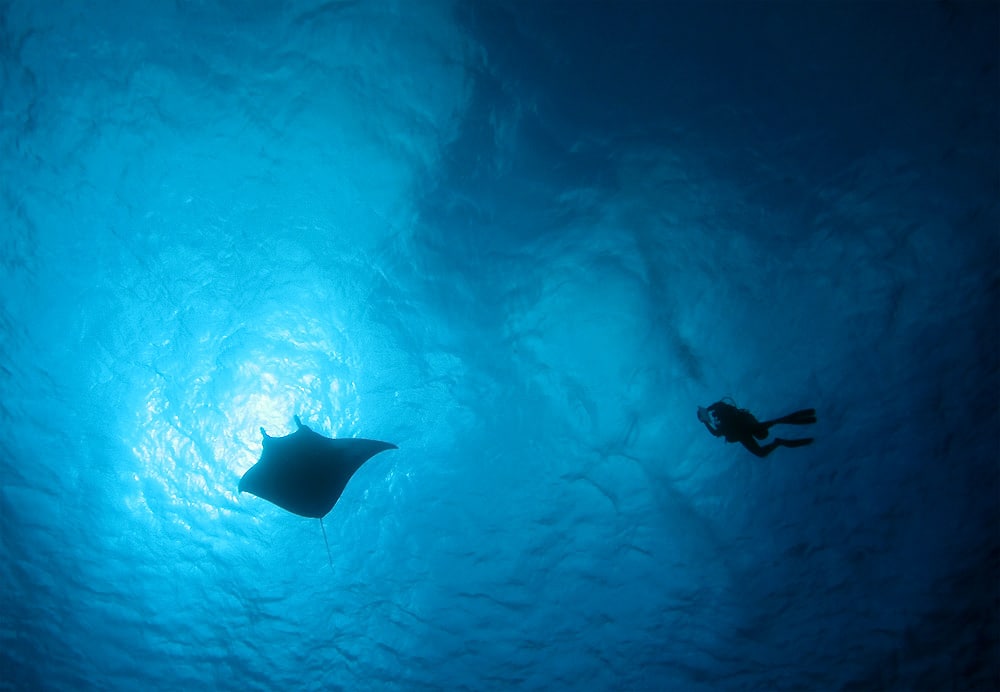
Silhouetted against the sun above, the size of the manta can be seen compared to scientific diver Kate Fraser hovering nearby.

Sadly mantas, already an occasional visitor to the coral reef, are becoming rarer. Manta rays are vulnerable to fishing pressure, since they have a long life cycle, may be accidently captured in gill nets, and are harvested for their gill rakers to be used in various Chinese medicines.

This chance encounter, though brief, was therefore one to treasure for our divers.


Photos: 1,4,5 – Serge Andrefouet; 2,3 – Ken Marks
Related Posts

2025-2026 B.A.M. Student Voices

Throughout the Bahamas Awareness of Mangroves (B.A.M.) and Jamaica Awareness of Mangroves in Nature (J.A.M.I.N.) programs, we evaluate each phase of the mangrove education and restoration process to better understand how students are learning, growing, and connecting with their coastal environments.

Before the programs begin, students share what they already know about mangroves and how they feel about them. As the program progresses, we continue to gather feedback to see how their knowledge evolves from identifying mangrove species and understanding food webs to recognizing the role mangroves play in coastal protection and climate change mitigation.

But the surveys go beyond science content.

We also ask students…

Read More

Ten Years of B.A.M.: Rooted in Partnership, Growing in Purpose

Ten years ago, the Bahamas Awareness of Mangroves (B.A.M.) program began with a simple but meaningful commitment: to connect Bahamian students with the mangrove ecosystems that shape and protect their island home.

Since 2015, B.A.M. has been implemented in partnership with Friends of the Environment, whose dedication to environmental stewardship in Abaco has made this program possible year after year. Together, we have worked alongside Patrick J. Bethel High School and Forest Heights Academy to bring hands-on mangrove science into classrooms and out into the field.

What makes ten years remarkable is not just longevity — it is consistency…

Read More
Privacy Overview

This website uses cookies so that we can provide you with the best user experience possible. Cookie information is stored in your browser and performs functions such as recognising you when you return to our website and helping our team to understand which sections of the website you find most interesting and useful.  You can view our complete Privacy Policy here.

Strictly Necessary Cookies

Most of our cookies are used to improve website security and reduce spam. These cookies should be enabled at all times. They also enable us to save your preferences for cookie settings.

3rd Party Cookies

This website uses Google Analytics to collect anonymous information such as the number of visitors to the site, and the most popular pages. Keeping this cookie enabled helps us to improve our website.