search-icon
Conversations with Tongan Fishermen: What have we learned?
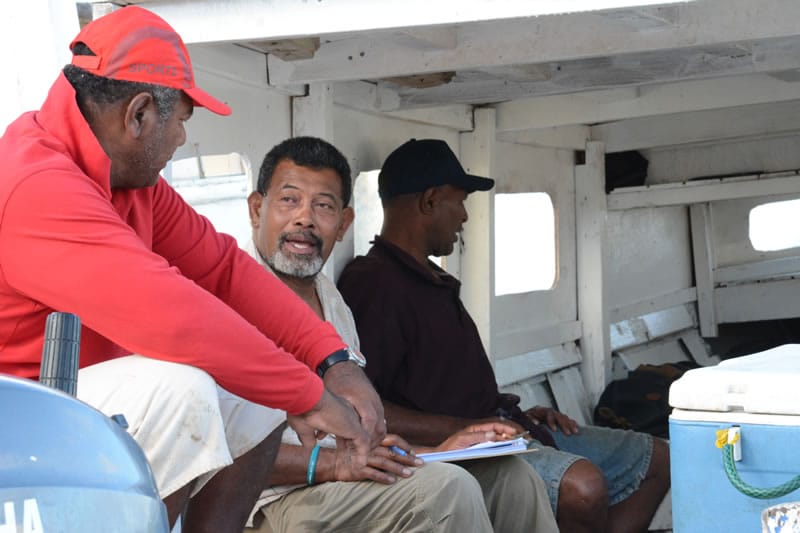
Sione Mailau taking note of the Tongan fishermen's answers to the survey.
Sione Mailau taking note of the fishermen’s answers to the survey.

This past month, we’ve been having a lot of conversations with fishermen in Tonga. Here is a short summary of what we’ve been hearing.

Fishing in Tonga targets reef fish and pelagic fish species, as well as other reef organisms like lobster, shellfish, octopus and sea cucumbers.  The techniques that are used to harvest animals include free diving with a spear for reef fish, using hook and line for deeper fishing (primarily targeting larger grouper and snapper species), using gill nets (typically near the shore for species like mullet), trolling in a boat for pelagic fish like tuna, and collecting organisms on the reef by hand during low tide (called “reef cleaning”).

Among the various fishing techniques, there are very specific gender roles.  Men typically are the ones who fish from a boat, either free diving or using hook and line, while women are primarily the ones who walk out on the reef collecting organisms during low tide.  Nearly all of the fishing from a boat is done at night, while “reef cleaning” is typically done during the day.
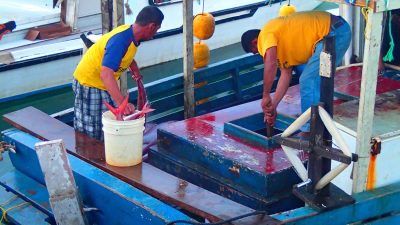
Tongan fishermen unloading their catch after hook and line fishing.

Fishing boats that go out may travel 15-20 kilometers to find suitable fishing grounds.  The trip is often dangerous due to the small size of the fishing boats (on average about 20 feet in length, with small 15-20 horsepower engines) and the exposed sections of the churning South Pacific Ocean that they need to cross to get to their fishing grounds.  Many fishermen report that they have had to travel further and further in recent years to find fish.  Some have even died in pursuit of their livelihood.  Fishing boats will stay out for between one and three days, and then return from fishing at dawn to sell their catch in the morning at the fish market.

Although there are areas of coral reef closer to the communities of Vava’u, many of these reefs have been over exploited.  Some efforts are underway by local communities on the outer islands to establish specially managed areas and restore fish populations to their local reefs.
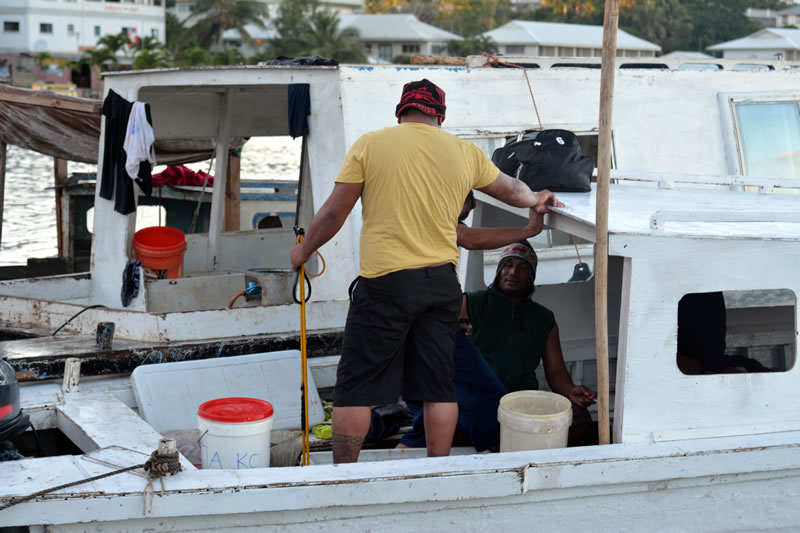
Spear fishermen at shore following a night's fishing.
Spear fishermen at shore following a night’s fishing.

We are hoping that the information we are collecting will help the Tongan government and local communities determine the best management measures to enact in order to achieve this goal.  This information is an invaluable piece of the puzzle when trying to understand the resilience of a coral reef ecosystem.  As the top predators on a coral reef, humans play an important role in the ecological interactions within the system.  At the present time, our research suggests that the reefs of Tonga are at a critical point.  In general, the coral communities are very healthy however the reefs are missing many of the fish populations that play an integral role in maintaining coral health.  One such fish family is the parrotfish, which acts like a lawn mower keeping algae populations in check.  Continued unsustainable harvest of this fish species could lead to an overgrowth of algae on the reef and a smothering of coral populations.   Ultimately, ensuring the harvest of marine organisms is occurring sustainably is good for both the resilience of the coral reefs and the long term food security of the people in Tonga.

Photos by Stefan Andrews.
Related Posts

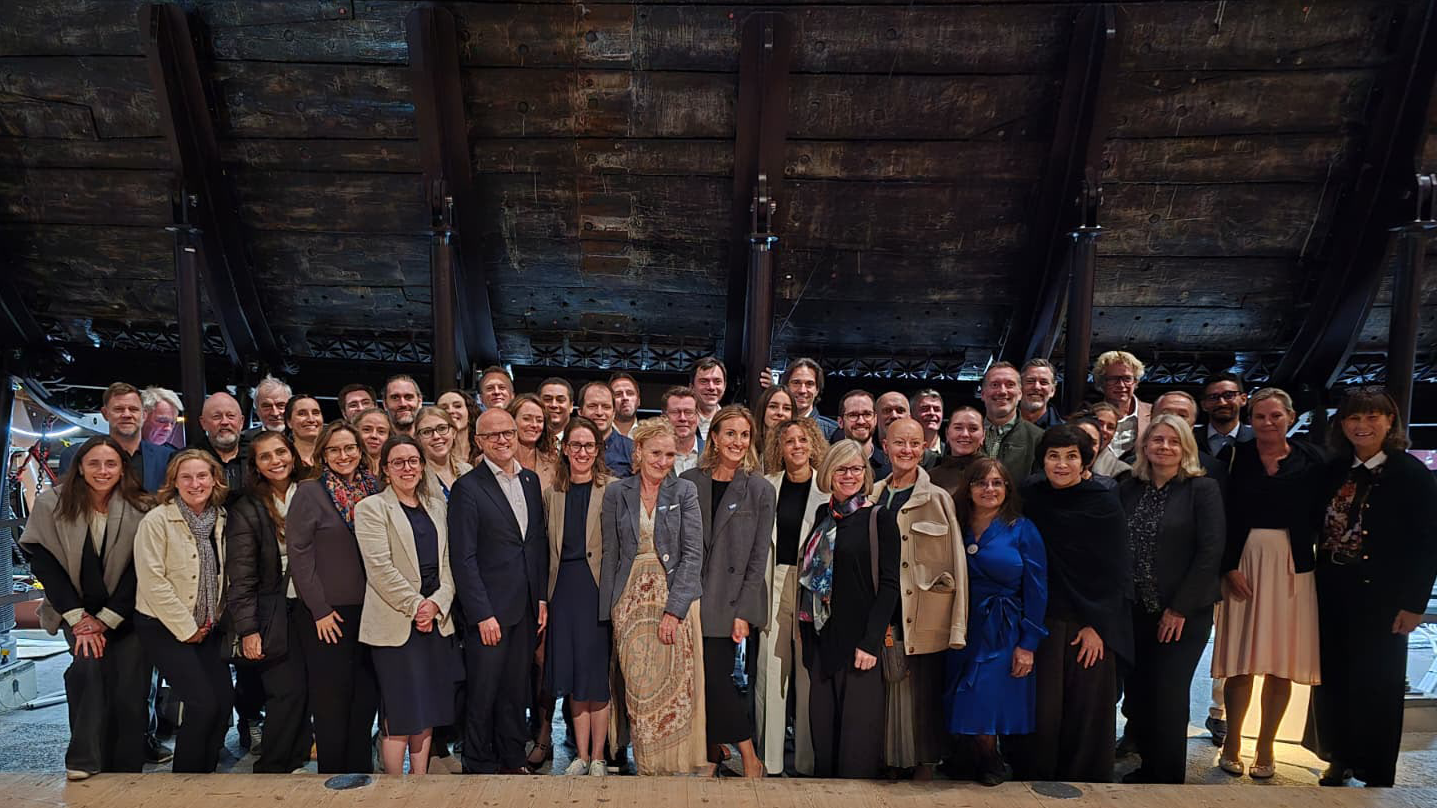
From Dialogue to Action: Ocean Foundations Gather in Stockholm

What can philanthropy accomplish when foundations working across ocean science, conservation, and sustainable development come together around a shared purpose?

That question was at the heart of the 6th UN Ocean Decade Foundations Dialogue, held September 7–9 in Stockholm, Sweden. The Khaled bin Sultan Living Oceans Foundation joined philanthropic organizations from around the world for three days of discussion, collaboration, and planning focused on accelerating progress during the second half of the UN Decade of Ocean Science for Sustainable Development.

Facilitated by UNESCO’s Intergovernmental Oceanographic Commission (IOC), the UN Ocean Decade Foundations Dialogue is a growing network of more than 30 philanthropic organizations committed to advancing ocean science, collaboration, and action. Since its creation within the framework of the Ocean Decade, the Dialogue has provided foundations with a space to exchange ideas, develop partnerships, and explore how philanthropy can help advance a healthy and resilient ocean.

Hosted by the Voice of the Ocean Foundation (VOTO), this year’s gathering began with From Depth to Action, an Opening Forum that brought nearly 100 leaders from the Swedish and international ocean community together at…

Read More

Meet IFAN: Helping Bring Navigate with Care to the Next Generation

If you’ve ever seen a lighthouse flashing from the shore or a brightly colored buoy bobbing in the water, you’ve seen Aids to Navigation at work.

Aids to Navigation, often called AtoNs, help mariners navigate safely. They can mark channels, warn of hazards, help vessels determine their position, and provide other information people need to make safe decisions on the water. Around the world, these systems help guide everything from small recreational boats to large commercial or container ships. 

But safe navigation isn’t only about protecting vessels and the people aboard them. The choices mariners make can also affect the animals and ecosystems beneath and around them.

That connection between maritime safety and ocean conservation is at the heart of this year’s Science Without Borders® Challenge—and of our partnership with this year’s theme sponsor, the International Foundation for Aids to Navigation (IFAN).

Read More
Privacy Overview

This website uses cookies so that we can provide you with the best user experience possible. Cookie information is stored in your browser and performs functions such as recognising you when you return to our website and helping our team to understand which sections of the website you find most interesting and useful.  You can view our complete Privacy Policy here.

Strictly Necessary Cookies

Most of our cookies are used to improve website security and reduce spam. These cookies should be enabled at all times. They also enable us to save your preferences for cookie settings.

3rd Party Cookies

This website uses Google Analytics to collect anonymous information such as the number of visitors to the site, and the most popular pages. Keeping this cookie enabled helps us to improve our website.