Today, was our last day conducting coral reef education programs throughout the Solomon Islands. I can’t believe how quickly time has passed here. It just seems like yesterday when we were conducting our first program.
Over this past month, I have had a lot of help from local representatives to carry out the education programs and I couldn’t have done it without them. Each person comes from different backgrounds (click here for more information) ; however, their passion for wanting to protect coral reefs so that the people of the Solomon Islands can continue to rely on them for part of their livelihoods is inspirational.
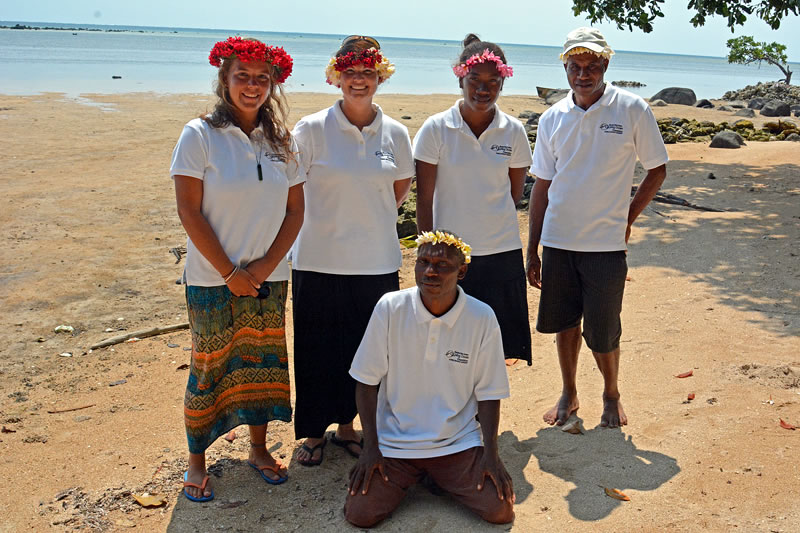
From left to right (Georgia Coward, Amy Heemsoth, Ivory Akao, Honorable Earnest Fea, Chief John Still Niola)
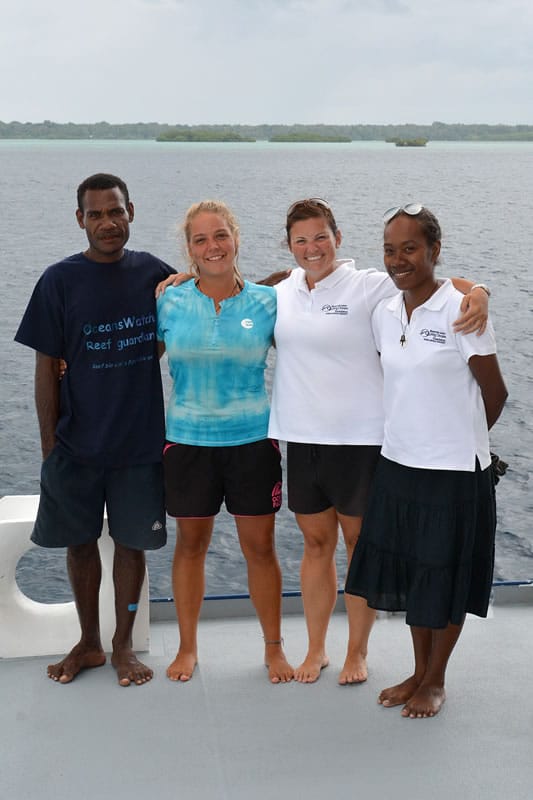
From left to right: (John Laulae, Georgia Coward, Amy Heemsoth, Ivory Akao)
I feel that sharing knowledge about coral reefs is really important here. People in the Solomon Islands have customary land ownership. Land is handed down from parents to their children. Land can only be leased, not sold. Each community also has usage rights for designated areas of the ocean, including coral reefs.
Fisheries Officer, Ivory Akao states, “Each community has the responsibility to manage their own coral reefs. It’s really important for these communities to learn about them so that they have the knowledge to protect this precious resource for generations to come.”
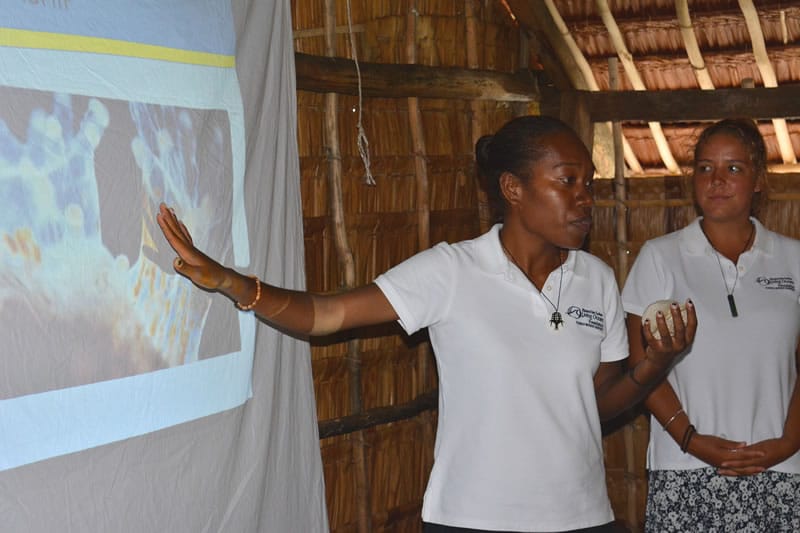
Ivory Akao, Fisheries Officer, presenting information about coral’s and their symbiotic relationship with zooxanthellae.
Throughout the three provinces (Western, Isabel, and Temotu) that we visited, the education team has gone into 25 communities with a total of 2,638 people. This is the most people reached while on a single Global Reef Expedition mission. Most of these talks have been with communities including men, women, and children.
Every village that we have been to in the Solomon Islands has different traditions and cultural values. One thing has remained constant…the people have always greeted us warmly and they have been really grateful for the information that we provided them. We have had some incredible experiences and met some really amazing people along the way.
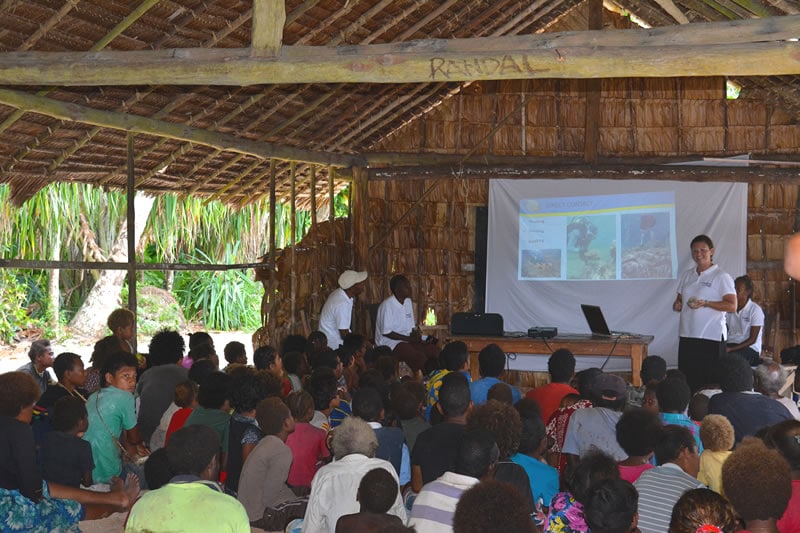
Director of Education, Amy Heemsoth, presenting coral reef seminar in Nemboa Village.
In one of our last talks, we had a little over 150 people attend. After the seminar, one of the elders said that the information that we provided should encourage the village to keep their Marine Protected Areas (MPA’s) in place. They thanked us for all of the knowledge that we provided and asked us to come back to provide this information in the schools. I can’t think of a better way to end such a wonderful and fulfilling GRE mission.
Photos: 1-3 Amy Heemsoth; 4 Georgia Coward