Expedition Log: BIOT – Day 23
Seagrass beds are found in many tropical coral reef lagoons around they world. They provide important ecosystem services, including sediment retention, juvenile fish habitat, and coastal protection. Historically, seagrasses have also been used as packing material for shipping fragile items, filling for bedding, roof insulation, and for medicinal use. While visiting the British Indian Ocean Territory (BIOT), we were surprised to find very little or no seagrass in most of the protected, shallow water lagoons, even though they were prime habitat to support seagrass growth.
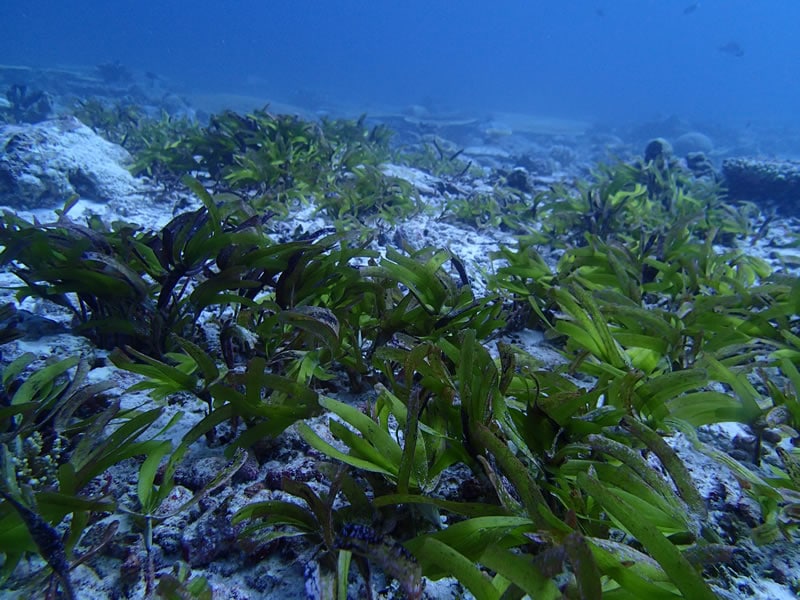
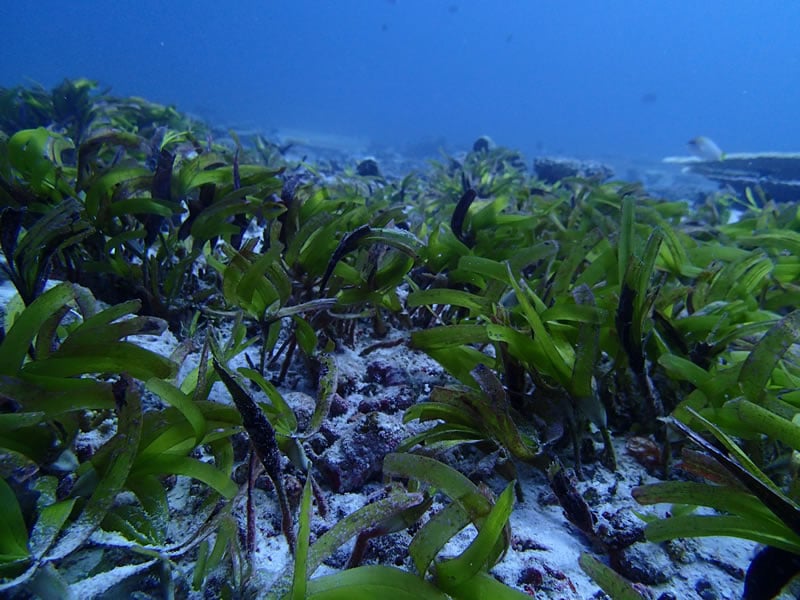
We weren’t sure exactly why we didn’t find seagrass beds throughout the lagoons in BIOT. It may be due to extreme low tide events, high shallow water temperatures, and high ultraviolet (UV) light exposure. However, one atoll we visited, Speakers Bank, contained an unexpected abundance of seagrass. The species of seagrass that we found on Speakers Bank is called sickle-leaved Cymodocea (Thalassodendron ciliatum). This species has a wide distribution throughout the Indo-Pacific region, but varies in abundance throughout its range.
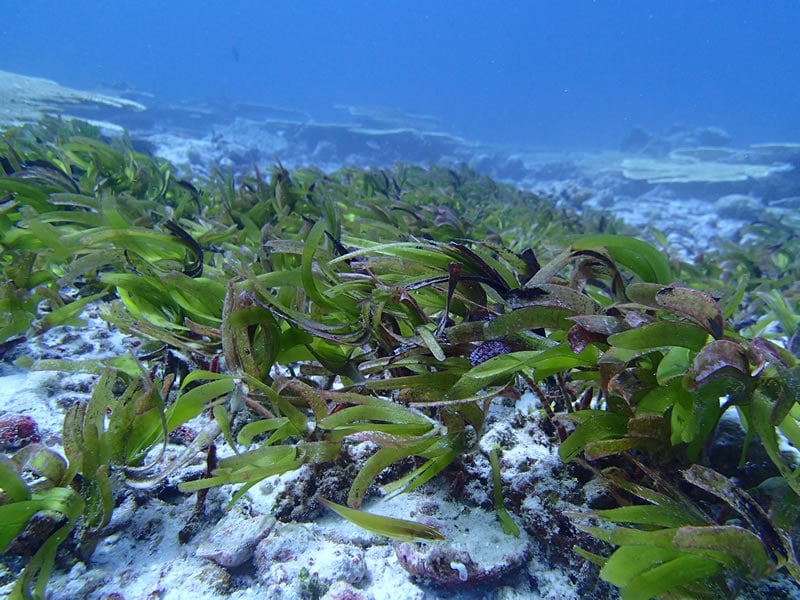
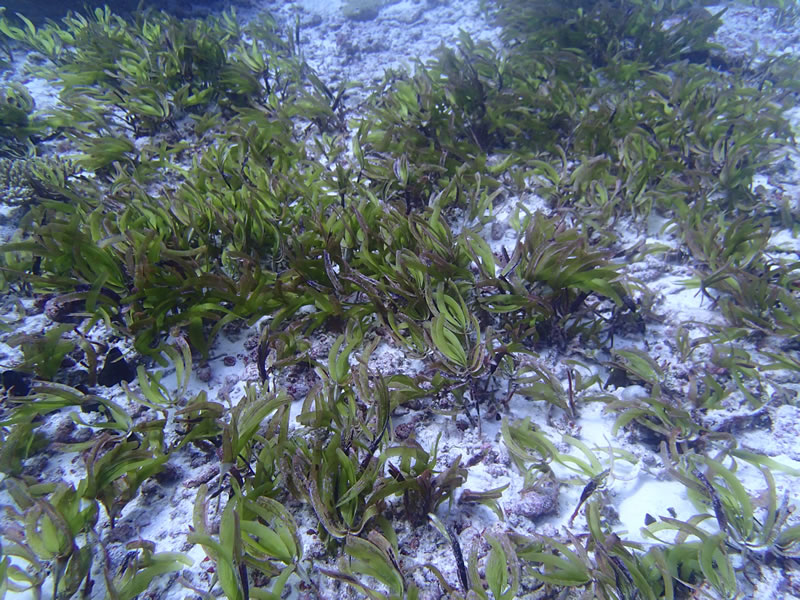
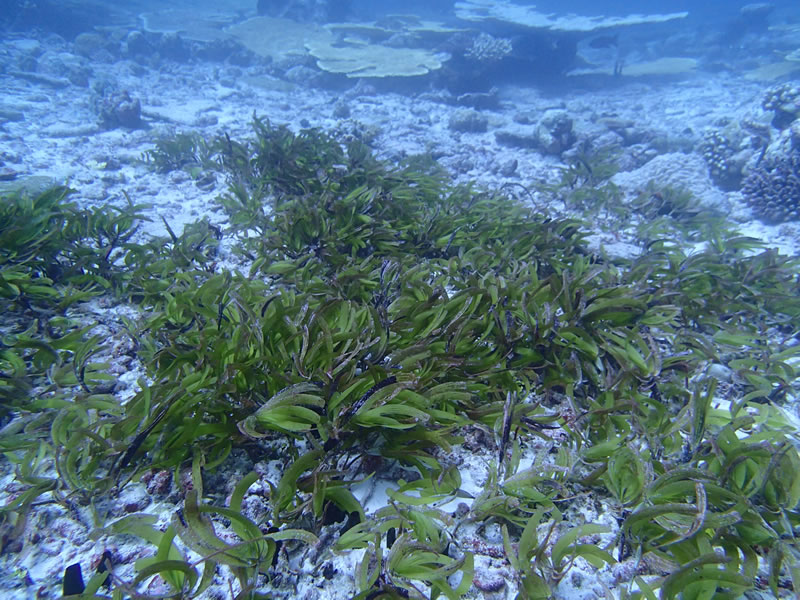
Seagrass beds at Speakers Bank.
(click-thru on images for greater detail)
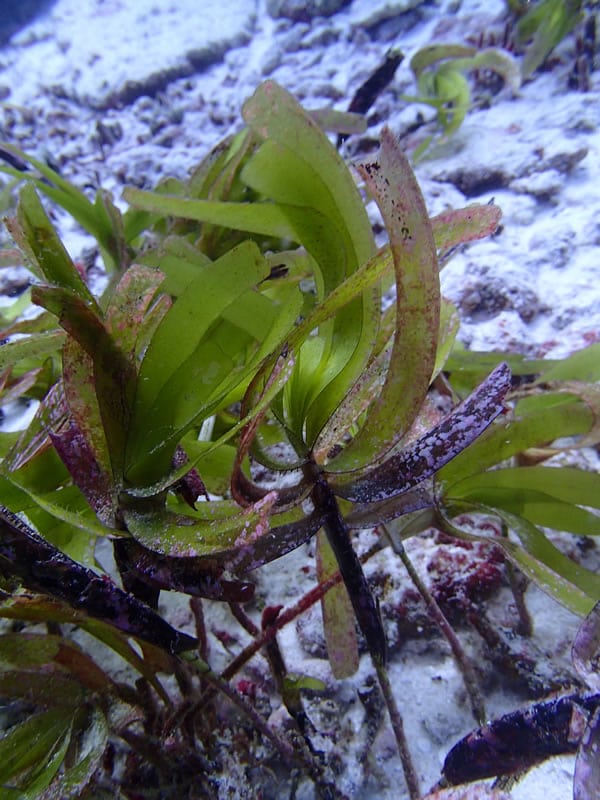
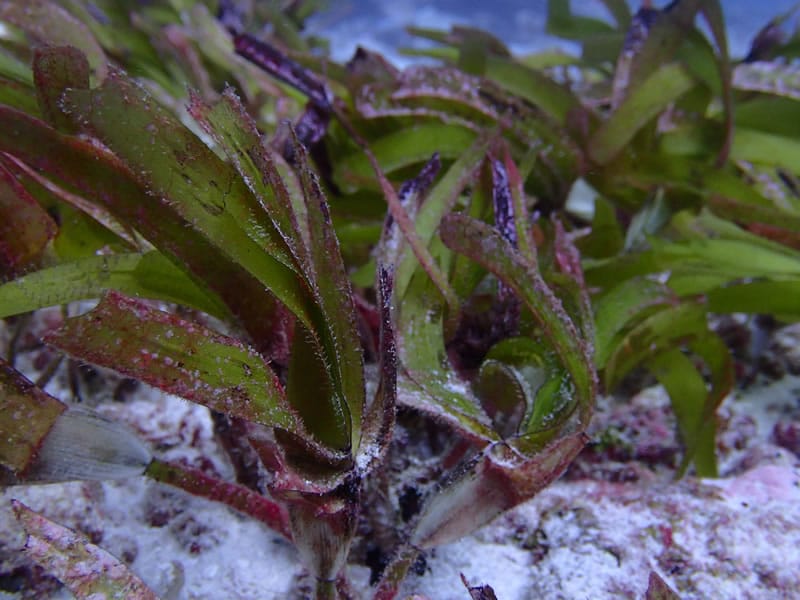
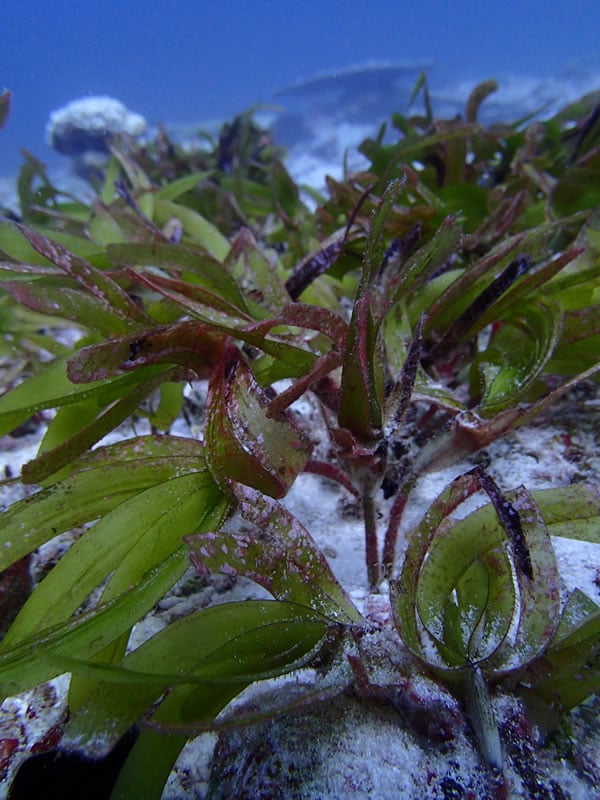
Seagrasses are flowering plants that reproduce like other flowering flora, through pollination and seed dispersal. Current and tidal patterns distribute seeds from one location to another. The reefs in BIOT are geographically isolated from land masses and other shallow water ecosystems, and swept by equatorial currents. These processes can carry seeds and plants away into deep water, preventing them from growing.
Unlike the protected, shallow water lagoons we visited, Speakers Bank is a submerged coral reef atoll where the reef crest only rises to eight meters and not to the surface like many of the neighboring atolls. As a result, the reef top is heavily scoured and exposed at times to heavy wave action and fast moving currents. The sickle-leaved Cymodocea seagrass was found on Speakers Bank in high densities both in the lagoon, and on top of the scoured, drowned reef crest. What was unusual was that we saw seagrasses growing in and among corals and other benthic organisms. When we see this type of habitat, with seagrass and coral intermixed, we know it is an excellent nursery ground for juvenile fishes and corals that are small in size.
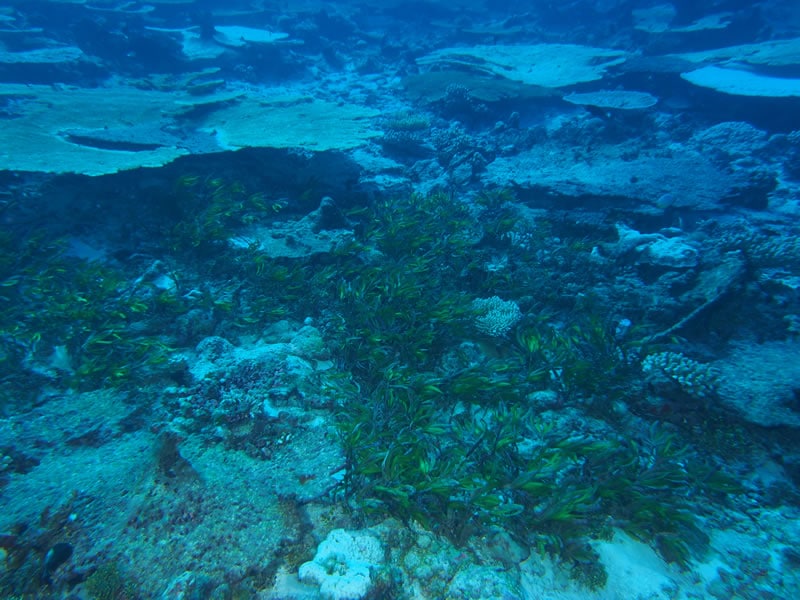
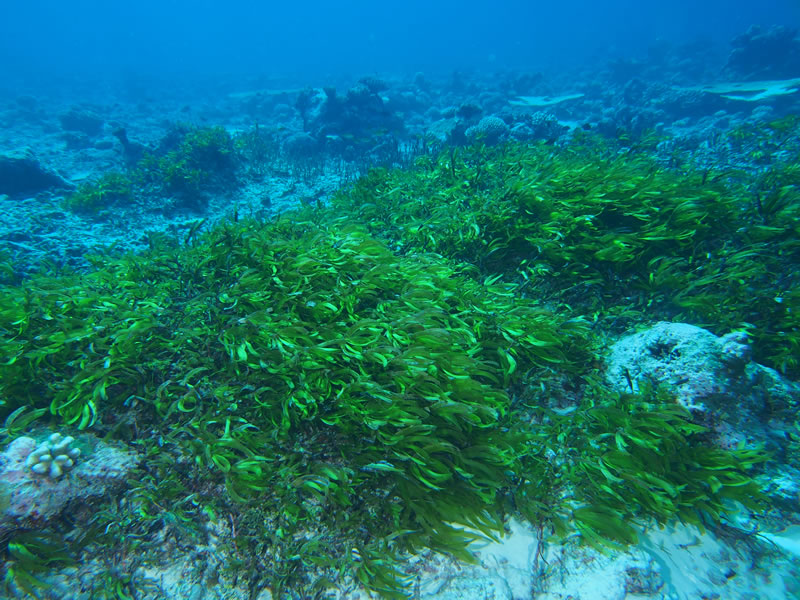
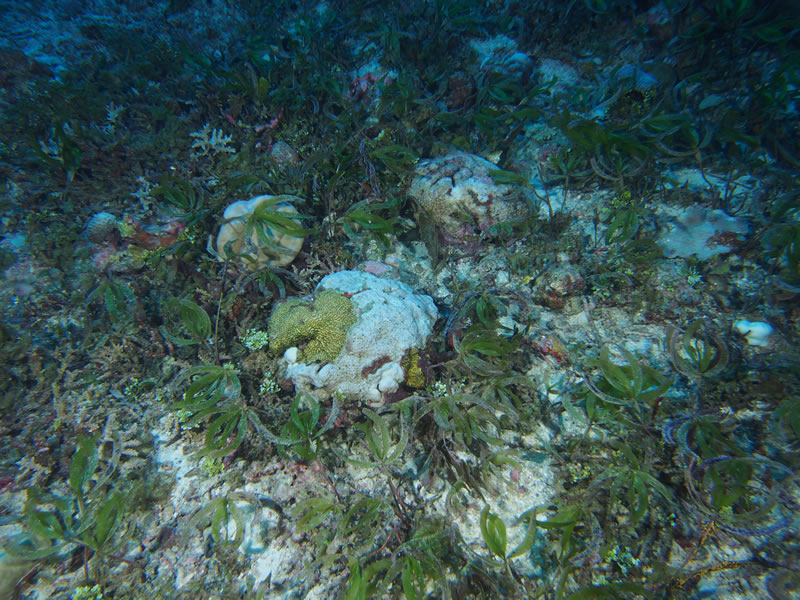
Seagrasses growing in and among corals and other benthic organisms.
(click-thru on images for greater detail)
No shallow water habitats exist down current from Speakers Bank, so seagrass seeds from Speakers Bank would typically not reach other atolls in BIOT. The Maldives, an island chain a few hundred miles to the north of BIOT, is rich in seagrass species, and we find many species there that are not present in BIOT. The combination of severe geographic isolation, together with hydrological conditions, limits the distribution and dispersal of seagrass in BIOT almost exclusively to Speakers Bank. It’s possible that changes or anomalies in current patterns, such as the formation of an eddy, could introduce additional seagrass species to BIOT from nearby locations such as the Maldives, but until then, it seems that Speakers Bank will be the one and only large seagrass bed we’ll see in BIOT.
Photos: 1-6,10,11 Steve Saul; 7-9 Andrew Bruckner