
search-icon
Marine Protected Area (MPA) Success

On our  return to Fiji, government officials receiving our scientific results, discussed the benefits of Marine Protected Areas (MPAs). When we collected the data for our research, we saw first hand how an MPA can transform the marine environment.

Marine Protected Area Success

In the middle of towing Ron across the local marine protected area set up in front of Mavana Village, on Vanuabalavu Island, he popped his head up to shout, “Hey, this MPA is really working! The fish are huge. And I’ve already seen 11 sea cucumbers on this transect.”
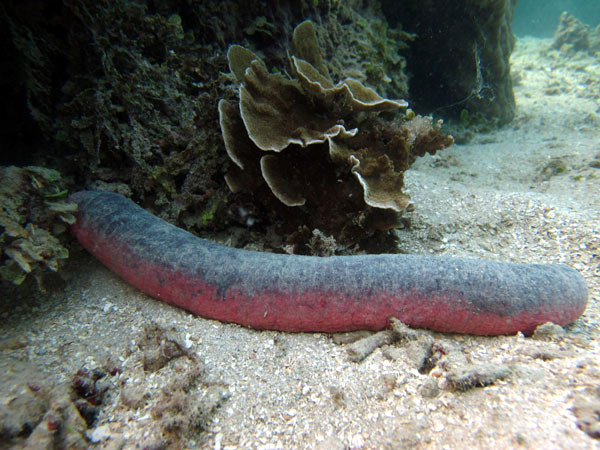
Holothuria edulis - pinkfish sea cucumber found in Mavana MPA.
Holothuria edulis – pinkfish sea cucumbers found in Mavana MPA.

10 Times Higher

Ron recorded an average of 97 total sea cucumbers per hectare. This was more than 10 times higher than what we have generally observed throughout most of the Lau Group. This survey is part of the Living Oceans Foundation Fiji leg of the Global Reef Expedition.
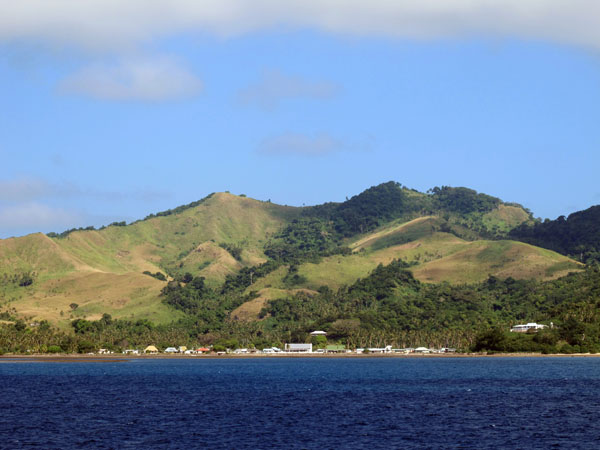
Vanuabalavu Island, Mavana Village site of Mavana MPA.
Vanuabalavu Island, Mavana Village site of their MPA.

Recovery

Fiji established he Mavana MPA in 2007. This is ample time for certain fast growing taxa like some parrotfish and surgeonfish to grow, reproduce, and recruit to the MPA. It is some positive news that when local communities are committed to their management, fish and invertebrate stocks can be protected from overharvesting and recover.

Meanwhile, the Mavana MPA offers protection from the sea cucumber frenzy that has ravaged the Lau Group. In one instance last year, the son of the chief from Susui village came over to Fiji’s capital Suva for a management awareness workshop, only to make connections with an Asian export company that he enticed back to harvest all of the sea cucumbers from the Susui marine protected area. The people of Mavana have so far resisted this temptation. We are hopeful that once they receive the findings from our surveys, they will continue their stewardship over the reef.
 

Related Posts

2025-2026 B.A.M. Student Voices

Throughout the Bahamas Awareness of Mangroves (B.A.M.) and Jamaica Awareness of Mangroves in Nature (J.A.M.I.N.) programs, we evaluate each phase of the mangrove education and restoration process to better understand how students are learning, growing, and connecting with their coastal environments.

Before the programs begin, students share what they already know about mangroves and how they feel about them. As the program progresses, we continue to gather feedback to see how their knowledge evolves from identifying mangrove species and understanding food webs to recognizing the role mangroves play in coastal protection and climate change mitigation.

But the surveys go beyond science content.

We also ask students…

Read More

Ten Years of B.A.M.: Rooted in Partnership, Growing in Purpose

Ten years ago, the Bahamas Awareness of Mangroves (B.A.M.) program began with a simple but meaningful commitment: to connect Bahamian students with the mangrove ecosystems that shape and protect their island home.

Since 2015, B.A.M. has been implemented in partnership with Friends of the Environment, whose dedication to environmental stewardship in Abaco has made this program possible year after year. Together, we have worked alongside Patrick J. Bethel High School and Forest Heights Academy to bring hands-on mangrove science into classrooms and out into the field.

What makes ten years remarkable is not just longevity — it is consistency…

Read More