 During a month-long expedition in 2007, the Khaled bin Sultan Living Oceans Foundation (KSLOF) conducted a comprehensive assessment of the coral reefs situated in the Ras Qisbah region of the northern Saudi Arabian Red Sea. Thirteen years later, KSLOF Chief Scientist Sam Purkis is embarking on a return mission to revisit this area and extend the mapping of the shallow-water reefs conducted by KSLOF into the abyssal depths of the Northern Red Sea.
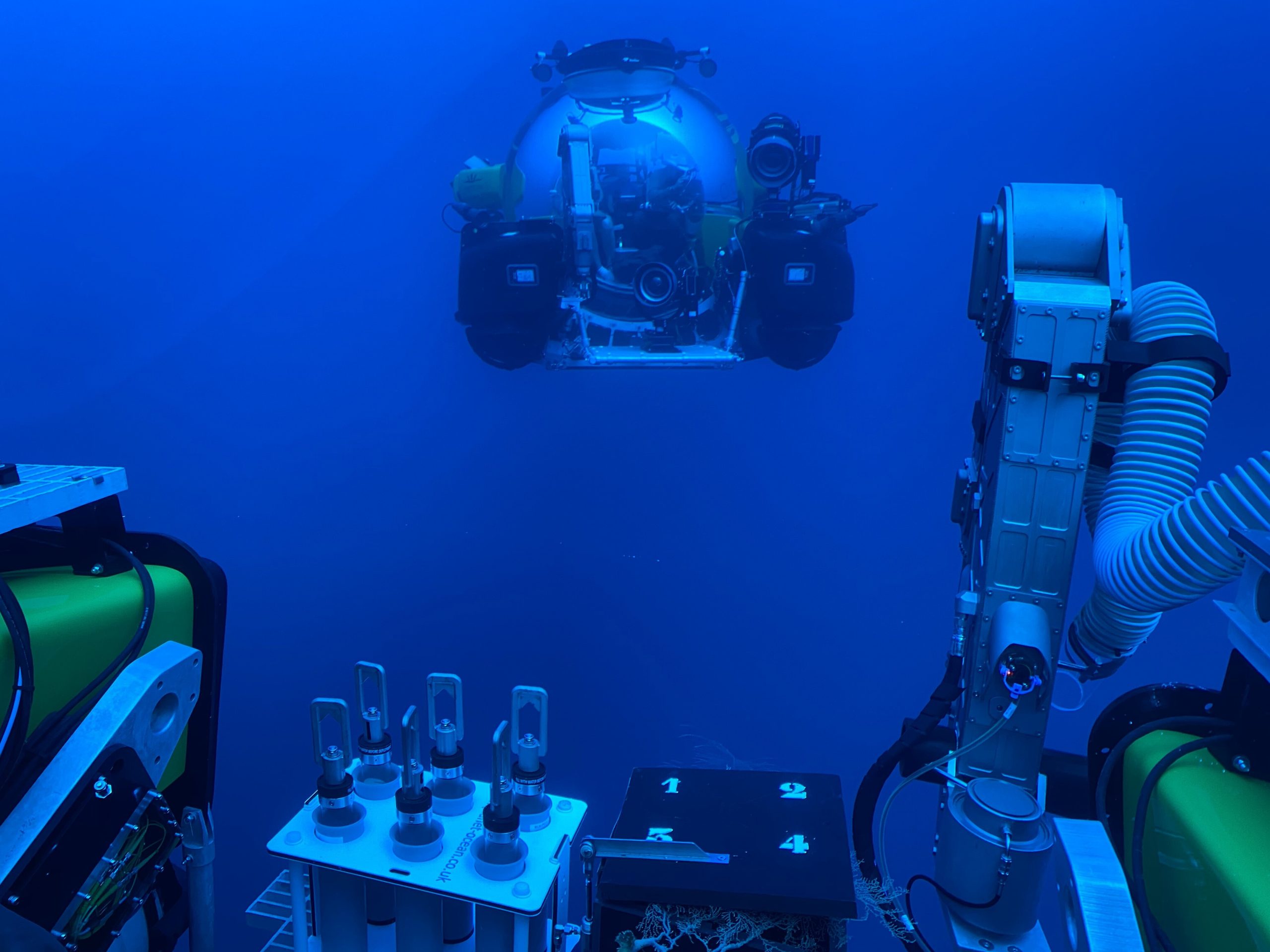
This work has been facilitated by a six-week joint expedition aboard the inaugural science mission of OceanXplorer, an 87 m research vessel furnished with state-of-the-art tools for seabed mapping, including a pair of custom Triton manned submersibles, each with a diving depth of over 1,000 m, plus a 6,000 m rated remotely operated vehicle (ROV). The unique capacity of OceanXplorer combined with the uncharted deeps of the Northern Red Sea are guaranteed to yield new discoveries and further reveal the intricacies of reef building offshore.
In addition to his role with KSLOF, Dr. Purkis is also a professor and Head of the Marine Geosciences Department at the Rosenstiel School of Marine and Atmospheric Science (RSMAS), University of Miami.