
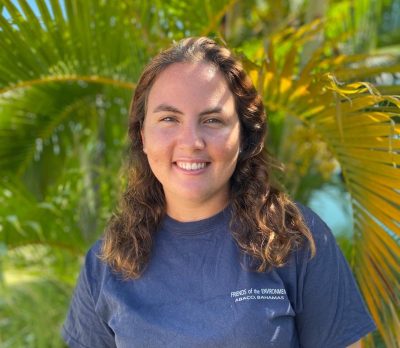
 In honor of International Education Week, the Khaled bin Sultan Living Oceans Foundation has chosen to profile Lianna Burrows at Friends of the Environment (FRIENDS). Lianna works with us on our Bahamas Awareness of Mangroves (B.A.M.) program, which teaches students about mangrove forests while helping them restore this vital ecosystem.
Where do you work?
I work at Friends of the Environment (FRIENDS) in Abaco, The Bahamas as the Outreach Coordinator.
Who do you teach?
Mainly our realm of teaching is targeted toward the local primary and high school students all around Abaco, aged 3-16. We work closely with local schools to teach these students about their environment, natural resources and ways we can help conserve them for future generations. Although we target this age group, we also play a role in teaching the general public about their environment through our website, social media, campaigns, as well as our input in environmental issues in our communities.
What lessons do you want your students to learn about the marine environment?
Our goal is to make our students passionate about their marine environment through multiple avenues. We want our students to interpret the most important part of their marine environment to them, but would also like them to take away lessons of the importance of the marine environment socially and economically as an island community. In addition, we’d like them to be aware of climate change and the connectivity to the marine environment to terrestrial environments, and how they affect each other. Learning food chains, biodiversity, endangered and native species are also important to us.
How does the Living Oceans Foundation help you educate students in The Bahamas?
The Living Oceans Foundation helps tremendously with educating students in The Bahamas about the importance of mangroves and mangrove restoration. We have worked very closely with their staff and have admired their expertise on mangroves and their passion to teach students. Bringing in an educator from another avenue outside of the students’ regular realm of teachers has a huge impact on the way they learn. They are excited to have a new face in the classroom, and enthused to go out in the field. Additionally, the information they receive on mangroves, as well as the equipment they get to use in the field is heavily focused on the science side of the mangrove ecosystem, which gives them a better understanding of it all.
How does hosting international scientists at the Kenyon Centre benefit your education programs?
The Kenyon Centre is an incredible avenue for us to highlight international education. Scientists come from all over to do their research for their PhD and more, and sometimes we have the privilege to invite them to speak to local students about their research, or even have students join them in the field. Their studies can include ecosystems such as seagrass beds, coral reefs and mangroves, and species such as Queen Conch, Nassau Grouper, sea turtles and more. Students get to see scientists first hand going out into the field and working long hours in the lab on their research while they stay at the Kenyon Centre, and they get to hear their incredible field day stories, or learn about how they became scientists. This inspires our local students in our education programs and allows them to ask questions to scientists about their field and careers.
Learn more about our work on mangrove education and restoration.