This Year’s Theme: Microscopic Marine Life
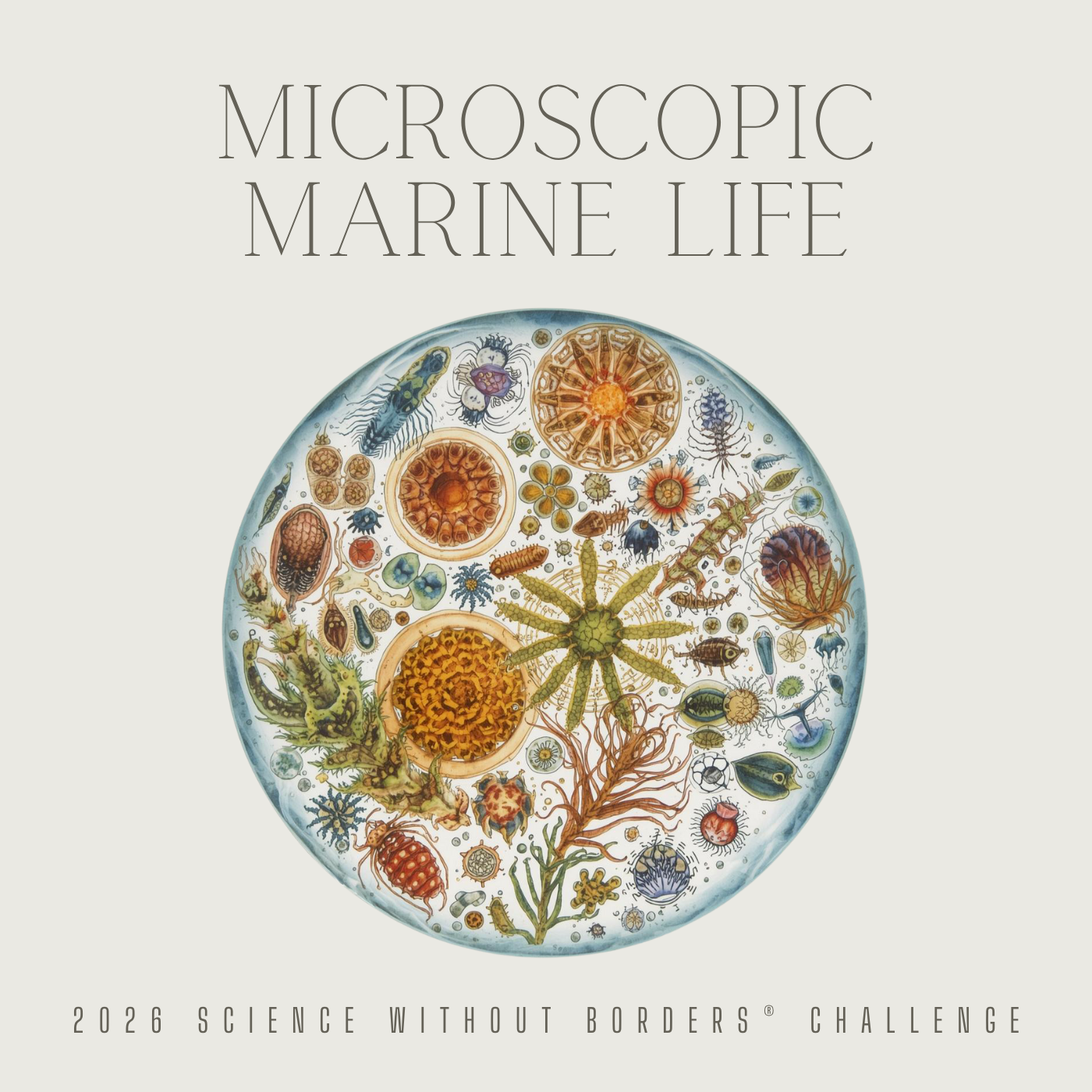
The 2026 Science Without Borders® Challenge is now open, inviting young artists from around the world to dive into the fascinating world of the unseen. This year’s theme, “Microscopic Marine Life,” celebrates the tiny ocean organisms that have a massive positive impact on the health of our ocean and planet.
What is the Science Without Borders® Challenge?
The Science Without Borders® Challenge is an international art competition designed to engage students and promote ocean conservation. Open to young artists between the ages of 11 and 19, the challenge encourages participants to create artwork highlighting important themes related to marine science and conservation. Each year, the competition focuses on a specific theme, such as threats to coral reefs, overfishing, or endangered species, to raise awareness about the importance of protecting the world’s ocean. The challenge aims to inspire creativity and foster a deeper understanding of marine environments while providing students with an opportunity to have their work recognized globally. Winners receive scholarships, and their artwork is showcased to help spread the message of ocean conservation.
What Should Your Artwork Include?
For this year’s theme, participants are asked to depict microscopic marine life in a way that reveals its importance to ocean ecosystems and human life. This might include microscopic plankton, bacteria, diatoms, foraminifera, or other tiny marine organisms, any of the ocean’s smallest life forms that have a big ecological role.
Your artwork should bring these tiny creatures to life. Where do they live? What do they do? How do they affect the ocean or planet? Use your creativity to show viewers why these microscopic organisms matter and how they help keep our ocean and planet healthy.
We encourage participants to explore this topic further by learning about the theme.
Why Participate?
By participating in the Science Without Borders® Challenge, you can be part of a global movement advocating for ocean conservation. Your artwork can help others appreciate the beauty, complexity, and importance of microscopic marine life and why it deserves protection. Additionally, winners will receive scholarships of up to $500, and their artwork will be showcased internationally, drawing attention to the importance of marine conservation.
How to Enter
To enter the 2026 Science Without Borders® Challenge, follow the Contest Rules, review the Tips for Success, and upload your artwork to our online Submission Form. The Challenge is open to all students aged 11-19 years old who are enrolled in primary or secondary school (or the home-school equivalent). The contest is free to enter, and students can win up to $500 for artwork that best reflects this year’s theme. Entries must be received by Monday, March 2, 2026, to be eligible to win.
Each participant is required to have a teacher sponsor, who will help guide them through the submission process and ensure that all entry requirements are met. When submitting their entry, students must provide their sponsor’s contact information, including name, phone number, and email address.
Help us get the word out about this competition by telling any young artists and teachers you know and encouraging them to apply. Sign up for our newsletter below and follow us on Facebook, Twitter, and Instagram for contest announcements.
Get started today and help reveal the unseen wonders of our ocean!