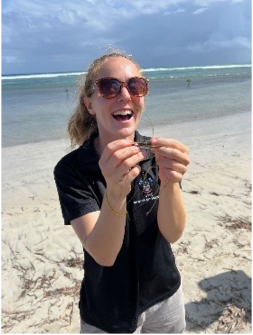
This guest blog comes from Isabel Key, a doctoral student at the University of Edinburgh, UK. Her research focuses on visual and acoustic methods for assessing the biodiversity of seagrass meadows in Scotland. As an interlude from her studies, she interned with the Khaled bin Sultan Living Oceans Foundation and the University of the West Indies Discovery Bay Marine Lab.
In our previous post, we explored what seagrass is, where it’s found, and the incredible benefits it provides to marine life. Today, we’re turning the lens on us—how these underwater meadows help humans, and why they deserve a place in the spotlight.
So… does seagrass do anything for you? Oh yes, my friend.
If you like eating seafood, you’ve got to like seagrass. Often, fish and other marine life are caught directly in the meadow, but seagrass also acts as a ‘nursery’ for young fish, where they can feed and grow strong before moving out into other habitats like coral reefs and the deep ocean, where they may also be caught by fishing boats. This means that protecting seagrass is absolutely crucial for supporting fisheries, putting food on our dinner tables, and sustaining the livelihoods of people who depend on fishing.
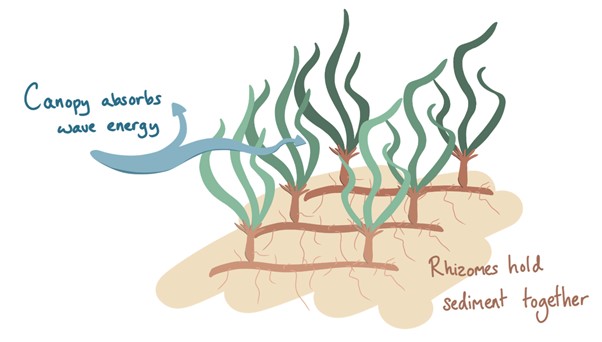
Seagrass doesn’t just provide us with food; it even protects the land we live on! The leaves absorb energy from waves, reducing their impact when they hit the coastline. Moreover, seagrass shoots are held together by an underground network of ‘rhizomes’ (like underground stems) which keeps the sand in place, preventing it from being washed away into the water. This natural barrier helps stop erosion—a process that can eat away at beaches, destroy habitats, and threaten homes and infrastructure. Working together with mangroves and coral reefs, seagrass shields coastlines from the impacts of storms, which are becoming more frequent and severe due to climate change. By keeping beaches intact, seagrass also quietly supports tourism and recreation, making it a vital part of both nature and our communities.
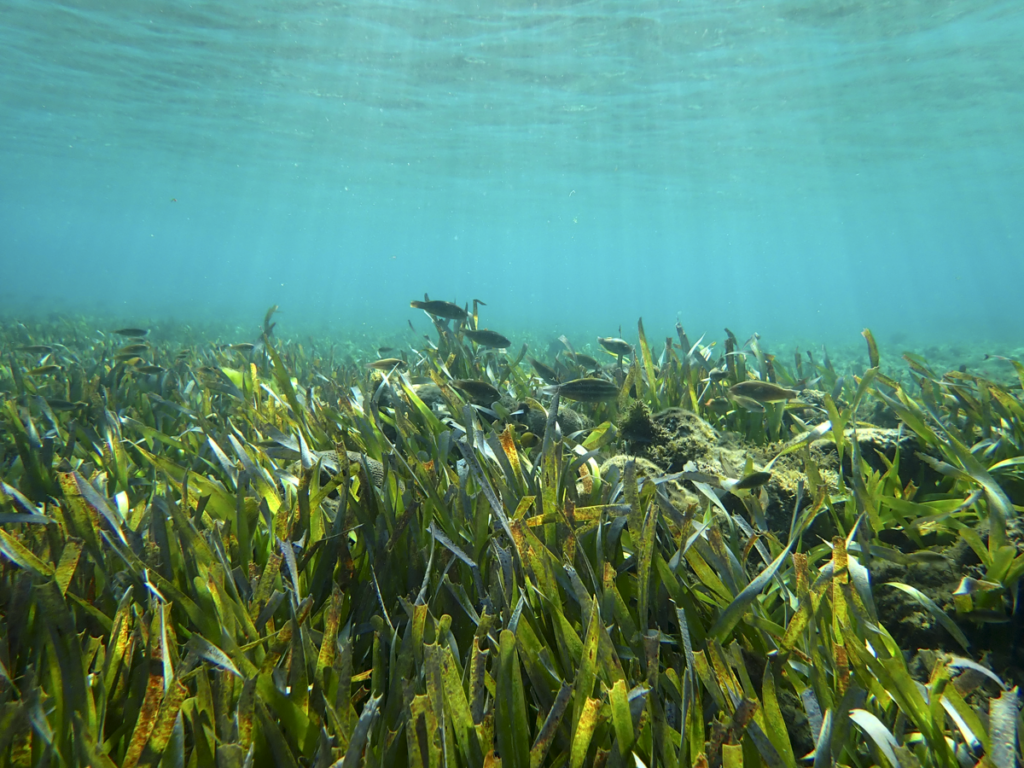
Another handy habit of seagrass is storing carbon from the atmosphere. When seagrass photosynthesises, it takes carbon dioxide out of the water, turning it into organic matter in the leaves and roots. Some of this “blue carbon” gets buried in the sediment, where it can stay locked away for thousands of years. This means that disturbing or destroying seagrass meadows leads to carbon dioxide being released back into the atmosphere, which would accelerate climate change. Another important reason to keep our seagrass meadows intact!
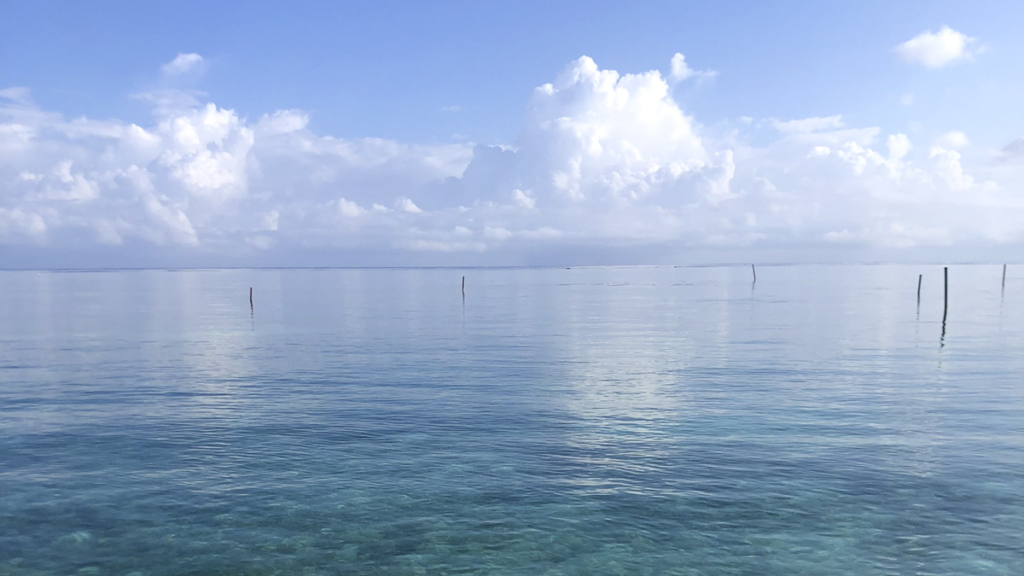
One final fascinating—and oh so helpful—talent of seagrass is its ability to prevent disease. The leaves and roots filter harmful microbes out of the water and also release anti-microbial chemicals that attack harmful bacteria. This doesn’t just protect the seagrass from disease, but also helps stop other marine life from getting sick. In fact, coral reefs have been shown to suffer 50% less disease when seagrass is nearby. So, seagrass—just by existing—is helping protect the ocean around it, and can even reduce disease risk for humans. It’s like a very relaxed, but efficient, underwater doctor!
Seagrass has even more tricks up its sleeve, but I think I’ve told you enough for now to persuade you that it is pretty cool!
So next time you feel those tickling blades in the water—don’t be afraid. Thank seagrass for all the gifts it’s giving us and the rest of the living world, including protecting coastlines, providing fish for our table, slowing climate change, and keeping the ocean healthy.