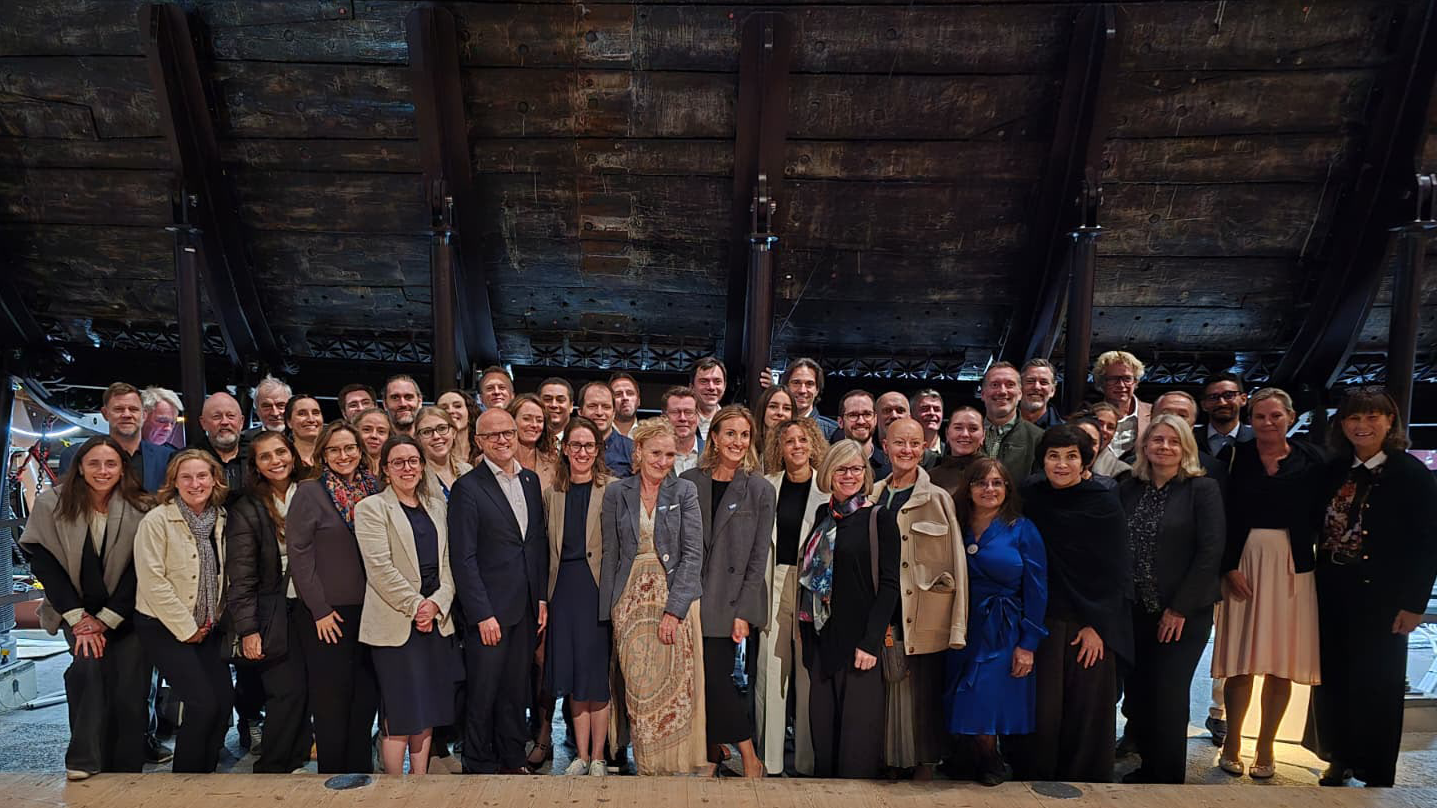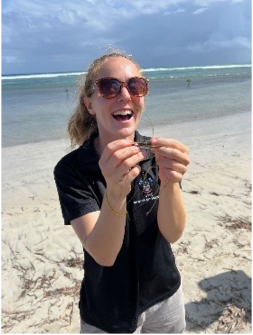
This guest blog comes from Isabel Key, a doctoral student at the University of Edinburgh, UK. Her research focuses on visual and acoustic methods for assessing the biodiversity of seagrass meadows in Scotland. As an interlude from her studies, she interned with the Khaled bin Sultan Living Oceans Foundation and the University of the West Indies Discovery Bay Marine Lab.
The J.A.M.I.N. programme, which engages Jamaican secondary school students in learning about and restoring mangroves, just celebrated its 10-year anniversary. But mangroves don’t always have to steal the show! Another vital marine habitat—seagrass meadows—also deserves our attention. Like mangroves, seagrass meadows play a crucial role in supporting both marine life and human communities (read more here). This spring, we launched a pilot for a new sister program that shifts the spotlight from mangroves to seagrass.
I spent three months at the beginning of 2025 as an intern at the University of the West Indies Discovery Bay Marine Lab (DBML), collaborating with the Khaled bin Sultan Living Oceans Foundation’s COO & Education Director, Amy Heemsoth. Together, we brainstormed engaging seagrass topics and explored how they could be aligned with the Jamaican national curriculum. Mirroring J.A.M.I.N., we settled on a three-phase programme: what is seagrass; why is it important; how is it threatened; and what can we do about it?
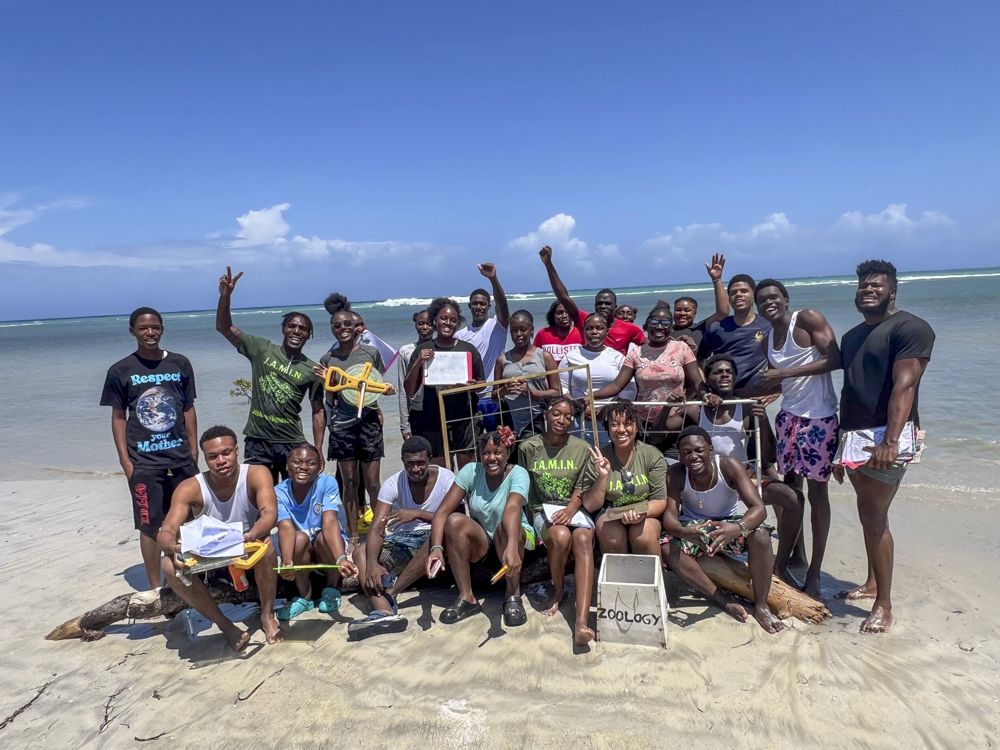
During my internship, I developed and piloted the first phase of the new seagrass curriculum. This comprised an introductory lesson, a field trip, and a data analysis session for students in Environmental Science at William Knibb Memorial High School. Most of the students had heard of seagrass, and once they learned how important it is for juvenile fish—and therefore supporting fisheries—they were ‘hooked!’
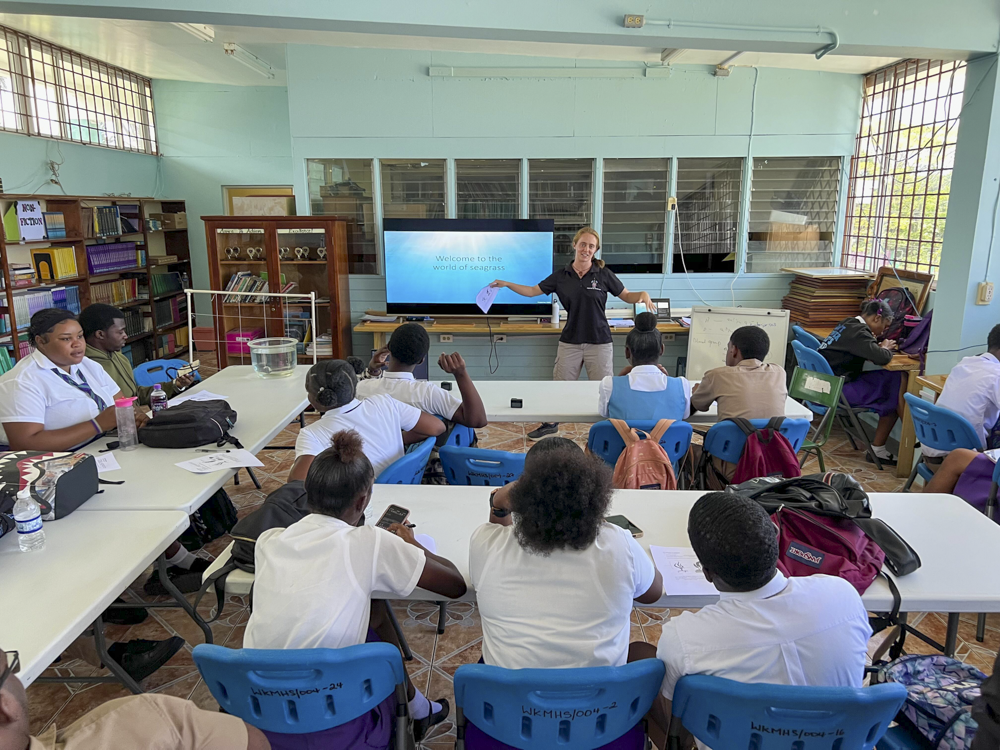
Using 360° video footage, the students initially explored Jamaican seagrass meadows without having to get wet. It turns out they’re beautiful! With the help of some cheesy rhymes, they quickly learned to identify the three common Caribbean species. How could you forget: “Turtle grass is wide and flat, a tasty turtle snack”?
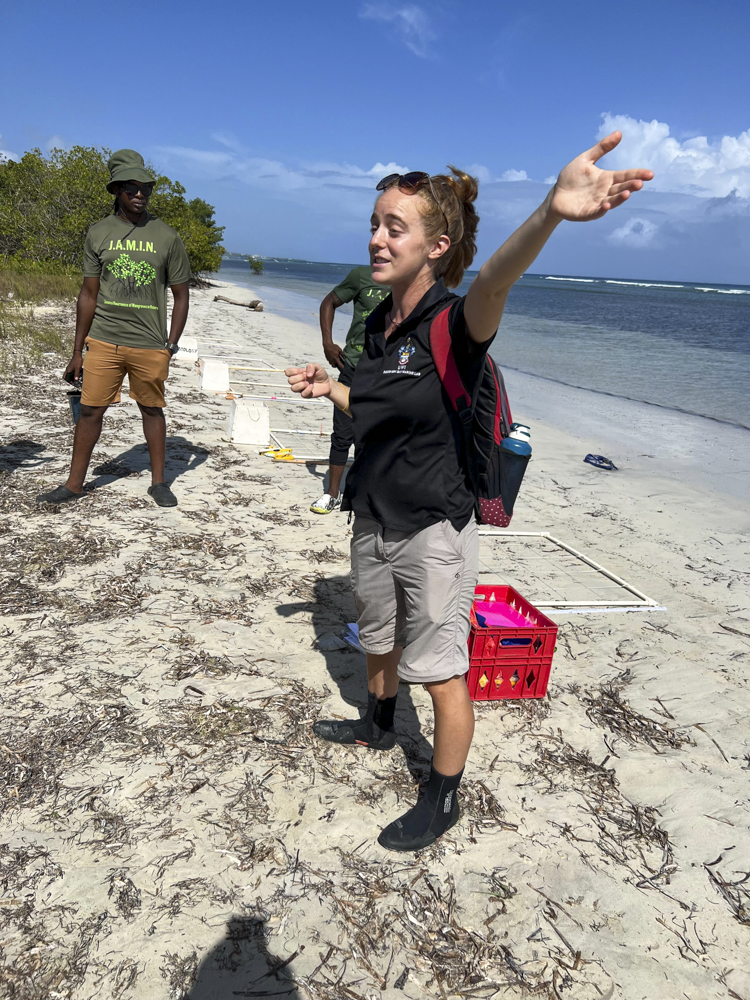
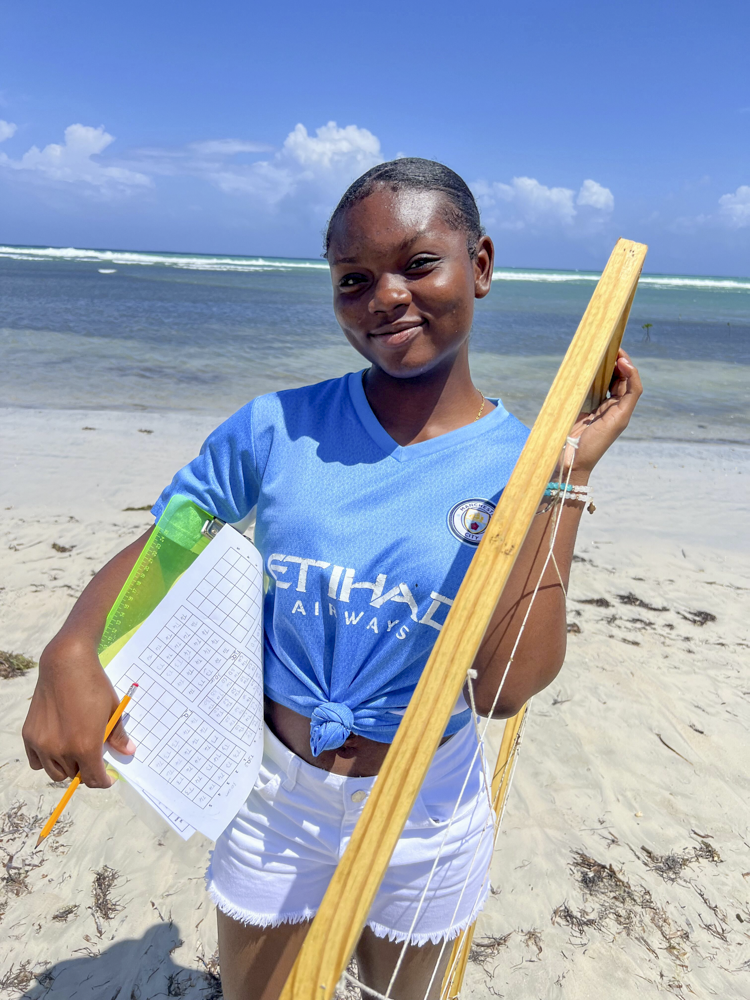
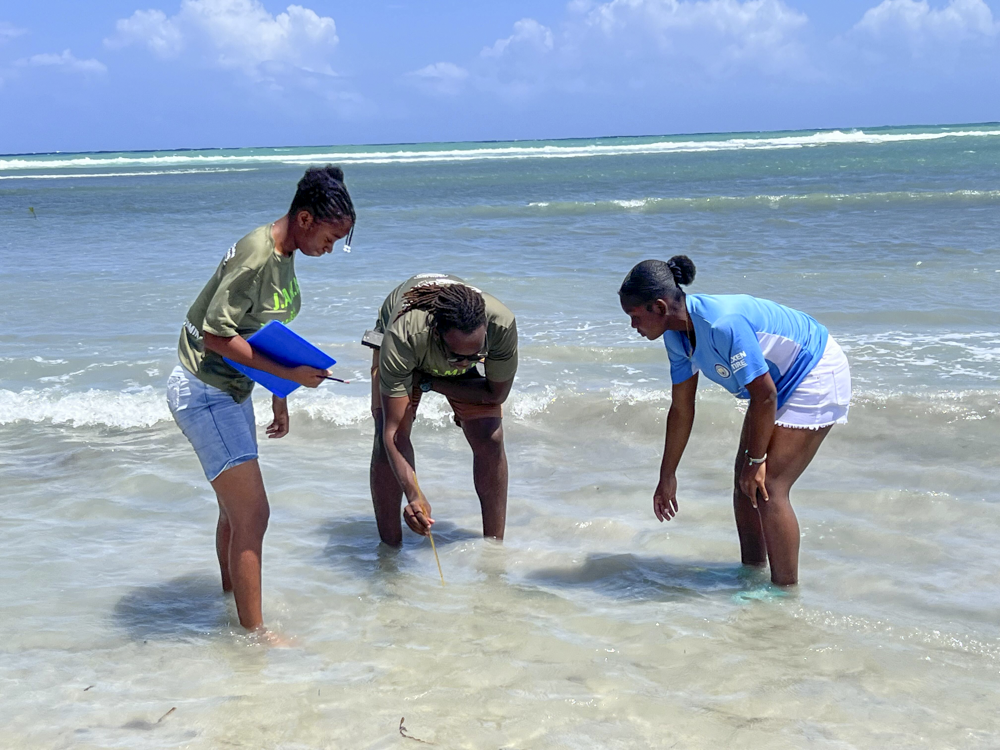
With species identification mastered, it was time to head to the local beach, Jobson Bay. The students used quadrats and transects to investigate how the dominant seagrass species changes with distance from the shore (i.e., species ‘zonation’). The weather was not on our side, with a strong wind whipping up the sediment and making the water murky. We could barely see the seagrass beneath our feet!
Fortunately, we’d brought along some ‘viewing boxes’ which allowed us to see under the waves. Against the odds, and thanks to the support of the outstanding teachers and DBML staff, as well as the enthusiasm of the students, we achieved mission success. With determination and a splash, the students collected data on the density of each seagrass species across the length of five transects, running from the beach down into deeper water.
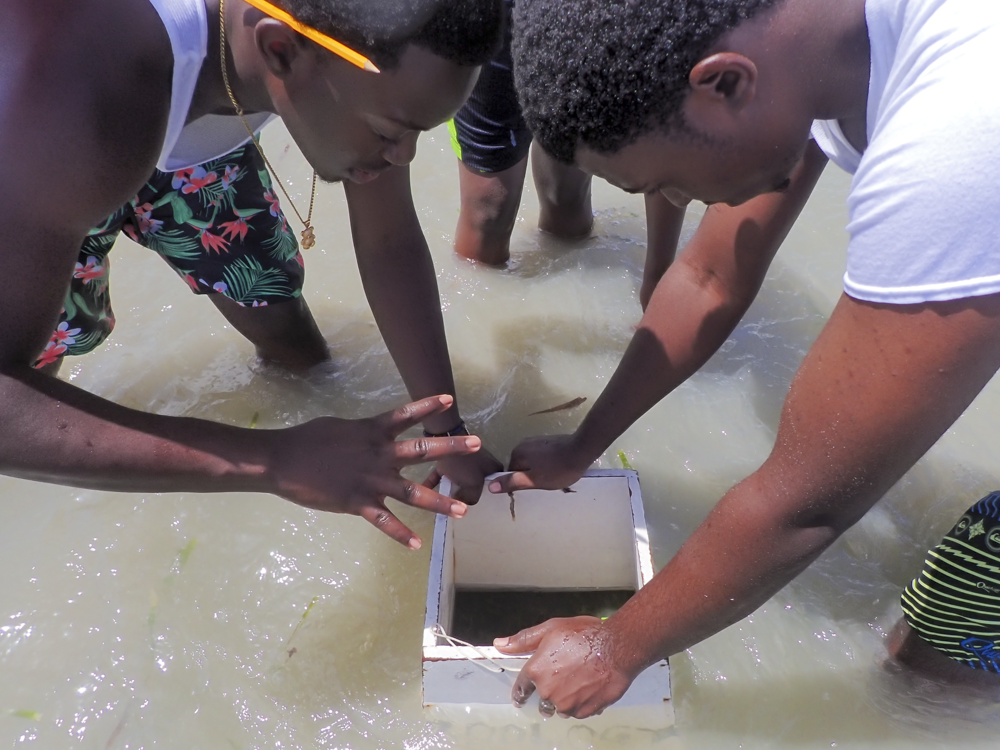
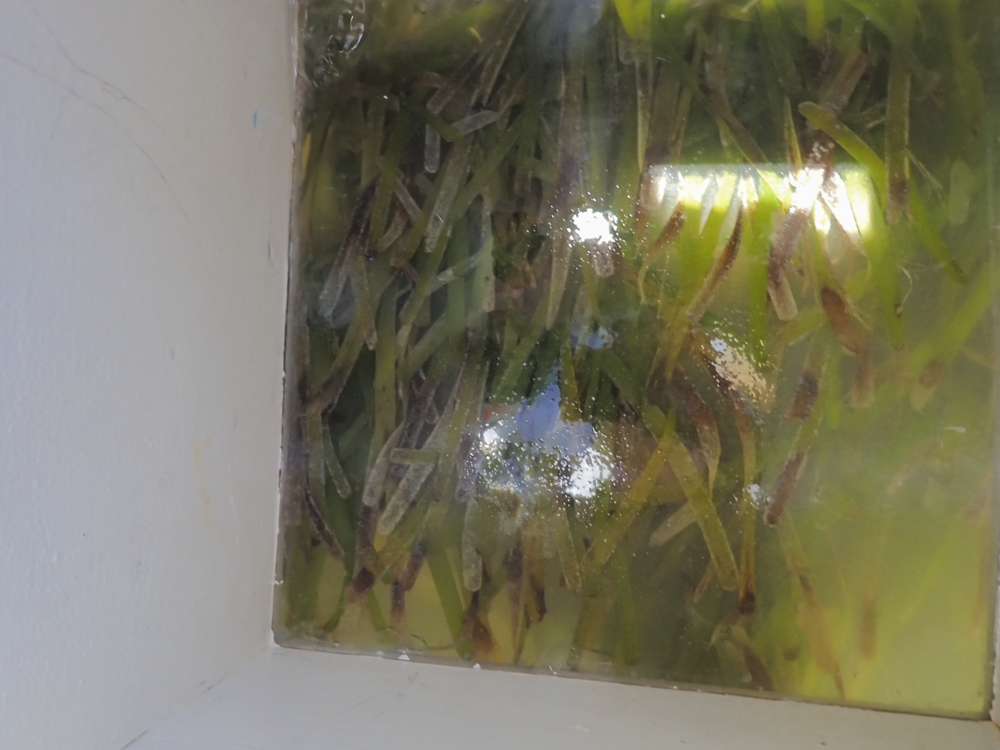
Photos by Isabel Key.
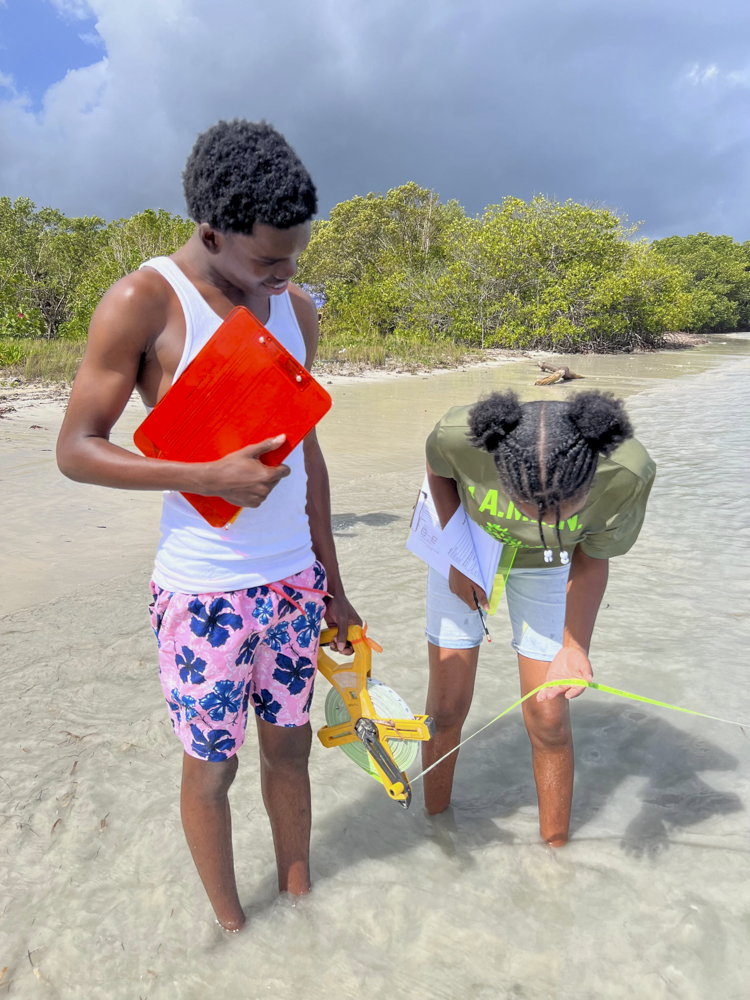
Photos by Amy Heemsoth.
Back in the classroom, the students showed great grit (especially for a Friday afternoon!) and plotted graphs of their data, revealing that shoal grass tended to be found closer to shore, while turtle grass dominated in slightly deeper water. As a teaser for the next phase of the project, we discussed why this might be—perhaps some species need more light, or are more sensitive to desiccation at low tide?
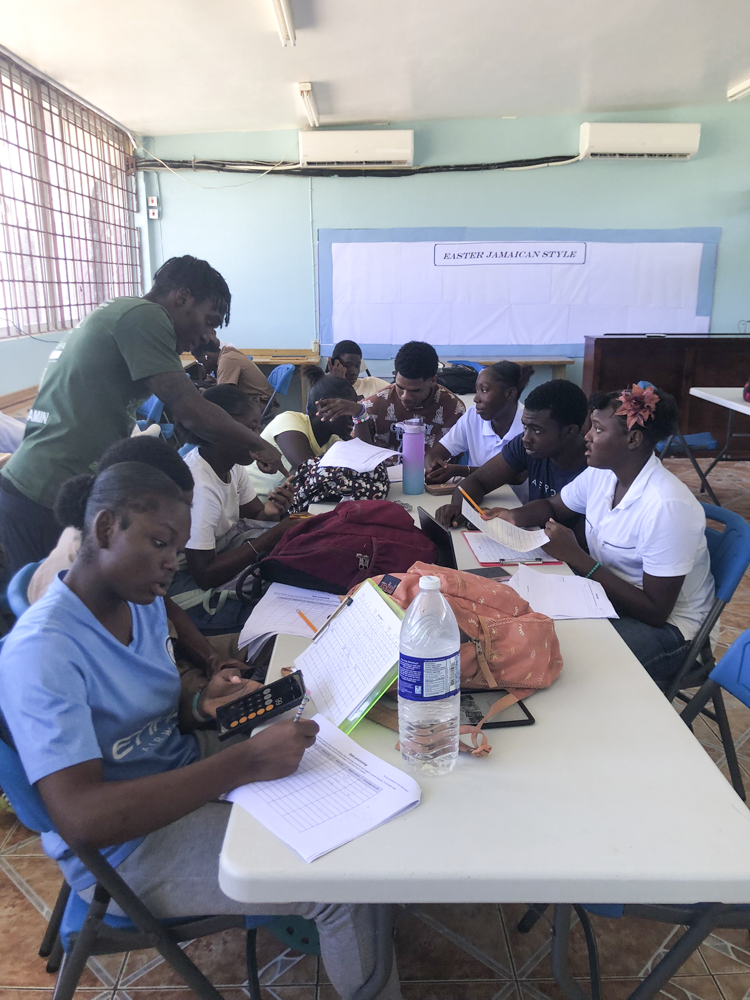
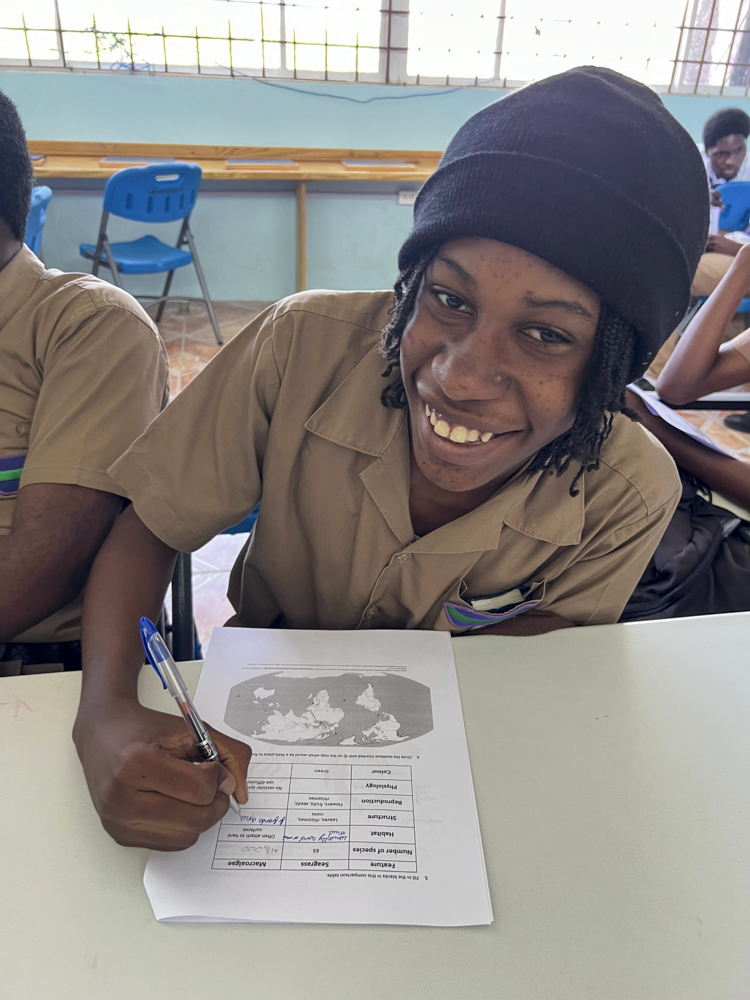
Photo credits: Left photo by Isabel Key; Right photo by Amy Heemsoth.
Finally, the students added data points to an online mapping platform: Seagrass Spotter—marking only the third seagrass meadow in Jamaica to be added! As citizen scientists, their efforts directly support a global database accessible to researchers worldwide. For example, Seagrass Spotter data have recently been used to assess how human activities threaten seagrass globally. Thanks to their hard work, these students are making a meaningful contribution to important scientific studies now and in the future!