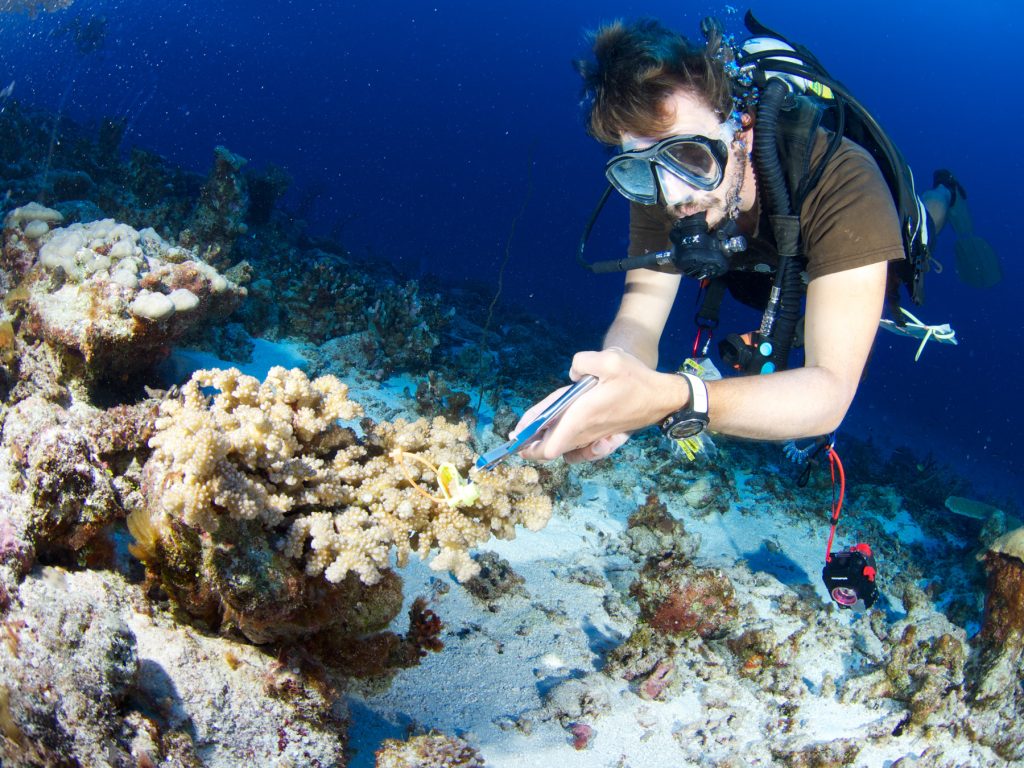
We’re pleased to share this guest blog from Dr. Anderson Mayfield, Chief Research Scientist at Coral Reef Diagnostics and a former Fellow with the Khaled bin Sultan Living Oceans Foundation. He has joined several of the Foundation’s research missions, including an expedition to the remote Chagos Archipelago, where he witnessed firsthand the onset of a major coral bleaching event. Today, his work focuses on coral stress physiology, understanding coral resilience, and exploring how emerging tools like artificial intelligence and citizen science can help protect reefs worldwide.
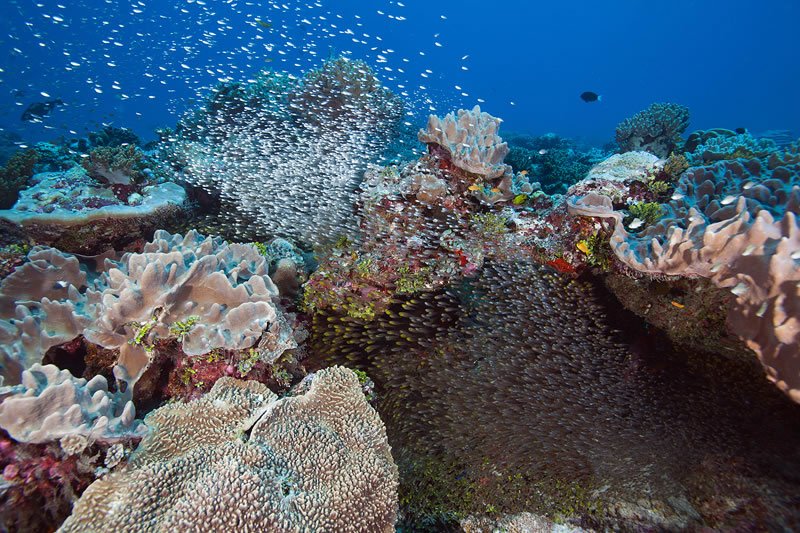
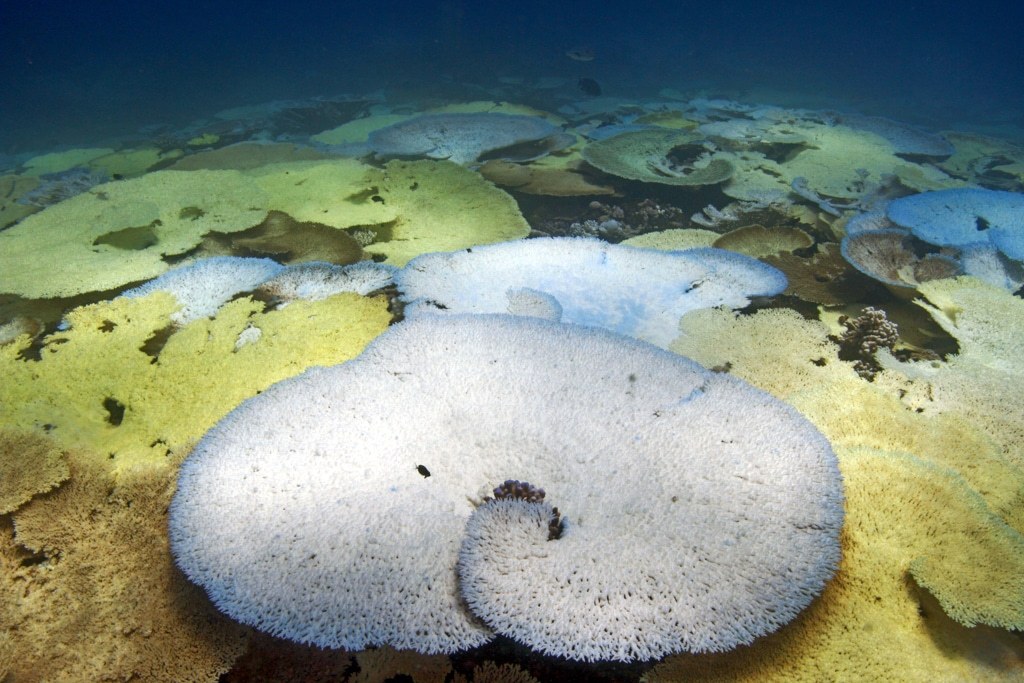
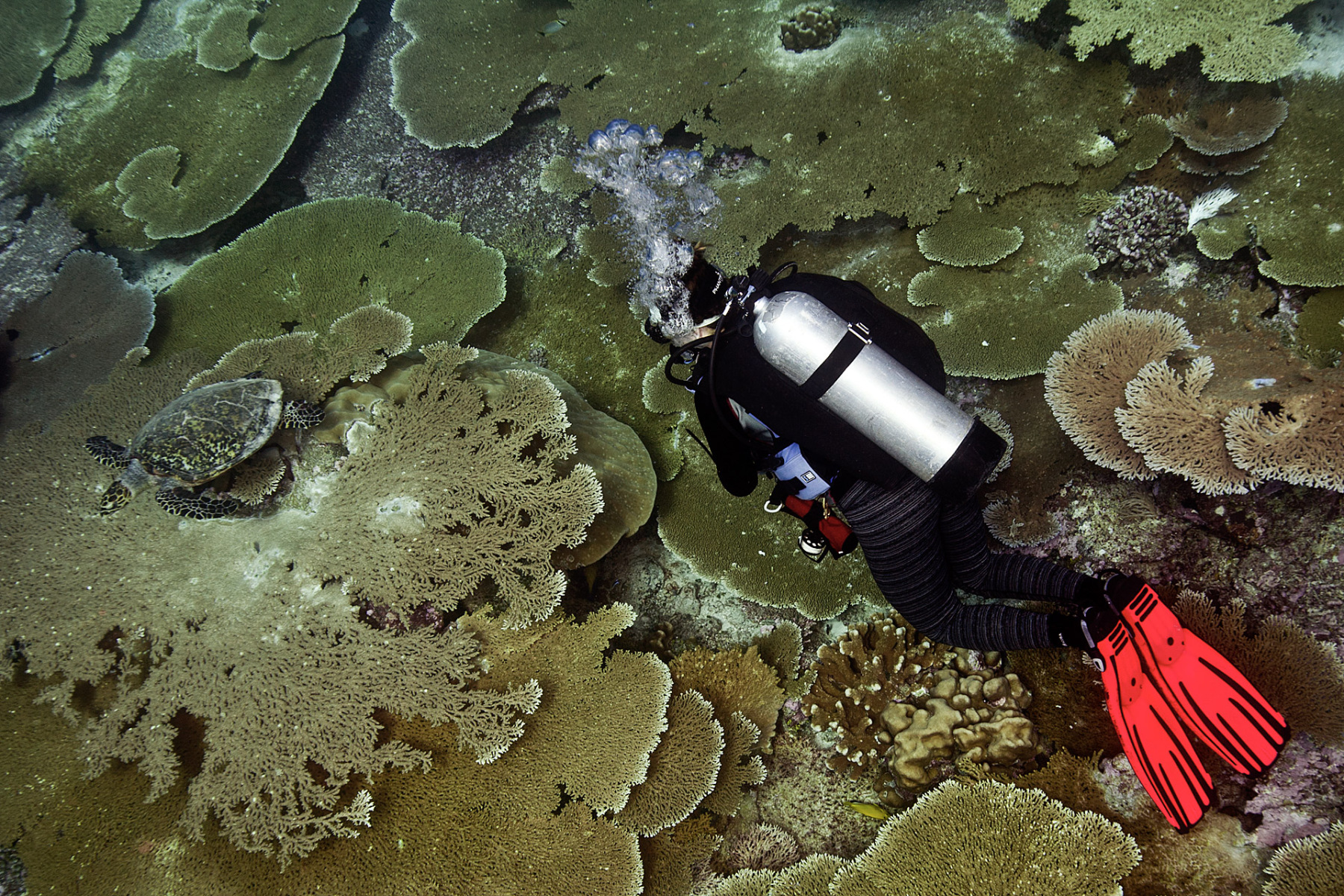
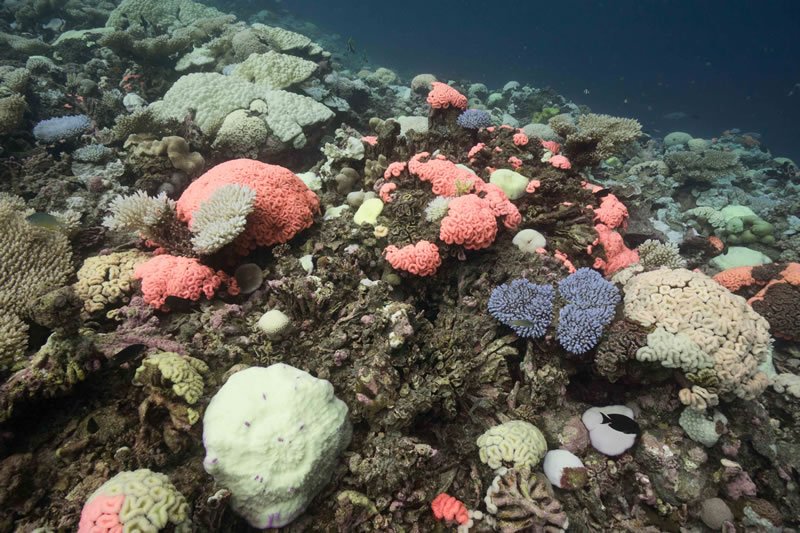
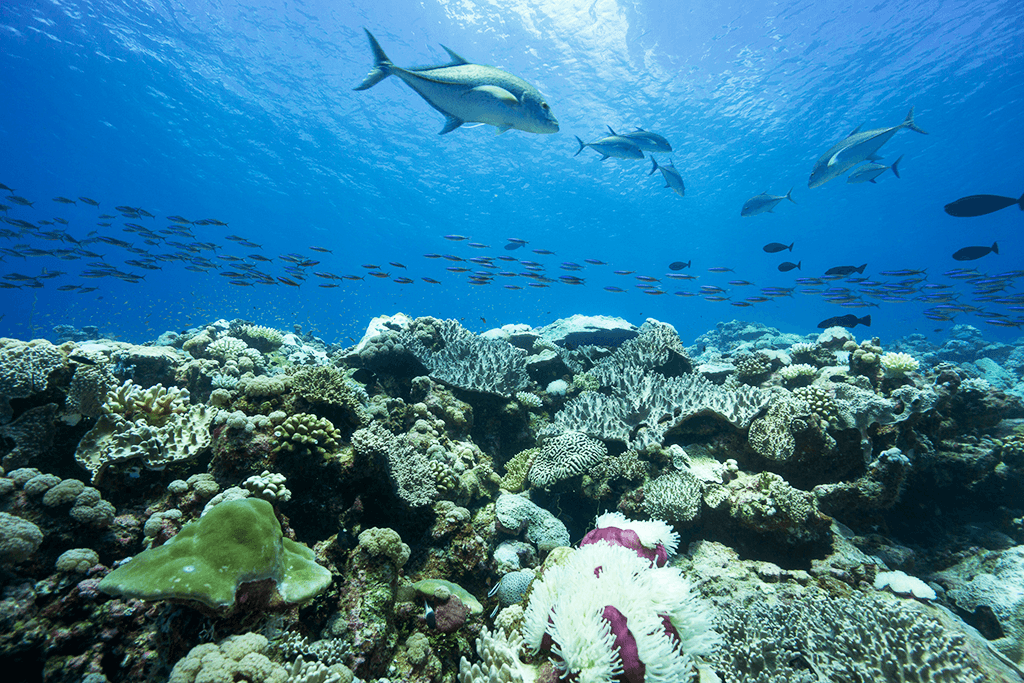
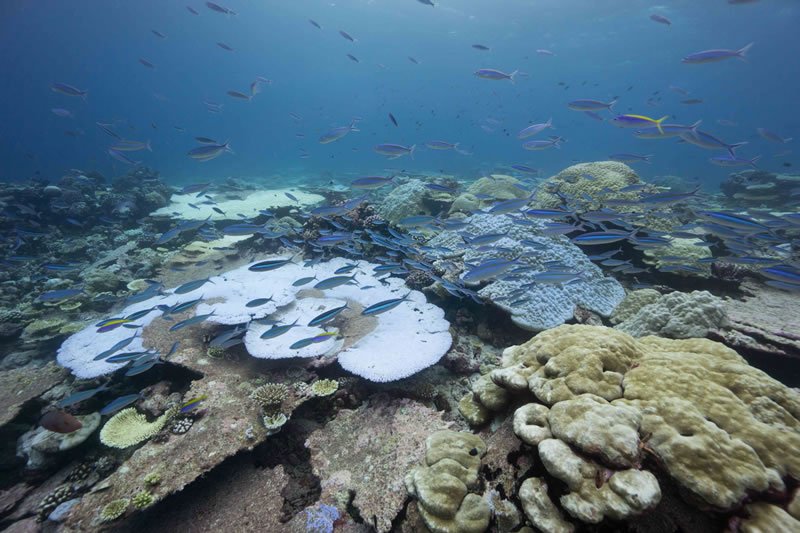
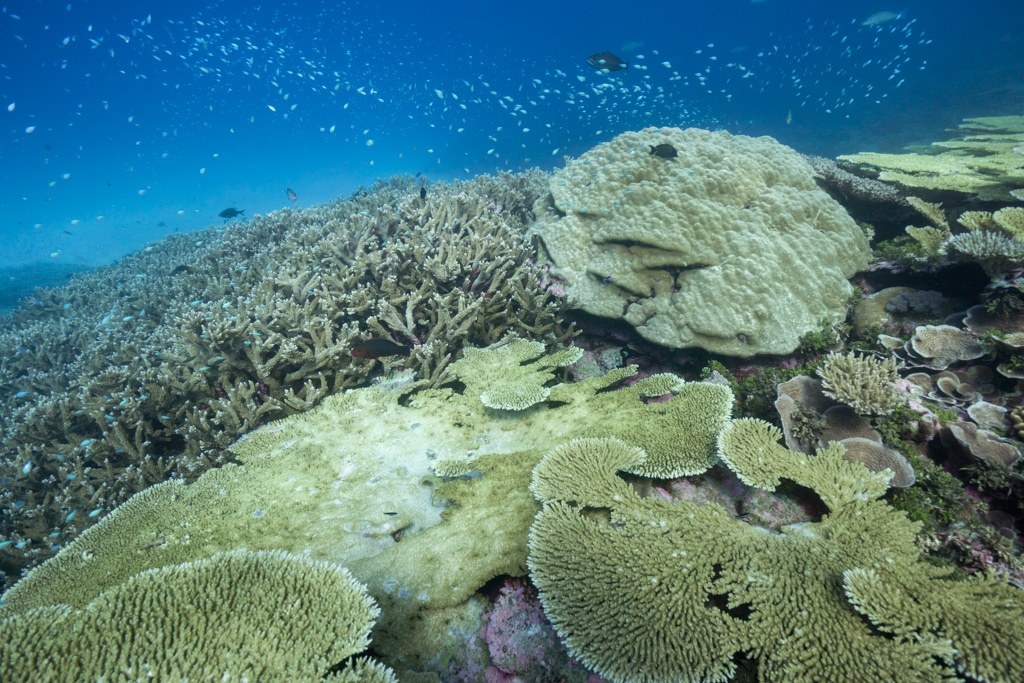
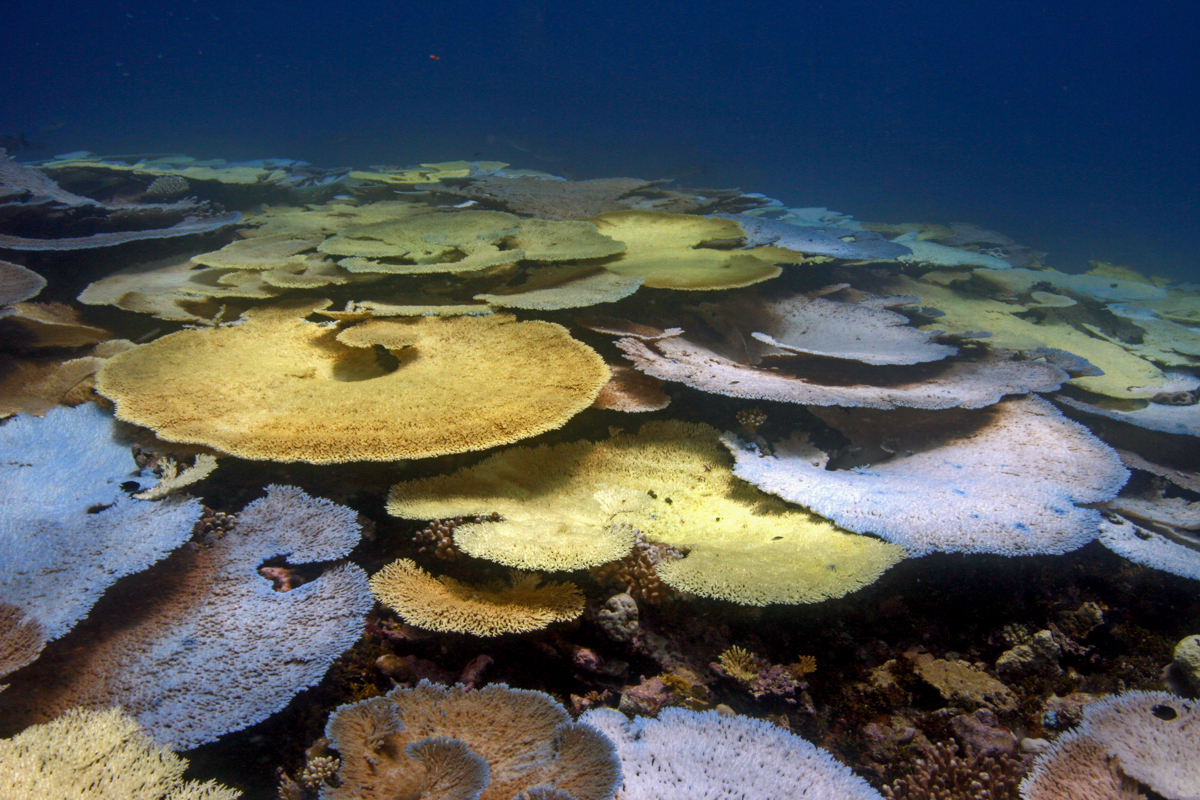
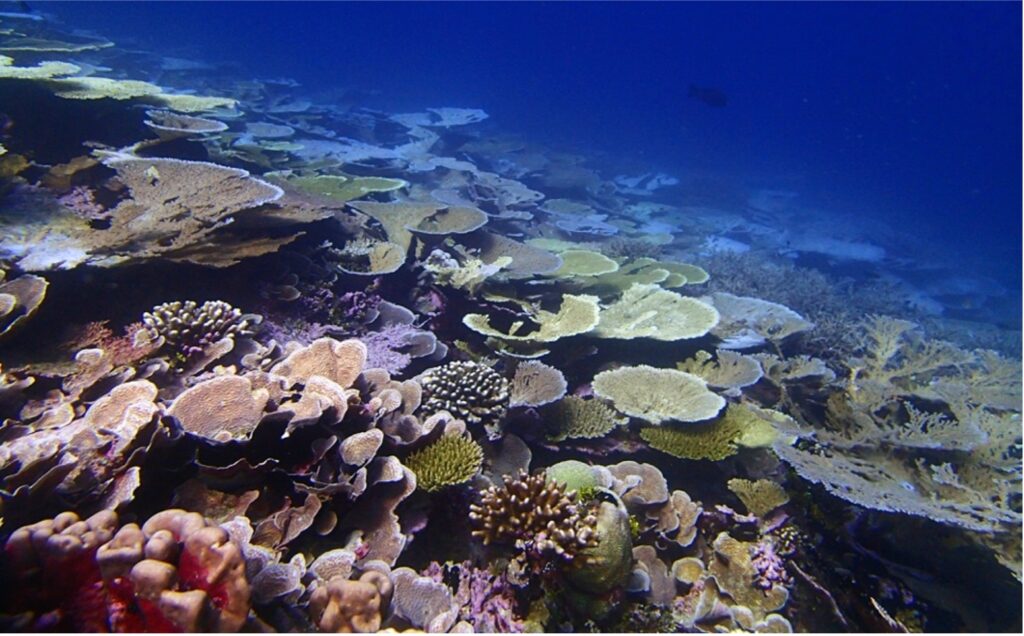
When I had the amazing opportunity to traverse the Chagos Archipelago with the Khaled bin Sultan Living Oceans Foundation on their Global Reef Expedition back in 2015 (Fig. 1), the heart of my work involved sampling corals to assess their stress levels and climate change tolerance. This endeavor was timely as we witnessed the beginnings of a catastrophic, high temperature-induced coral bleaching event from which only a fraction of the corals has recovered to date (Fig. 2).
Although I was lucky from a scientific standpoint to have sampled corals both before and during this unexpected marine heatwave, since the underlying data could help us understand why some corals resist bleaching, whereas others succumb, this undoubtedly macabre exercise makes one feel like a marine actuary. Rather than predicting which corals will live and which will die, could I be doing something more useful with my time and energy? Furthermore, how useful is information derived from corals sampled in 2015, many of which have been wiped off the face of the Earth?
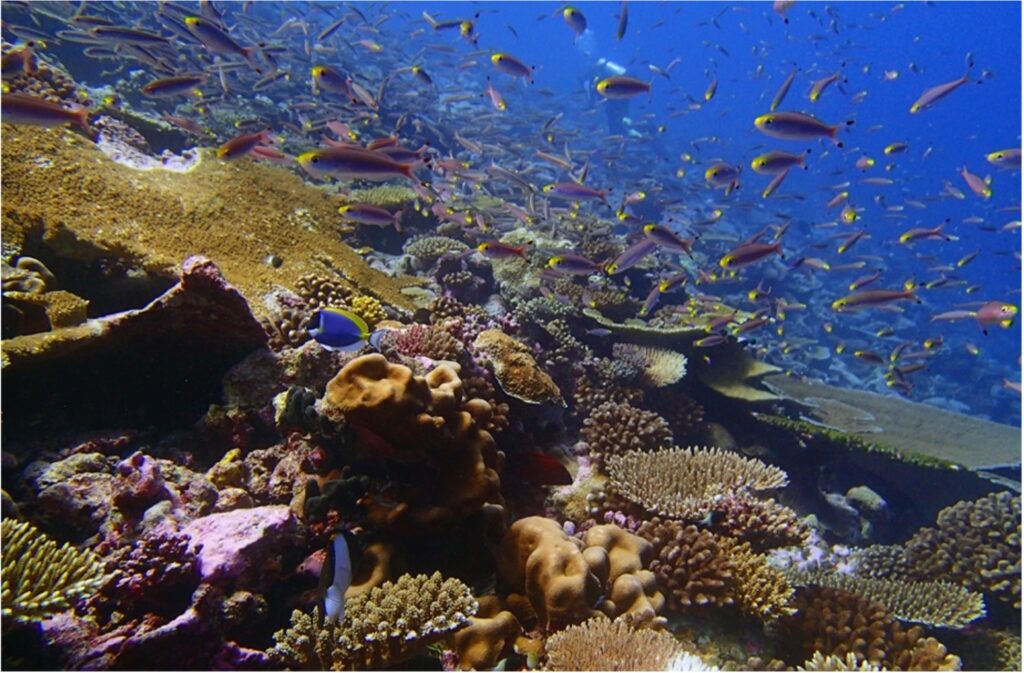
To answer the latter question, data collected 10 years ago show us what reefs in a remote location with no human inhabitants looked like before they began bleaching regularly. And I mean “show” in a literal sense; the Living Oceans Foundation science team took tens of thousands of photos and videos of the reefs, and a subset of the images was used to train the first artificial intelligence (AI) to be developed to aid marine biologists in automating their image analyses: University of California, San Diego’s CoralNet.
Coral reef monitoring is likely the step in the coral reef conservation and restoration process that best lends itself to non-scientists. Although it is important to note that simply amassing more coral reef data will not save these imperiled, high-biodiversity ecosystems — we need dramatic reductions in carbon dioxide levels while simultaneously ensuring that the most climate-resilient corals are breeding with one another. We can and should nevertheless acquire coral reef ecological data from more places, by more people, at more times, at more depths, etc.; more and better data on coral abundance and diversity is undoubtedly a good thing, and organizations like ReefCheck have trained many thousands of “citizen scientist” volunteer divers over the years (most of whom lack any formal marine biology training). To the possible chagrin of some PhD scientists who may think that minimally trained tourists could not obtain comparable data to their own, most large-scale comparisons between scientist- and citizen scientist-derived data show relatively high congruency, which is good news.
However, ReefCheck training requires several days, and dedicated survey gear, such as slates, must be brought on each dive. How many tourists would be willing to bring along such items on vacation? Furthermore, the data must later be entered into a spreadsheet on a computer and then uploaded to a website or sent via email, where it is curated by a scientist. Only very dedicated tourists are likely to reliably complete all such steps on their vacations. What if they could simply take pictures and then upload the pictures to a website, adding as much information about the site as possible (e.g., date, nearest island, approximate depth, etc.)?
One can now put a smartphone in a $10 USD waterproof pouch and take it on a dive to 30 m, and virtually anyone who can afford to SCUBA dive on vacation can surely afford both a smartphone and such a pouch. It stands, then, that many more underwater photos will be taken in the coming years. Can we put them to good use? This was the question I sought to answer using several thousand images I personally took during the aforementioned Chagos mission. I am an amateur photographer and used a $300 USD underwater camera (Olympus TG series with housing), and although my images are far from spectacular, I religiously white-balanced throughout the dives to ensure colors were accurate. This is important because certain wavelengths of light, particularly reds, yellows, and oranges, are lost beyond several meters. Poorly white-balanced photos taken at depths greater than even just 7-8 m will appear mostly blue, making it hard to discern reef inhabitants like corals from algae-covered rocks.
Assuming, though, that one white-balances often (likely to be entirely automated by smartphone manufacturers in the near future, if not already), any picture of a coral reef represents potentially usable data. After all, the Living Oceans Foundation, myself, and others have bombarded the CoralNet AI with thousands and thousands of coral reef photos, training the AI to correctly classify the various features in them (e.g., water, fish, corals, algae, etc.). To see if I could use my “tourist diver” photos (so named because I took them at random, without any scaling object, transect tape, or photo-quadrat) to estimate both coral abundance (i.e., “cover”) and bleaching prevalence (% of all coral tissues bleached), I uploaded several thousand images of reefs of Chagos into CoralNet, trained the AI with a subset of them, and then had the AI analyze the remainders.
If interested, check out the publication (Mayfield & Dempsey 2026), though note that it is highly technical and written for a scientific audience. Briefly, the AI was about 85% accurate and analyzed thousands of coral reef photos in about one minute. I then spent several minutes calculating coral cover and percent bleaching from the exported data. The AI was most accurate at “typical” coral cover levels: 20-40%. At very low coral covers, its calculations deviated more significantly from those of the “gold standard” formal survey method (highly skilled/trained Living Ocean Foundation scientific divers). So, the AI is not perfect, but think about it; given its high accuracy, a tourist could complete a dive in which they took coral reef photos, upload the photos to CoralNet, enter a date, location, or any other useful metadata….and that’s it. Either a scientist can do a secondary training of a subset of the images to attempt to further increase accuracy, or we could just go with the current training set. I, or other scientists, could then go to CoralNet and easily export the data. Assuming a diver planned to take the pictures anyway, I estimate that it would take them about 10 minutes to start an account on CoralNet, upload the images, and add useful information (more time if they want to enter things like individual depths for each photo). If even 1% of the 60-70 million certified divers (based on 2025 PADI estimates) was willing to do this several times a year, the dataset would easily dwarf that obtained by the entire marine biology researcher community.
It’s an exciting prospect, having tourists be our “eyes” on the reef; this would free up busy scientists like me with more critical issues, like devising ways to thwart bleaching via cooling, shading, nature-based solutions, or other means (e.g., trying to make the corals themselves stronger, which is an active area of research by hundreds of marine biologists at present). More keen tourist divers could certainly go beyond simply uploading their photos; they could reach out to local non-profit organizations to see if they need assistance with in-water cleanups (e.g., ghost net removal), maintaining nursery structures (currently a bottleneck in many coral reef restoration operations), or other such activities that lend themselves to those who may lack formal training in marine biology but nevertheless want to assist with much-needed coral reef conservation and/or restoration efforts.
If you have coral reef photos you’d be willing to share with Anderson (regardless of date or place), feel free to reach out to him at [email protected].
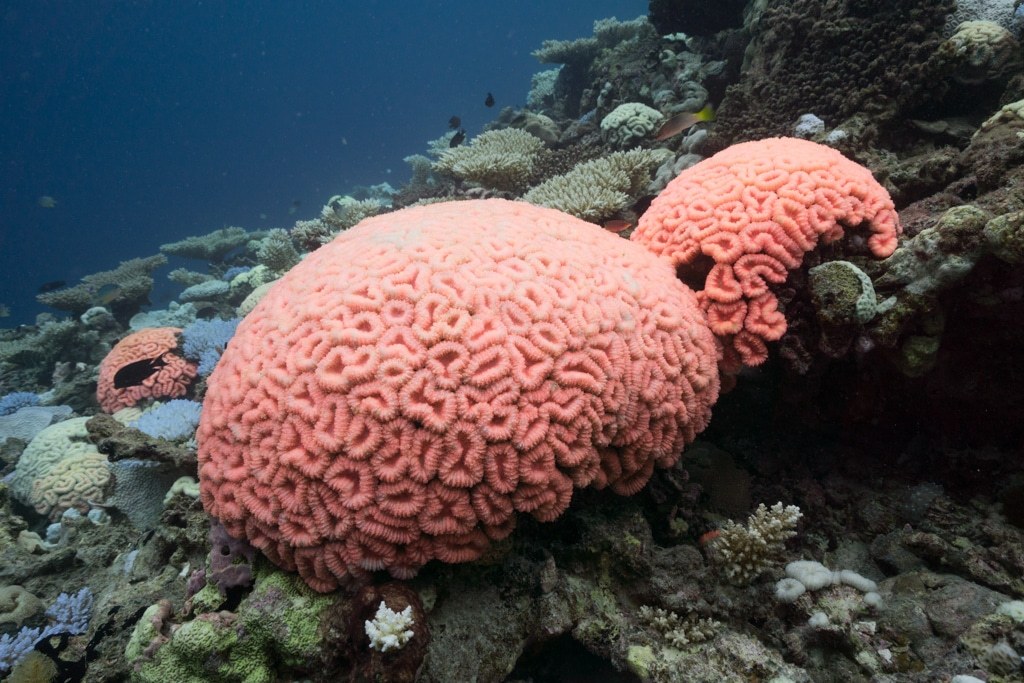
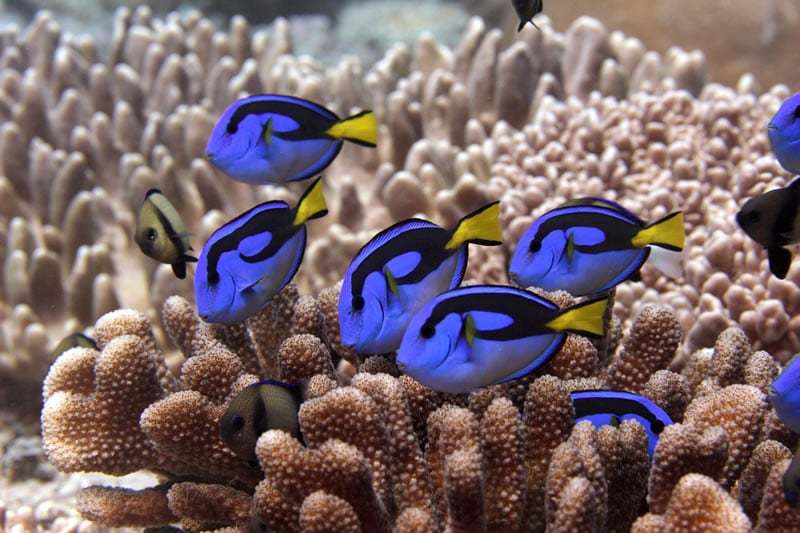
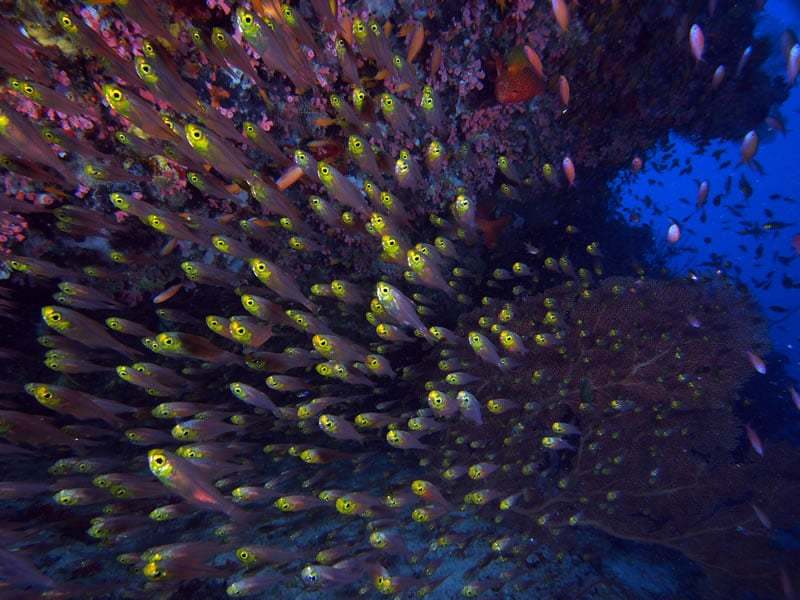
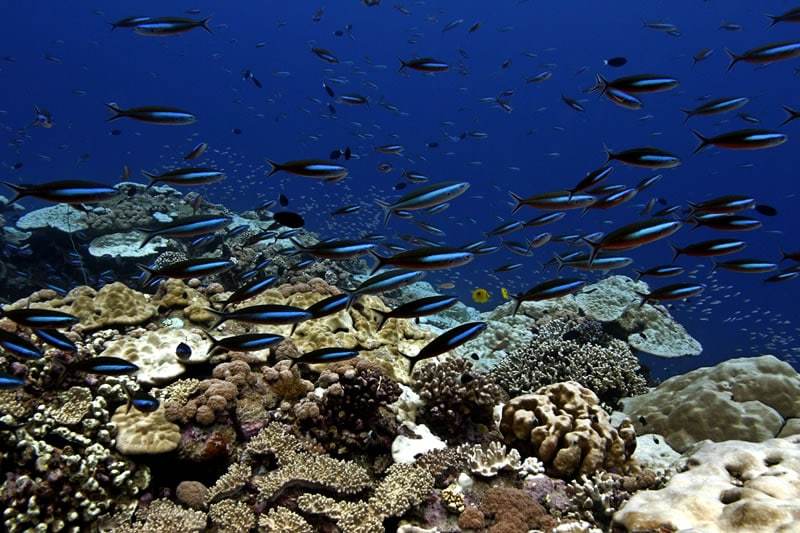
Images from our research mission to the Chagos Archipelago
These images from the 2015 Chagos Archipelago expedition capture coral reefs in the early stages of a mass bleaching event. While many corals appear in vivid “cotton-candy” shades of pink, blue, and purple, these bright colors are actually a sign of stress. As corals begin to lose the symbiotic algae that normally give them their color, some produce fluorescent pigments that may act like a natural sunscreen—helping protect them from intense sunlight in unusually calm, clear waters. These striking hues often precede the stark white bleaching that can ultimately lead to coral death.