There are certain faces you never forget.
Over the years, hundreds of students have stepped into mangrove forests with us through the Jamaica Awareness of Mangroves in Nature (J.A.M.I.N.) program. I may not always remember every name, but I remember the expressions — the hesitation before stepping into thick mud, the laughter when someone loses a shoe, the look of surprise when they catch that unmistakable sulfur smell rising from the mangrove soil.
Desta during J.A.M.I.N., investigating mangrove organisms and discovering marine life up close. His curiosity in the field laid the foundation for the path he follows today.
This year, two of those familiar faces returned.
Desta Pinks and Colesia Downer are now serving as interns with our long-standing partners — Desta with the Alligator Head Foundation and Colesia with the University of the West Indies Discovery Bay Marine Lab. Not long ago, they were high school students planting mangroves, collecting field data, and learning how coastal ecosystems function. Today, they are contributing to real conservation work in the very communities where they first discovered their passion.
There is something deeply meaningful about that kind of full circle.
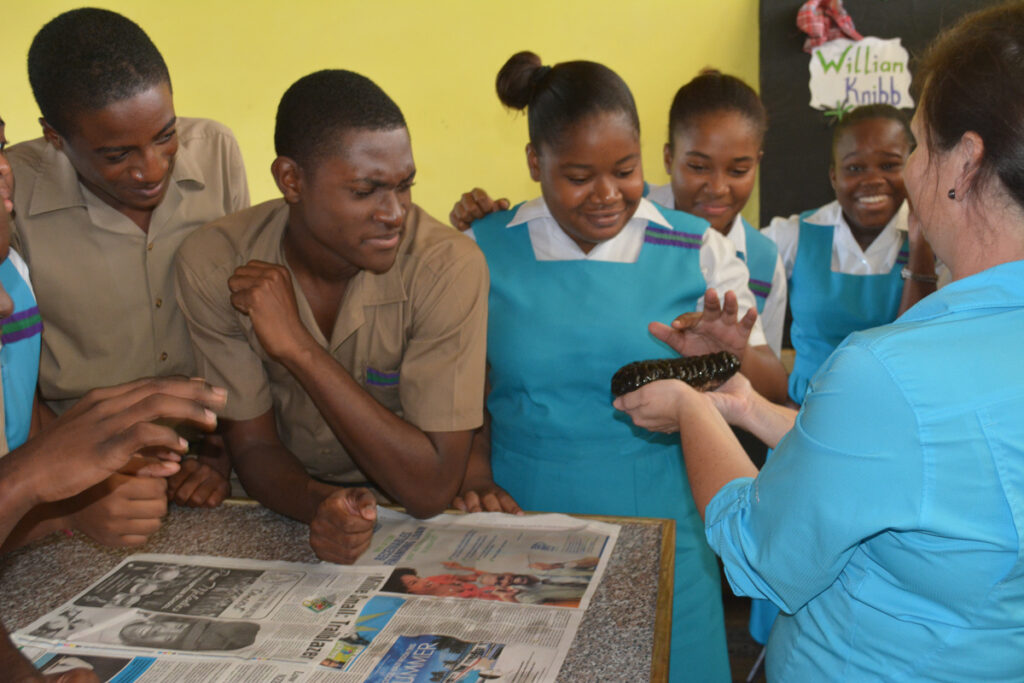
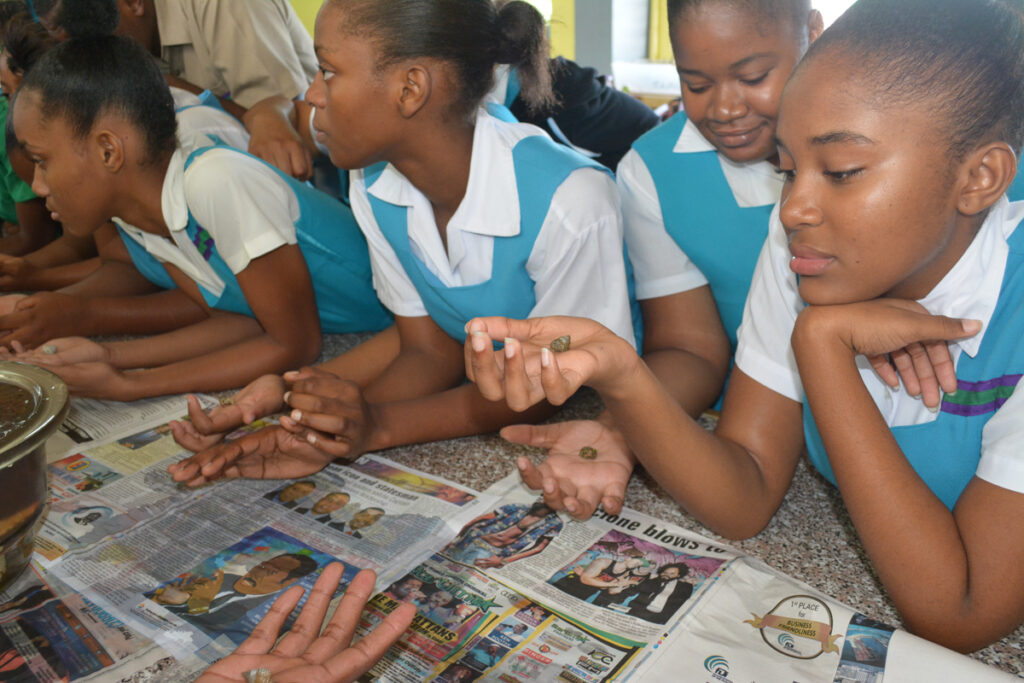
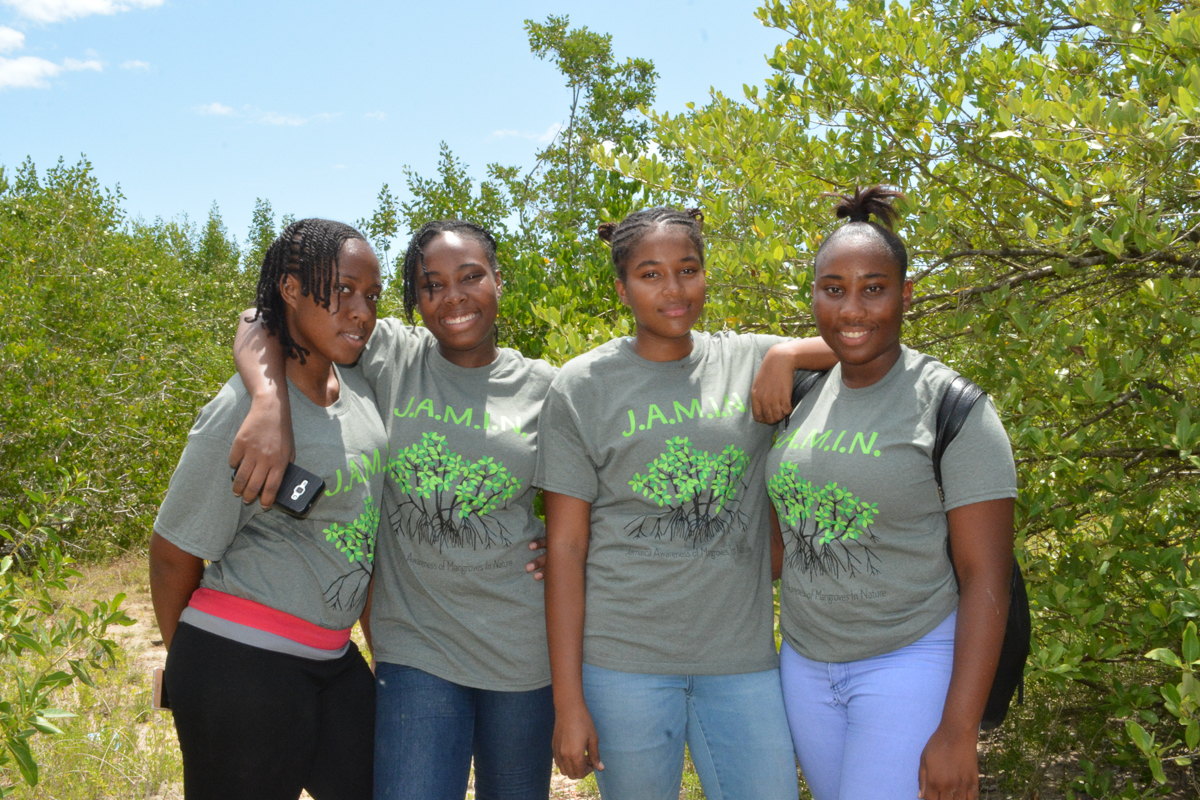
Colesia during her time as a J.A.M.I.N. student — exploring mangrove species in the classroom, examining marine life up close, and building confidence in the field. These early hands-on experiences laid the foundation for the conservation work she is now pursuing.
For many students, J.A.M.I.N. is their first opportunity to experience science beyond a textbook. It is hands-on, immersive, and sometimes messy. It asks them to observe closely, think critically, and connect what they are learning in the classroom to the natural world around them.
For Desta and Colesia, those early experiences did more than check a box for a school program. They helped shape a path.
Now, as interns, they are gaining professional experience in environmental conservation, supporting research, outreach, and community engagement. They are seeing firsthand how science informs decision-making and how local stewardship strengthens coastal resilience.
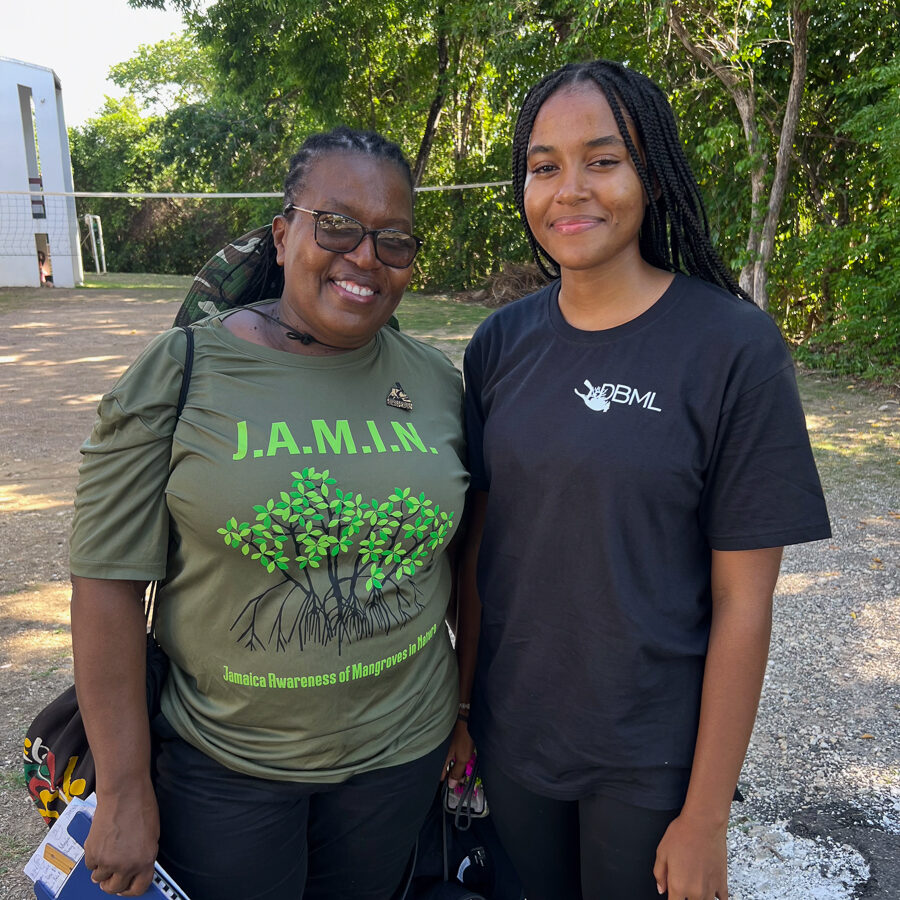
Colesia reunited with her former science teacher, Ms. Fulvia Nugent of William Knibb Memorial High School, whose support helped shape her journey through J.A.M.I.N. and beyond.
This year, their journey came full circle in an especially meaningful way. They helped support the J.A.M.I.N. program itself. Standing in front of students who are now where they once were, they became living examples of what is possible. For current participants, seeing former J.A.M.I.N. students step into leadership roles makes the path forward feel tangible and within reach.
Watching former students step into these roles is one of the most rewarding parts of this work. Education is not always about immediate outcomes. Sometimes it is about planting seeds — seeds of confidence, curiosity, and possibility — and trusting that they will grow in time.
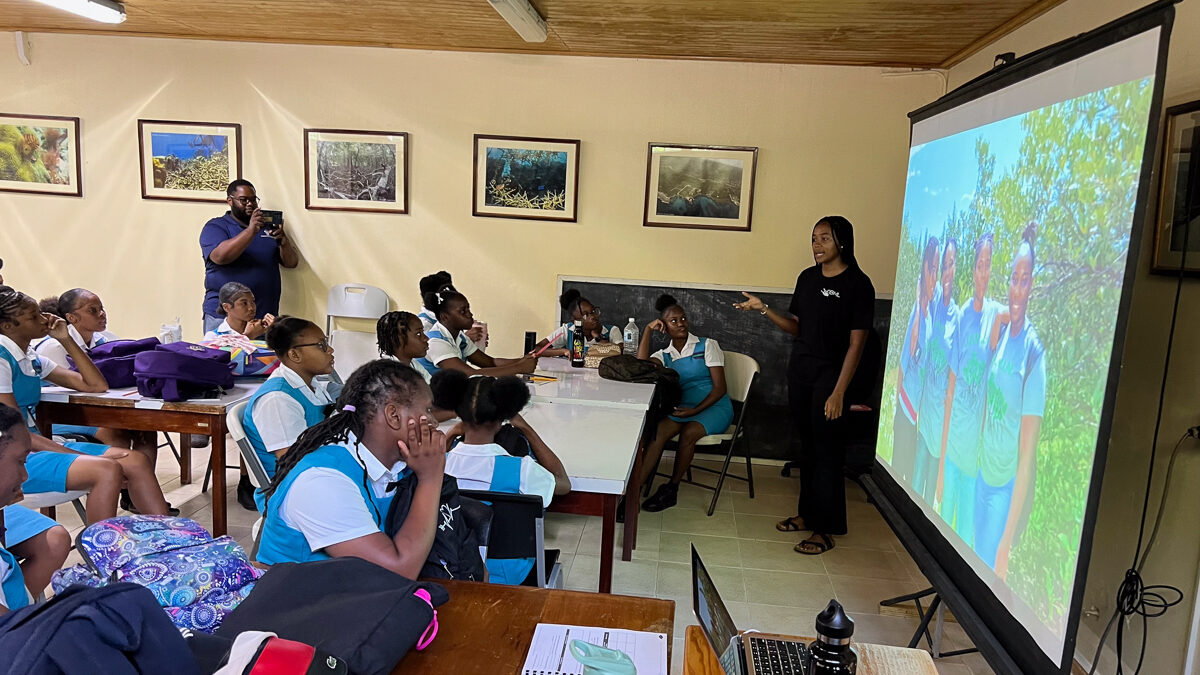
Colesia shares her journey with current J.A.M.I.N. students, her own photo from years ago visible behind her. From student to mentor, she now serves as a role model for the next generation, showing them what is possible when curiosity and hard work take root.
Years ago, Desta and Colesia stood knee-deep in mangrove mud learning about root systems and storm protection. Today, they are part of the teams working to protect and study those same ecosystems.
Desta during his J.A.M.I.N. days — first stuck in the mangrove mud and laughing through it, then helping a fellow student find their footing.
That is the lasting impact of experiential education.
Programs like J.A.M.I.N. are designed to build knowledge about mangroves and coastal resilience. But their true success is measured in something deeper — in students who begin to see themselves as scientists, conservationists, and leaders in their own communities. And when those students return to mentor and inspire the next generation, the impact multiplies.
Seeing these young professionals return not just as participants, but as contributors, is a powerful reminder that the work does not end when the lesson does. Sometimes, it is only just beginning.
In our next blog, we share Desta’s journey from a student laughing in the mangrove mud to a young professional pursuing environmental science and conservation.