search-icon
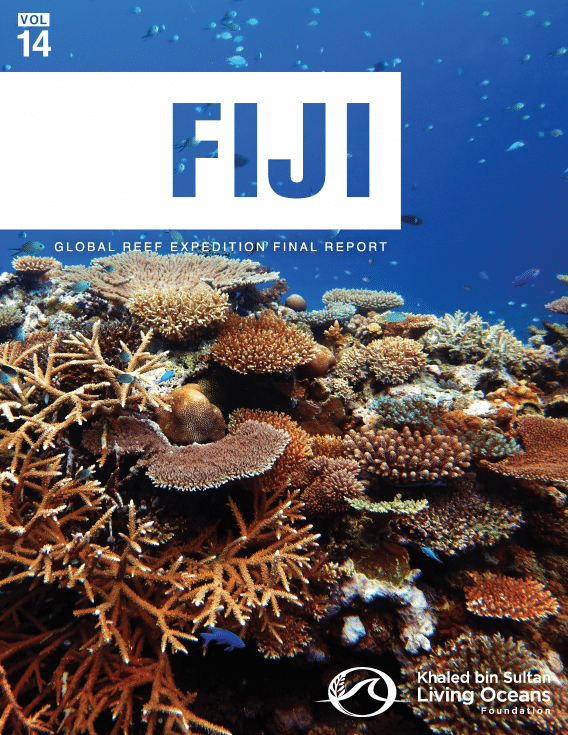
Global Reef Expedition Final Report: Fiji

The Khaled bin Sultan Living Oceans Foundation is conducting the Global Reef Expedition – the largest coral reef survey and mapping expedition in history. The Global Reef Expedition is a five-year mission to survey the health and resiliency of coral reefs around the world. In June of 2013, the Global Reef Expedition came to Fiji to assess the state of their coral reefs and create detailed habitat maps of their shallow water marine habitats.

Using standardized methods, scientists on the Global Reef Expedition mapped and surveyed the coral reefs of Fiji over the course of four weeks, from June 2-28. The research focused on coral reefs surrounding 11 islands in Lau Province, Fiji: Cicia, Fulaga, Kabara, Mago, Matuka, Moala, Nayau, Totoya, Tuvuca, Vanua Balavu, and Vanua Vatu. These small, remote islands are far from the tourist center of Fiji, and home to small villages of Pacific Islanders run by traditional leaders. These communities rely heavily on the coral reef ecosystem for their livelihood, mainly through engaging in artesianal and substance fishing.

The Expedition was conducted in partnership with local experts from the Wildlife Conservation Society of Fiji, Lau Provincial Office and Fiji Department of Fisheries, and scientists from the University of the South Pacific, Department of Fisheries. The Foundation also welcomed researchers from Nova Southeastern University, University of the Azores, University of the Philippines, NOAA/University of Miami, National Museum of Marine Biology and Aquarium of Taiwan, Reef Environmental Education Foundation (REEF), and Victoria University to join us on the expedition. Roko Sau Josefa Cinavilakeba from the Pacific Blue Foundation and High Chief of Yasayasa Moala Group and Roko Laitia Raloa from the Lau Provincial Office, joined the Expedition to provide assistance with traditional protocols, meetings and deliberations with the Chiefs, Council and elders on each island, and education activities…

Global Reef Expedition Final Report: Lau Province, Fiji
 

Related Posts

From Students to Stewards: A Full-Circle Moment for J.A.M.I.N.

There are certain faces you never forget.

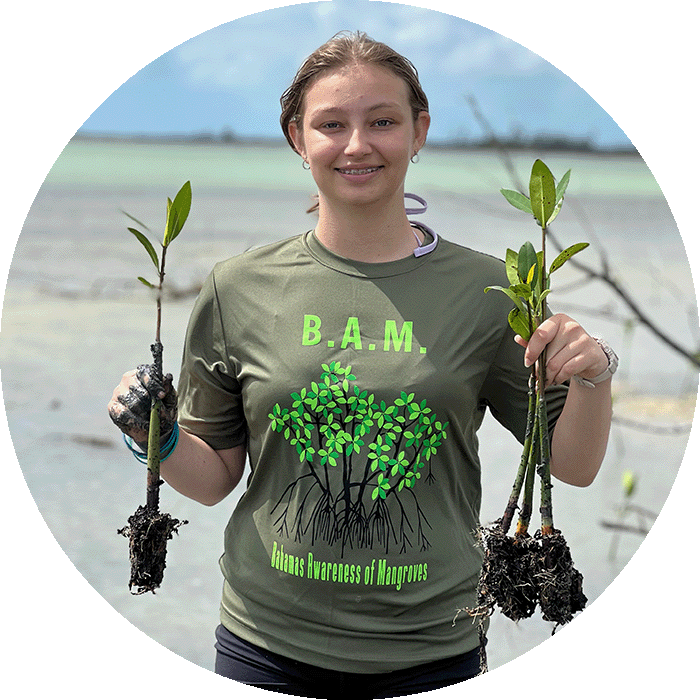
Over the years, hundreds of students have stepped into mangrove forests with us through the Jamaica Awareness of Mangroves in Nature (J.A.M.I.N.) program. I may not always remember every name, but I remember the expressions — the hesitation before stepping into thick mud, the laughter when someone loses a shoe, the look of surprise when they catch that unmistakable sulfur smell rising from the mangrove soil…

Read More

World Oceans Day: Protecting the Ecosystems That Protect Us

This World Oceans Day, the global community is being challenged to think differently about the ocean.

The 2026 World Oceans Day theme, “Reimagine: Beyond the World We Know, A New Relationship With Our Ocean,” invites us to recognize that the ocean is not something distant or separate from our lives. It regulates our climate, supports our economies, provides food for billions of people, and sustains the natural systems that make life on Earth possible.

Few places illustrate this connection more clearly than the coastal ecosystems that protect our shores and support marine life. While coral reefs, mangrove forests, and seagrass meadows are often…

Read More
Privacy Overview

This website uses cookies so that we can provide you with the best user experience possible. Cookie information is stored in your browser and performs functions such as recognising you when you return to our website and helping our team to understand which sections of the website you find most interesting and useful.  You can view our complete Privacy Policy here.

Strictly Necessary Cookies

Most of our cookies are used to improve website security and reduce spam. These cookies should be enabled at all times. They also enable us to save your preferences for cookie settings.

3rd Party Cookies

This website uses Google Analytics to collect anonymous information such as the number of visitors to the site, and the most popular pages. Keeping this cookie enabled helps us to improve our website.