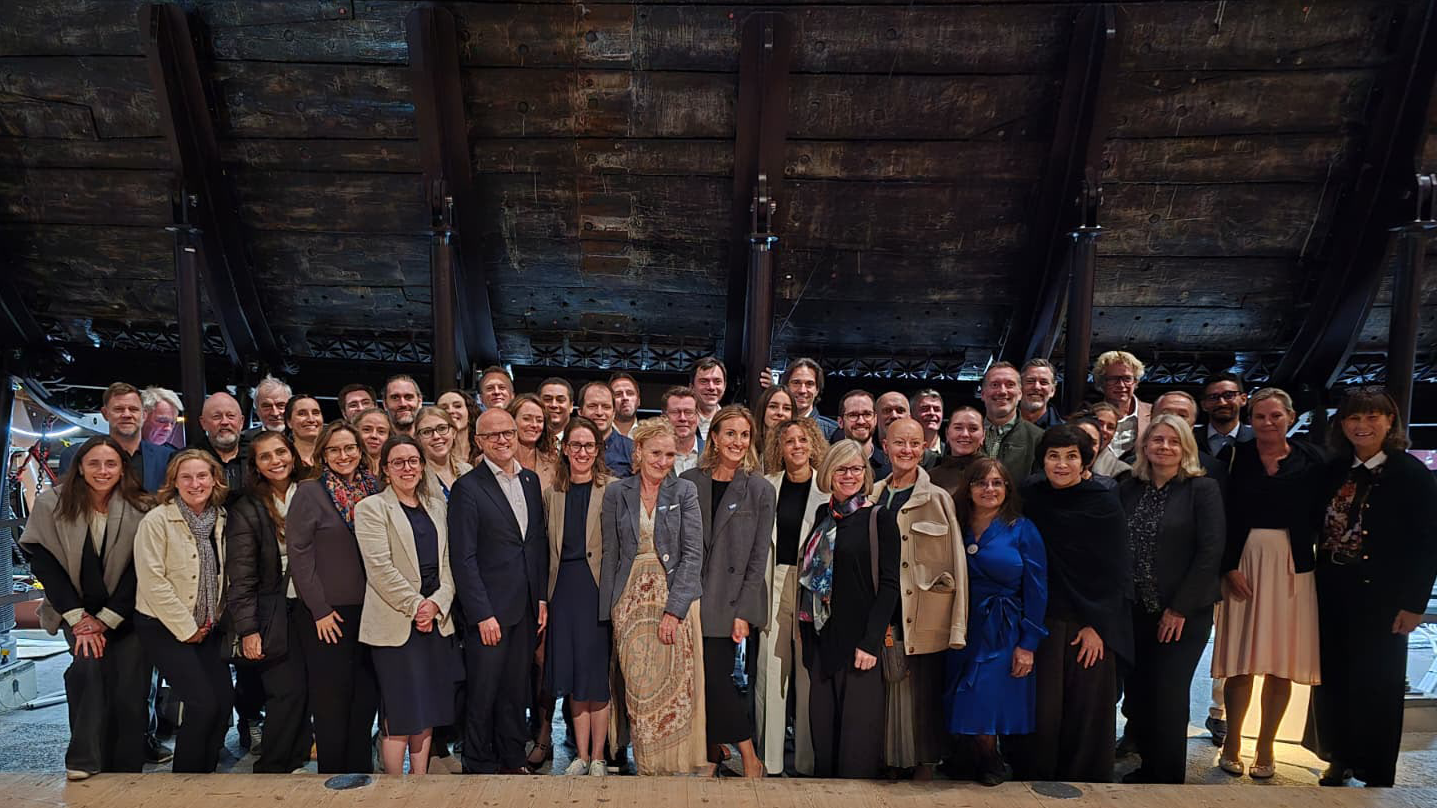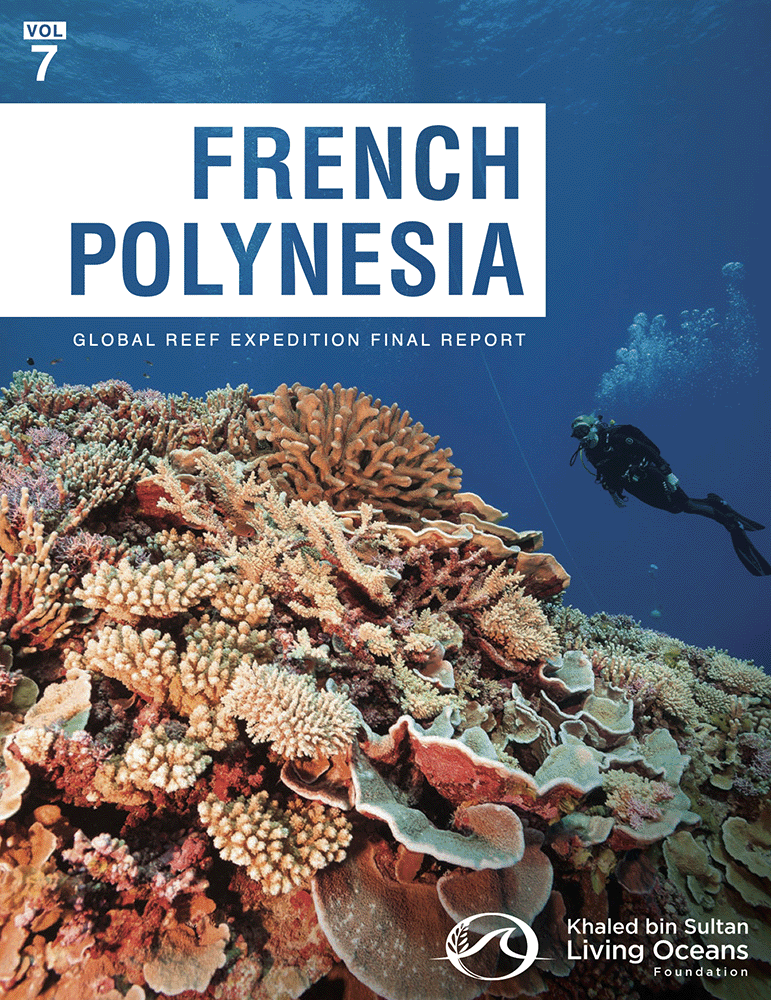
In April 2011 the Khaled bin Sultan Living Oceans Foundation embarked on the Global Reef Expedition—the largest coral reef survey and mapping expedition in history. As part of the 5-year Expedition, an international team of scientists worked with local partners to assess the health and resiliency of coral reefs in four archipelagos in the Overseas Lands of French Polynesia. They conducted standardized surveys of coral and fish communities and created high-resolution habitat maps of the seafloor. This was the largest comprehensive coral reef expedition ever conducted in French Polynesia.
The Global Reef Expedition: French Polynesia Final Report provides a comprehensive summary of the Foundation’s research findings from the Expedition, along with recommendations for preserving French Polynesia’s coral reefs into the future.
This unprecedented scientific mission involved 73 scientists from research organizations around the world who worked side by side with local experts and marine scientists to gather the highest quality data. Together, they mapped and surveyed reefs around 29 islands in the Society, Tuamotu, Gambier, and Austral Archipelagoes, covering over 8,000 km and conducting nearly 4,000 SCUBA surveys of French Polynesia’s coral reefs and associated fish communities. Some of the remote reefs they visited had never been studied by scientists before.
The Khaled bin Sultan Living Oceans Foundation hopes the data presented in this report will be used for the protection and preservation of French Polynesia’s coral reef ecosystems for generations to come.
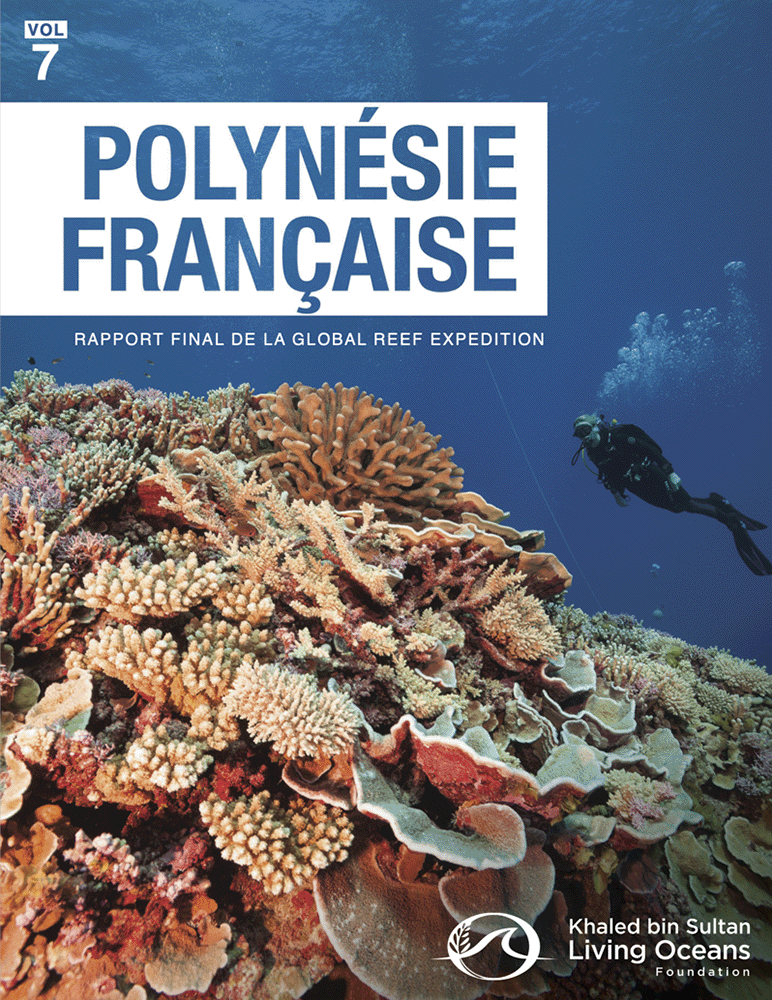
En avril 2011, la Khaled bin Sultan Living Oceans Foundation s’est lancée dans la Global Reef Expedition – la plus grande expédition d’étude et de cartographie du récif corallien dans l’histoire.
Dans le cadre de cette expédition de 5 ans, une équipe internationale de scientifiques a collaboré avec des partenaires locaux pour évaluer l’état de santé et la résilience des récifs coralliens dans quatre archipels de la collectivité d’outre-mer de la Polynésie française. Ensemble, ils ont effectué des relevés normalisés dans les communautés de coraux et de poissons et élaboré des cartes en haute résolution des habitats du plancher océanique. Les récifs coralliens de Polynésie française n’avaient jamais été étudiés de manière aussi exhaustive.
Le Rapport final pour la Polynésie française de la Global Reef Expedition offre un résumé complet des conclusions des recherches de la Fondation au cours de l’expédition, ainsi que des recommandations visant à préserver l’avenir des récifs coralliens de Polynésie française.
Cette mission scientifique sans précédent a impliqué 73 scientifiques issus d’organisations de recherche à travers le monde, qui ont travaillé de concert avec des experts locaux et des scientifiques marins polynésiens pour rassembler des données de la plus haute qualité. Ensemble, ils ont cartographié et étudié des récifs autour de 29 îles des archipels de la Société, des Tuamotu, des Gambier et des Australes, couvrant plus de 8 000 km et effectuant près de 4 000 missions sous-marines au sein des récifs coralliens de Polynésie française et des communautés de poissons qui y résident. Certains récifs reculés visités n’avaient encore jamais été étudiés par des scientifiques auparavant.
La Khaled bin Sultan Living Oceans Foundation espère que les données présentées dans ce rapport seront utilisées pour protéger et préserver les écosystèmes des récifs coralliens de Polynésie française pour les générations à venir.