Floating along above the reef on our coral surveys here in Tonga, we are occasionally distracted by flashes of bright colors crawling along the reef. These bright colors come from a group of sea slugs called nudibranchs. For the uninitiated, the idea of marine slugs may bring up unpleasant images of slimy creatures oozing along the seafloor, but to SCUBA divers and underwater photographers, these small creatures are one of the oceans most interesting subjects. “Nudibranch”, pronounced [Nudee-Brank] but often shortened to “nudi”, comes from the Latin words nudus and branchia which mean naked gill.
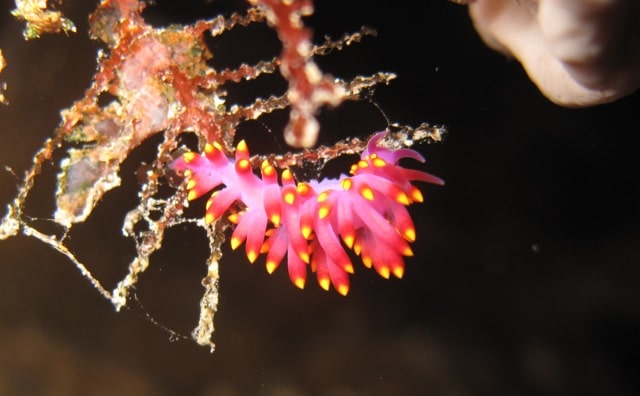
Aeloid nudibranch – Cuthona sibogae
Nudibranchs: Colorful Sea Slugs with Gills
Nudibranchs are grouped with snails and slugs in the class Gastropoda, but they differ from snails by having no shell, or at least a greatly reduced one. As their name implies, nudibranchs are further identifiable by their naked or exposed gills. The gills are easily visible on the backs of most nudibranchs. On dorids, the most common type of nudibranch, there is a feathery tuft of gills located on their back that they can draw into their body for protection if needed. Another common type of nudibranch, aeolids, has a series of soft spikes known as cerata along their backs. The cerata are not gills exactly, but as the aeolids absorb oxygen through their skin, the cerata increase the surface area of the nudi, helping them absorb more oxygen.
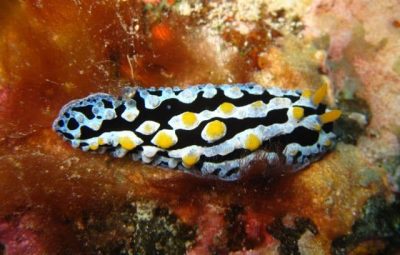
Dorid nudibranch, Phyllidia sp.
Nudibranchs display beautiful patterns in a diverse array of bright colors that have made them the target for marine photographers the world over, with a variety of websites, books, and ID guides created to help us better understand and identify them. While appealing to the human eye, the main two purposes of these nudi’s intricate patterns and bright colors are defense and camouflage.
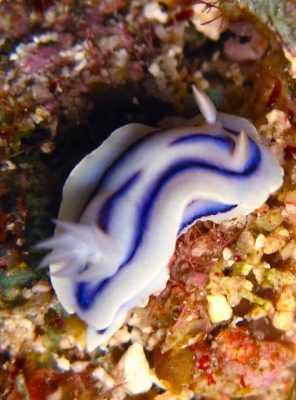
Lock’s chromodoris,Chromodoris lochi
Defense Mechanisms
Chemical Defenses: As soft-bodied organisms, having an effective defense mechanism is an important part of their survival. Their bright colors can also warn predators of the nudi’s chemical defenses, similar to the vibrant coloration of poisonous terrestrial animals like the poison dart frog that secrete toxins through their skin. Unlike the poison dart frog, nudibranchs typically do not produce their own chemical defenses, but obtain them from their food sources. Sponges, a popular food source for nudis, often contain either distasteful or poisonous chemicals in their tissues. After preying on a sponge, nudibranchs can then recycle and use these chemicals within their own bodies to decrease their palatability and deter predators from eating them.
Camouflage: Nudibranchs spend much of their time on the very animals they eat, brightly colored sponges and anemones. These slow moving animals usually incorporate the color of their prey into their tissue allowing them to be camouflaged when feeding.
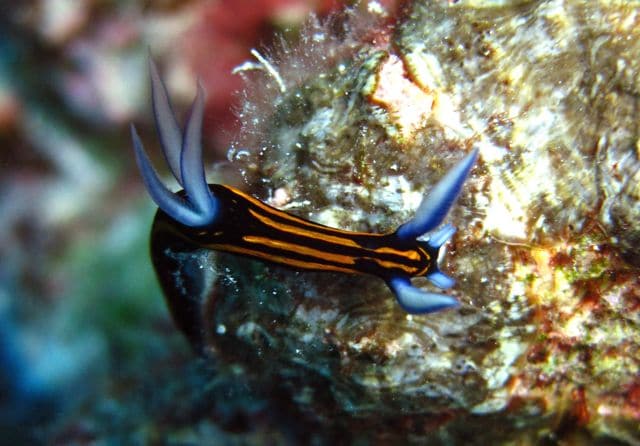
Slender roboastra nudibranch, Roboastra gracilis
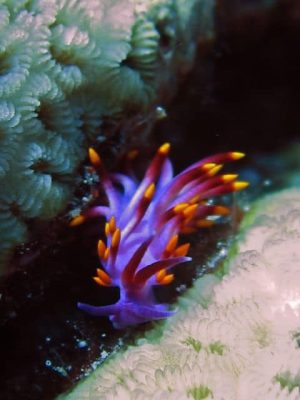
Aeloid nudibranch – Cuthona sibogae
Some nudibranchs that feed on cnidarians like jellyfish, corals, or anemones can ingest the nematocysts (stinging cells) characteristic of the phylum Cnidaria, and incorporate them into the tips of their cerata, allowing them to sting would-be predators as another defense mechanism.
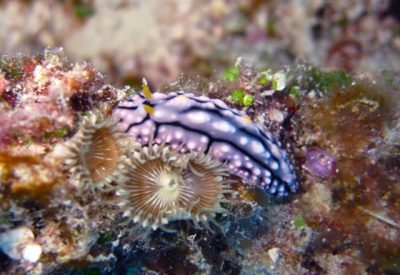
Dorid nudibranch, Phyllidia sp.
These small beautiful sea slugs are found throughout the world’s oceans from the arctic to the tropics. They can be found anywhere from shoreline tide pools down to some of the deepest reefs explored by SCUBA divers. As with many sea creatures, the diversity of nudibranchs is considered highest in the south Pacific, so hopefully we will keep finding these little guys as we continue exploring and researching these Tongan reefs.
Photos: 1-6 Nate Formel