 At the end of January, the Khaled Bin Sultan Living Oceans Foundation (KSLOF) released its report on the 2013 expedition to survey coral reef habitats throughout the Kingdom of Tonga.
The results showed that coral reef fish populations of important commercial and predatory species are dwindling—especially in Vava’u. Further studies, including the Rapid Assessment of Biodiversity in 2014 and the Vava’u Ocean Initiative Expedition in 2017, also showed declines in coral cover and coral health and diminishing targeted fish populations.
In 2014 and 2015, the coral reefs in Vava’u were subjected to a moderate bleaching event, where ocean temperatures remained over 29°C for six weeks. This event caused coral mortality at sites including ‘Eueiki, which was highlighted as an important coral reef area in KSLOF’s report. There have also been moderate outbreaks of Crown-of-Thorns (COTS) starfish over the last 12-16 months in Vava’u and active management with the Department of Environment and Ministry of Fisheries was conducted in 2019.
In Tonga, there has been lots of effort between communities, government, national, and international partners to implement ocean management programs that aim to restore and conserve marine species and the marine habitats as well as provide livelihood benefits.
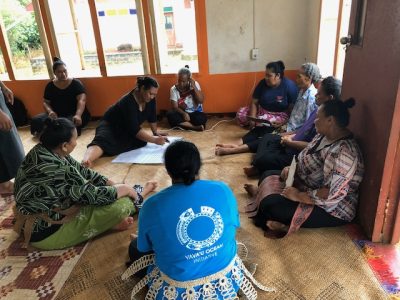
For us at the Vava’u Environmental Protection Association (VEPA), we have continued the focus on awareness and community programs, supporting the launch of the Vava’u Ocean Initiative in 2017 with the Waitt Institute, Department of Environment, Ministry of Fisheries and Ministry of Lands and Natural Resources to further support ocean management and conservation programs.
Through this partnership, we supported the development and implementation of 7 Specially Managed Areas (SMAs) in Vava’u and the national consultations for marine spatial planning (MSP) alongside Government partners.
SMAs are implemented through the Ministry of Fisheries and aim to provide a network of smaller conservation areas that can be critical to re-establishing coastal marine resources while at the same time supporting the livelihoods of the communities. As of this writing, there are currently 41 legislated SMAs in Tonga with 13 in Vava’u and more in the process. Both ‘Eueiki and Hunga alongside other Vava’u communities were established in 2016.
The Government of Tonga is also dedicated to broader ocean conservation with the development and implementation of Tonga’s Ocean Plan. Tonga’s Ocean Plan will designate 30% of Tonga’s exclusive economic zone (EEZ) as no-take areas and aims to sustainably manage the ocean area for the benefit of conservation, food security, livelihoods, and economic development.
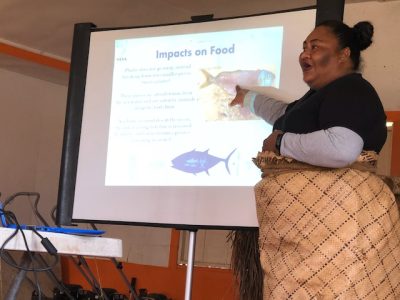 There have been great strides taken within Tonga, and this report by the Khaled bin Sultan Living Oceans Foundation will go a long way to support the monitoring and evaluation of marine conservation areas. It helps by providing a baseline status of coral reef habitats and can help with monitoring the ups and downs of coral reefs within Tonga.
It is fabulous that so many partnerships are working together, both near and far, to support conservation management efforts for the coral reefs and marine species in Tonga, while also maintaining strong commitments to support the livelihoods of fishers and communities that have survived and thrived off their oceans in the past.
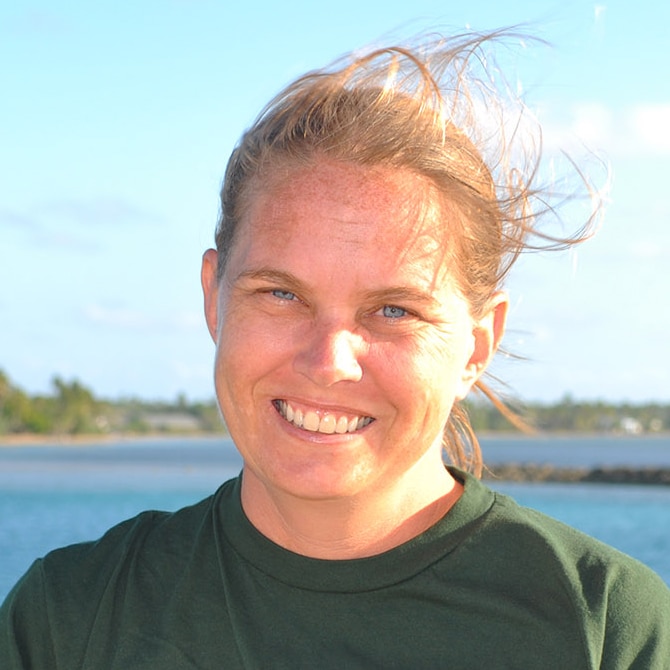 Karen Stone runs the day-to-day operations of the Vava’u Environmental Protection Association (VEPA) and was one of the local participants who joined us on the Global Reef Expedition research mission to the Kingdom of Tonga.