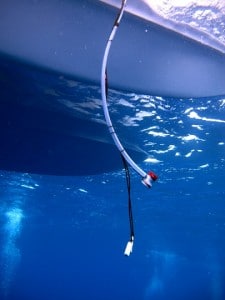
Acidic Oceans
“Ocean acidification” is a term you may have heard in relation to coral reefs. As carbon dioxide increases in the air, the amount in the ocean goes up as well. The increased carbon dioxide makes the ocean water more acidic,


“Ocean acidification” is a term you may have heard in relation to coral reefs. As carbon dioxide increases in the air, the amount in the ocean goes up as well. The increased carbon dioxide makes the ocean water more acidic,
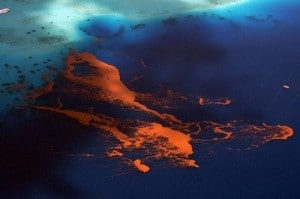
Like other animals, corals need to reproduce to survive. Unlike most other animals, corals are attached to the seafloor and cannot move around to find a mate for coral reproduction. To address this challenge, corals have developed several alternative reproductive
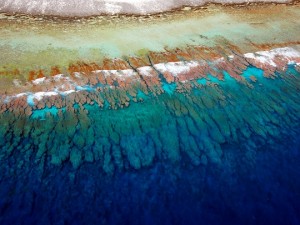
Mention coral reefs and most people think of sweeping landscapes of corals, sponges, and fish. While those do exist in Hao Atoll, researchers are also seeing the reef through different lenses. Satellite Imagery for Reef Habitats and Geomorphology of Coral
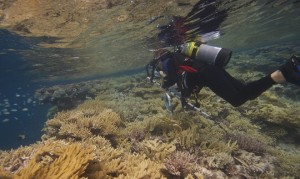
Research dives can be distilled down to lists of what is seen and what is not seen. Surveying the reef means figuring out what is there and what is missing. For the last few days, the science team has been
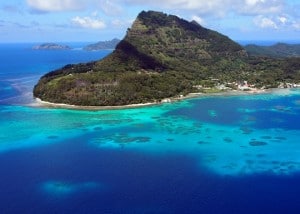
After a 3.5 hour flight on the Golden Eye, we reached Hao to begin our third research mission in French Polynesia at Gambier. Hao is a large (56 km X 15 km), low-lying coral atoll at the southeastern end of

As the year draws to a close we thought we’d look back at what we’ve been doing over the last twelve months. As part of our multi-year Global Reef Expedition we spent 2013 conducting field research in the Pacific Ocean.
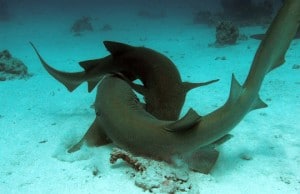
To state it simply, sharks are interesting. So much so that entire weeks of television are devoted to them. There are a variety of sharks found around the world from the docile wobbegong to the great white shark. The Largest
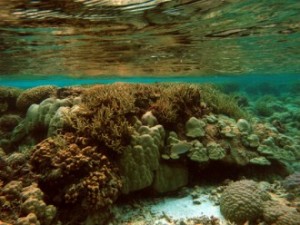
We have had many interesting dives within the lagoons around the Tuamotu Archipelago, but the Fakarava lagoonal habitats have been the most unique. There are thousands of small patch reefs that extend from the water’s surface to depths as great as
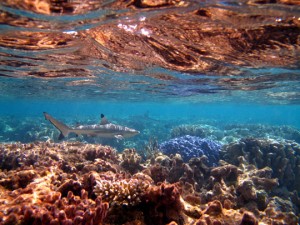
Fish communities in the Tuamotu Archipelago have been much more diverse than in Society Islands, especially on the fore reef. The fish are not only more abundant, but they are larger overall, meaning greater biomass, which is good for reefs
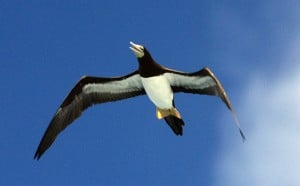
The Global Reef Expedition surveys aim to document what is happening on our coral reefs below water level, but on transit to our dive sites and in between dives, it is hard not to notice the abundant sea birds that