search-icon
Acidic Oceans

“Ocean acidification” is a term you may have heard in relation to coral reefs. As carbon dioxide increases in the air, the amount in the ocean goes up as well. The increased carbon dioxide makes the ocean water more acidic, making it more difficult for corals to grow their calcium carbonate skeletons. This has several potential negative effects on the coral reef environment. In order to better understand the effects ocean acidification is having on our oceans, a researcher on each mission looks at the connection between water chemistry and coral growth rate.

Studying growth rates of corals like these (Porites) will help us to understand how ocean acidification is affecting coral growth rate.

Assessing Ocean Acidification in the Gambier Islands of French Polynesia

Dr. Ian Enochs works for the University of Miami and NOAA and is helping to assess the impact of higher ocean acidity on the corals of French Polynesia. He has constructed an instrument that measures carbon dioxide, pH, temperature and salinity!
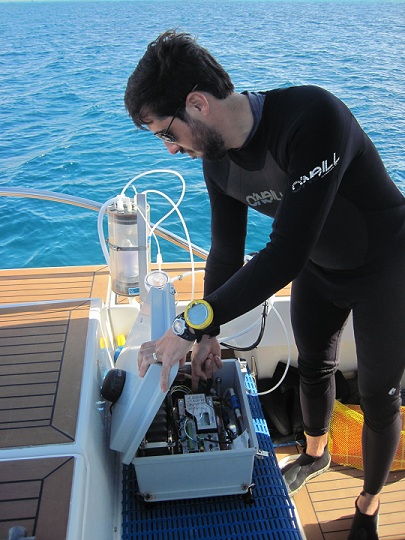
 Dr. Ian Enochs prepares his equipment to measure the water’s chemistry at each dive site.
Dr. Ian Enochs prepares his equipment to measure the water chemistry and ocean acidity at each dive site.


Before every dive, he places a water pump connected to a surface unit over the side of the dive boat to measure the water chemistry. Dr. Enochs and his collaborators have conducted some exciting ocean acidification research in the past and we can’t wait to see what they find during the Global Reef Expedition.
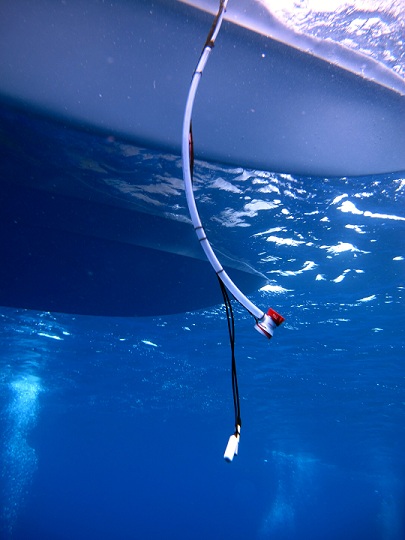
The water pump is deployed during every dive.

 (Photos 1-3 by Dr. Brian Beck)

Related Posts

2025-2026 B.A.M. Student Voices

Throughout the Bahamas Awareness of Mangroves (B.A.M.) and Jamaica Awareness of Mangroves in Nature (J.A.M.I.N.) programs, we evaluate each phase of the mangrove education and restoration process to better understand how students are learning, growing, and connecting with their coastal environments.

Before the programs begin, students share what they already know about mangroves and how they feel about them. As the program progresses, we continue to gather feedback to see how their knowledge evolves from identifying mangrove species and understanding food webs to recognizing the role mangroves play in coastal protection and climate change mitigation.

But the surveys go beyond science content.

We also ask students…

Read More

Ten Years of B.A.M.: Rooted in Partnership, Growing in Purpose

Ten years ago, the Bahamas Awareness of Mangroves (B.A.M.) program began with a simple but meaningful commitment: to connect Bahamian students with the mangrove ecosystems that shape and protect their island home.

Since 2015, B.A.M. has been implemented in partnership with Friends of the Environment, whose dedication to environmental stewardship in Abaco has made this program possible year after year. Together, we have worked alongside Patrick J. Bethel High School and Forest Heights Academy to bring hands-on mangrove science into classrooms and out into the field.

What makes ten years remarkable is not just longevity — it is consistency…

Read More