One of my favorite parts of the Jamaica Awareness of Mangroves in Nature (J.A.M.I.N.) and the Bahamas Awareness in Mangroves (B.A.M.) programs is teaching students about the mangrove food web. In the current phase of our Mangrove Education and Restoration programs, we delve into the intricate dynamics of matter and energy within the mangrove ecosystem, aligning with each country’s high school science curriculum.
Our week kicks off in the classroom with an in-depth discussion of food web concepts, using mangrove ecosystems as a prime example. We cover how organisms acquire energy, explore the trophic levels in an ecosystem, delve into the intricacies of food chains and food webs, and examine the flow of matter and energy through an ecosystem. Although students are generally familiar with these concepts, it is an excellent review before their standardized exams.
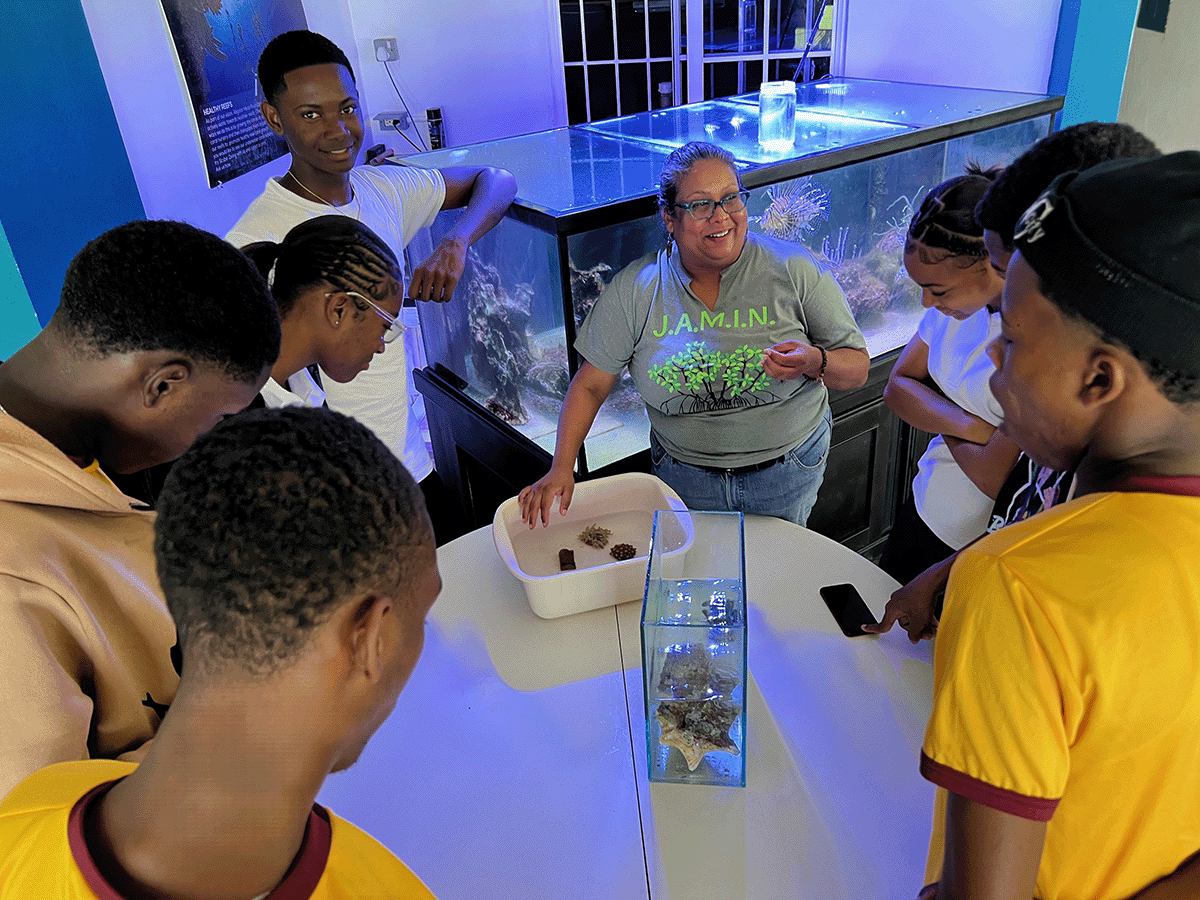
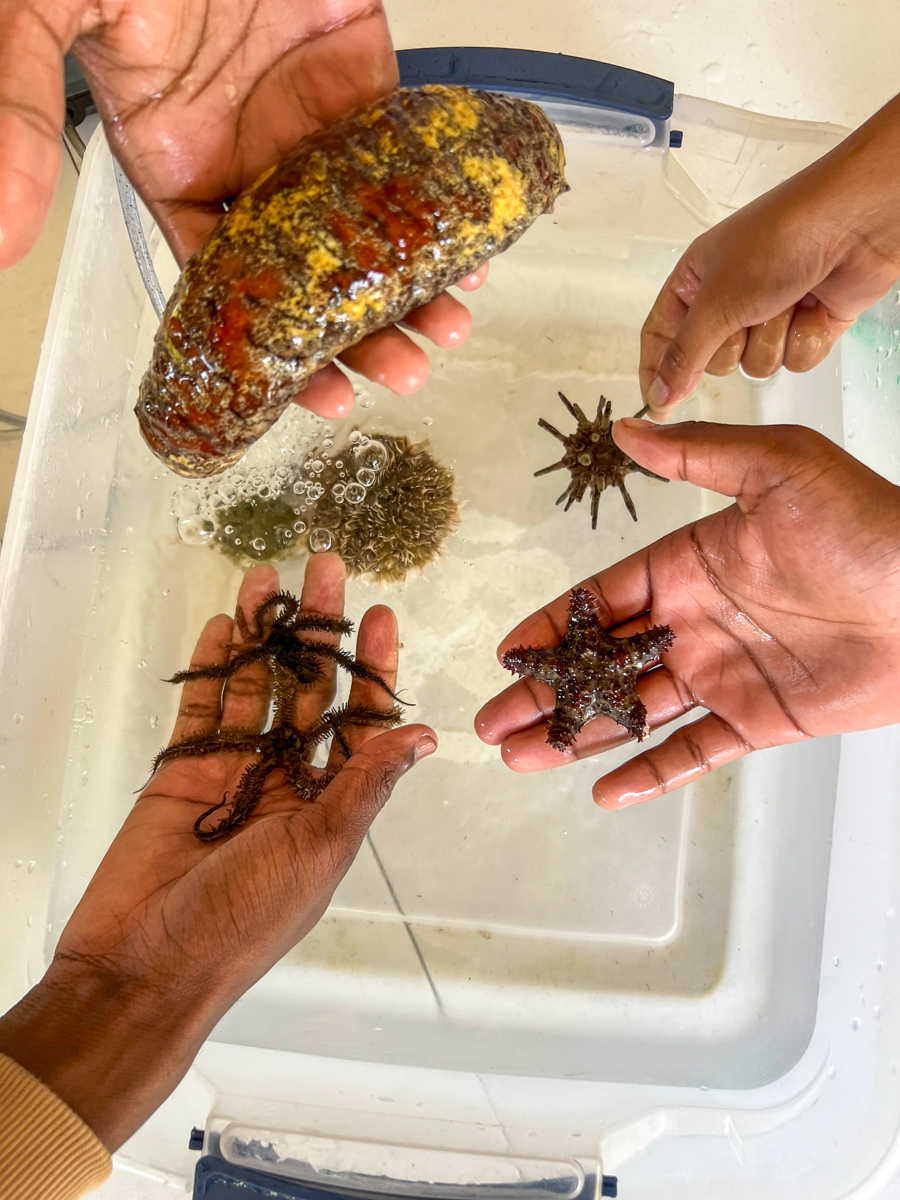
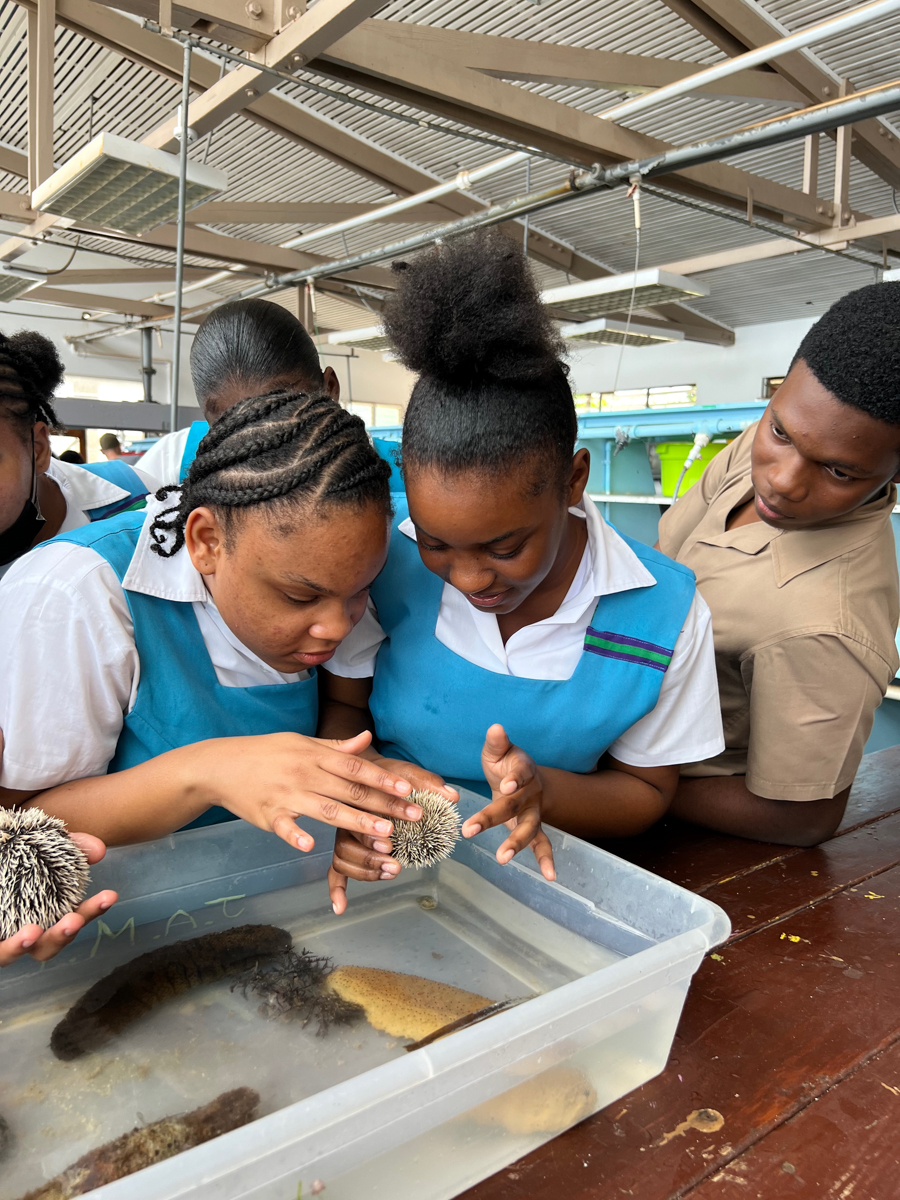
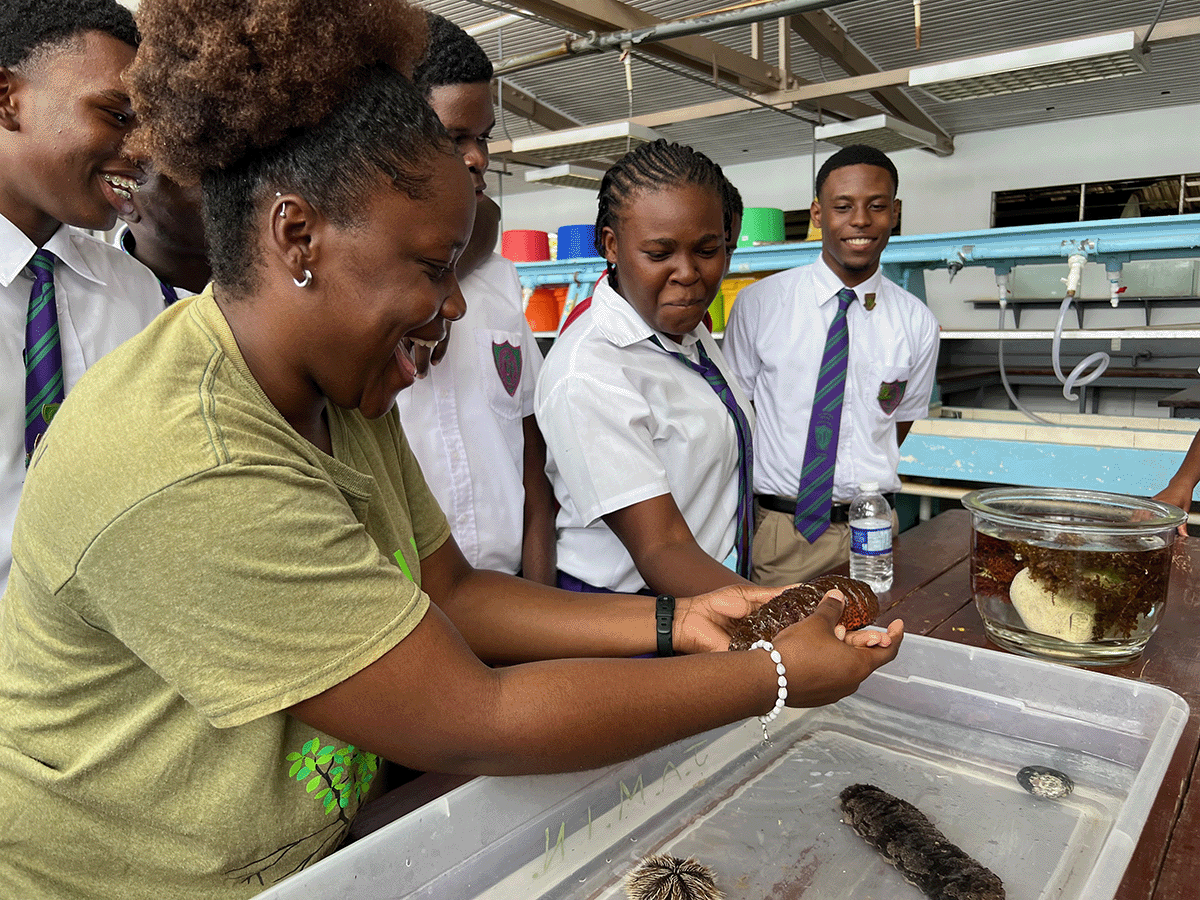
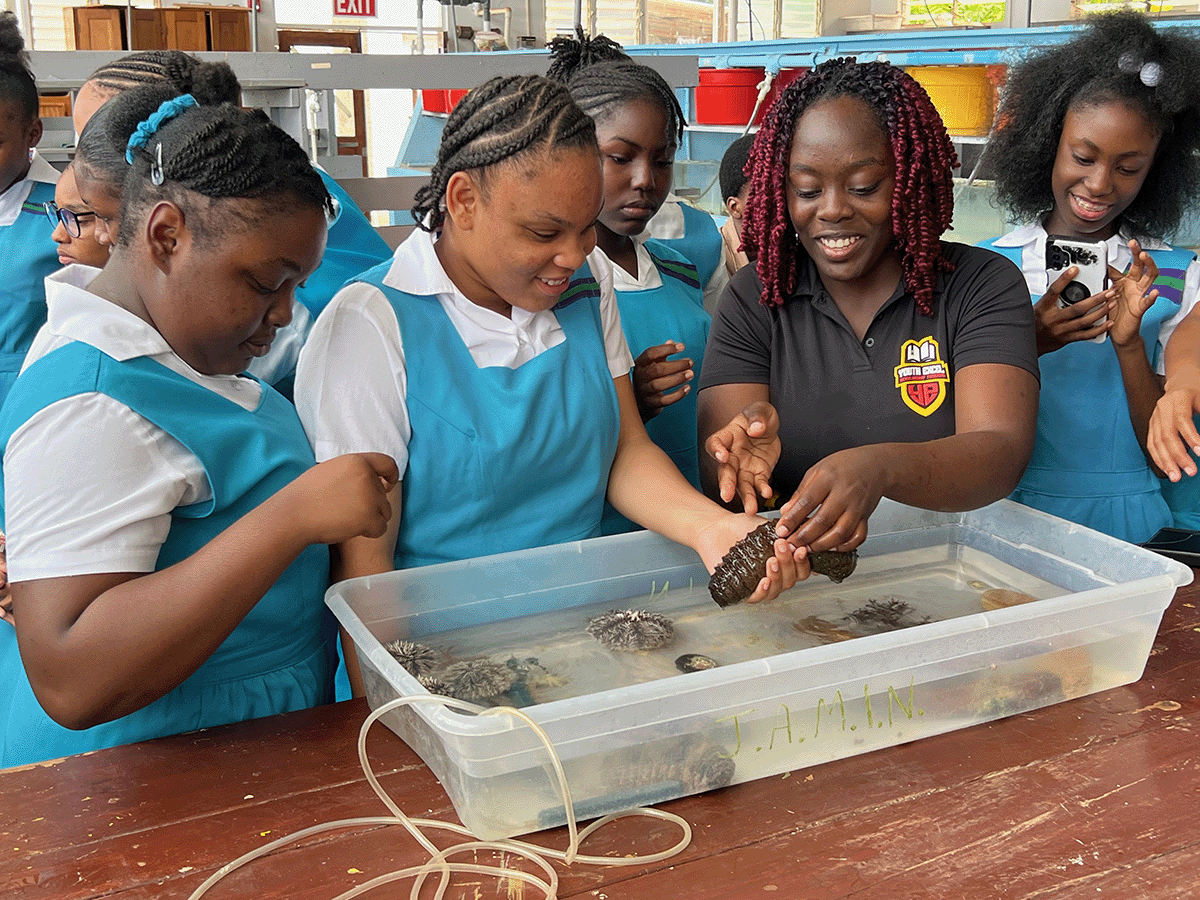
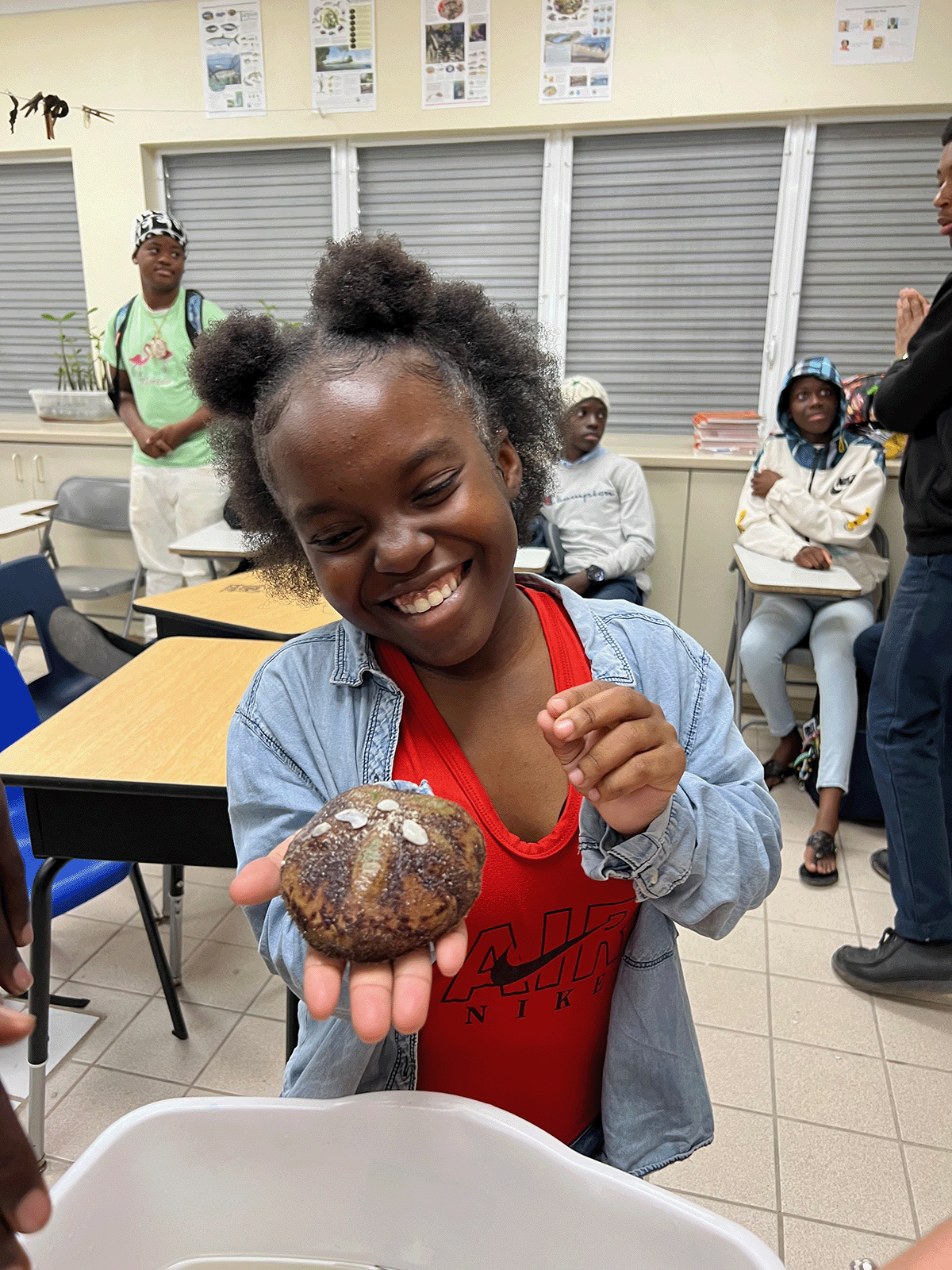
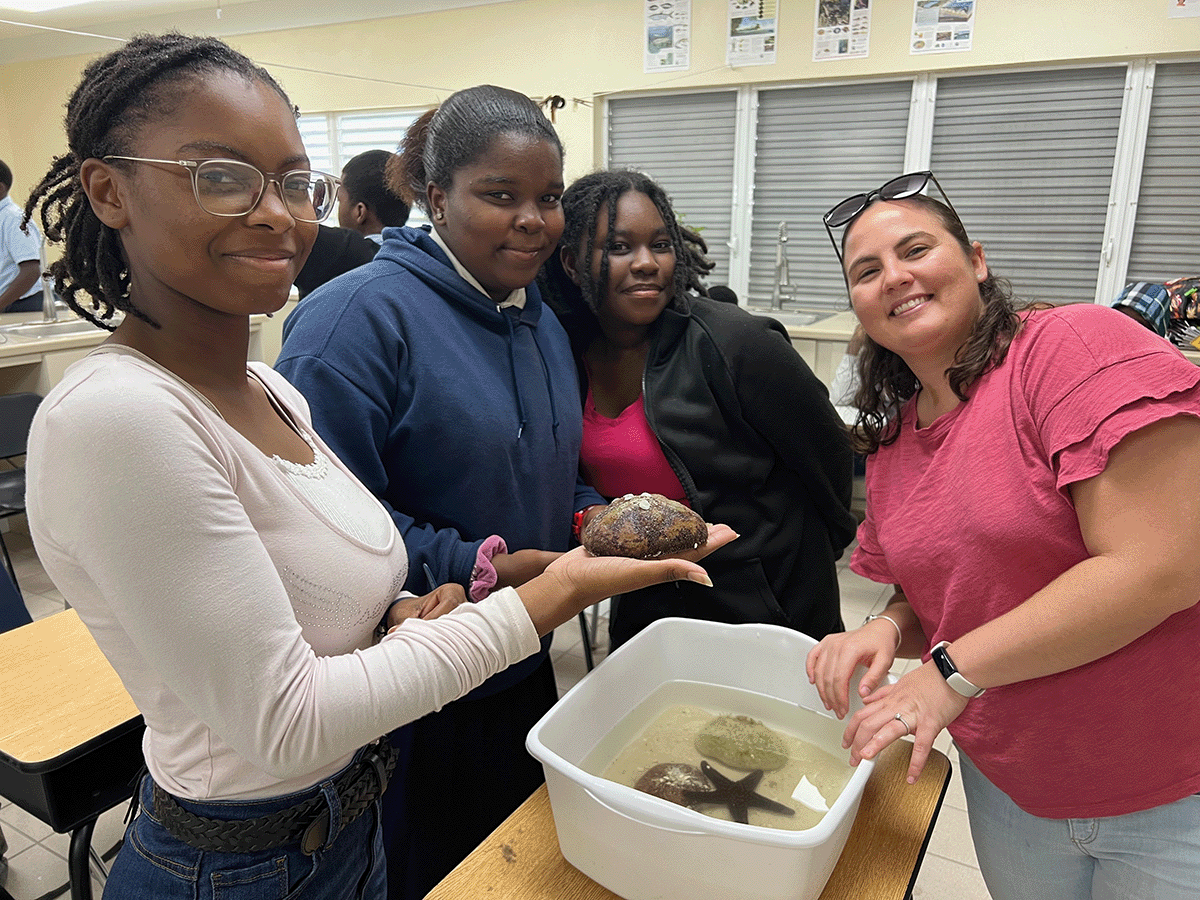
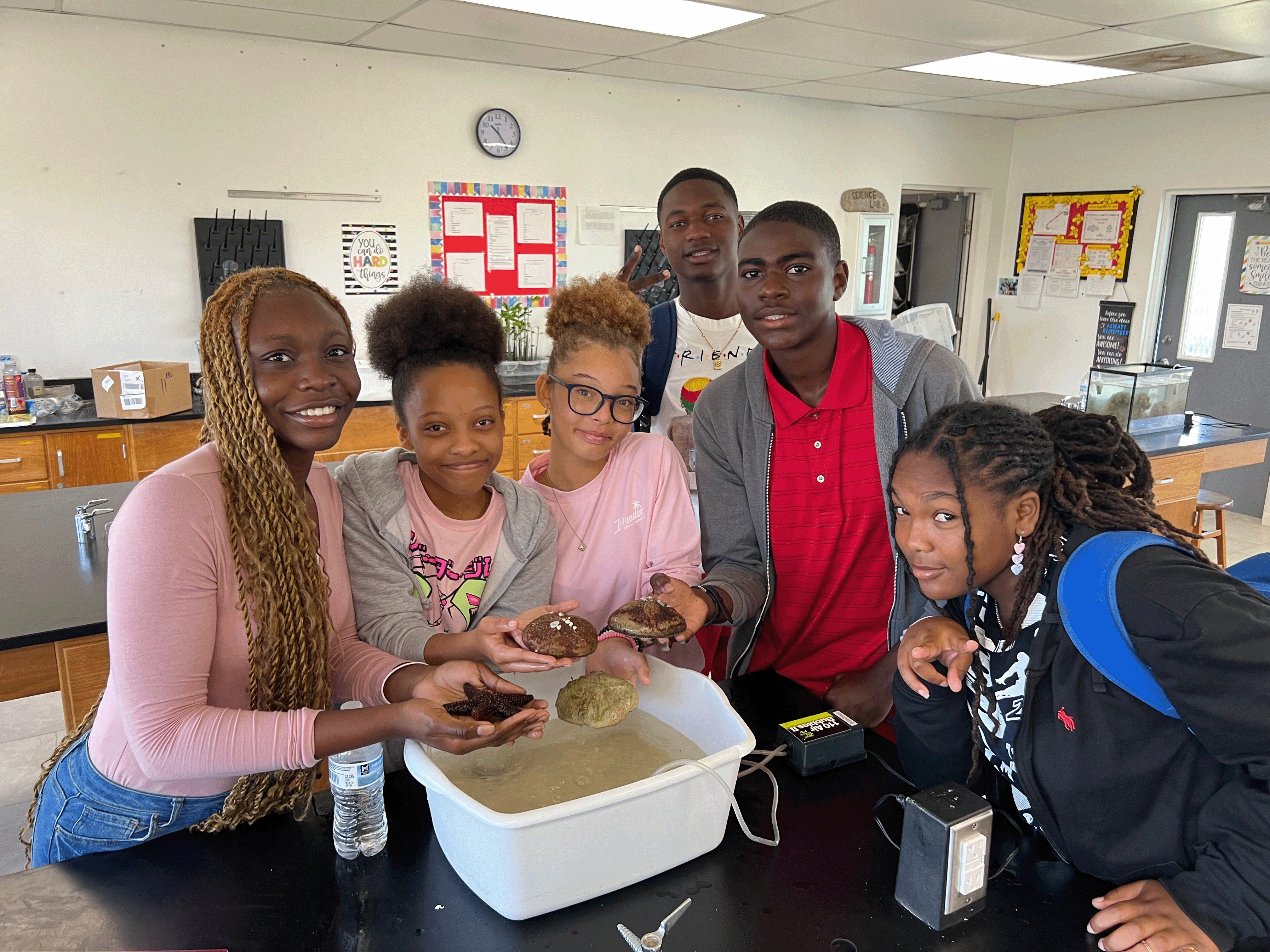
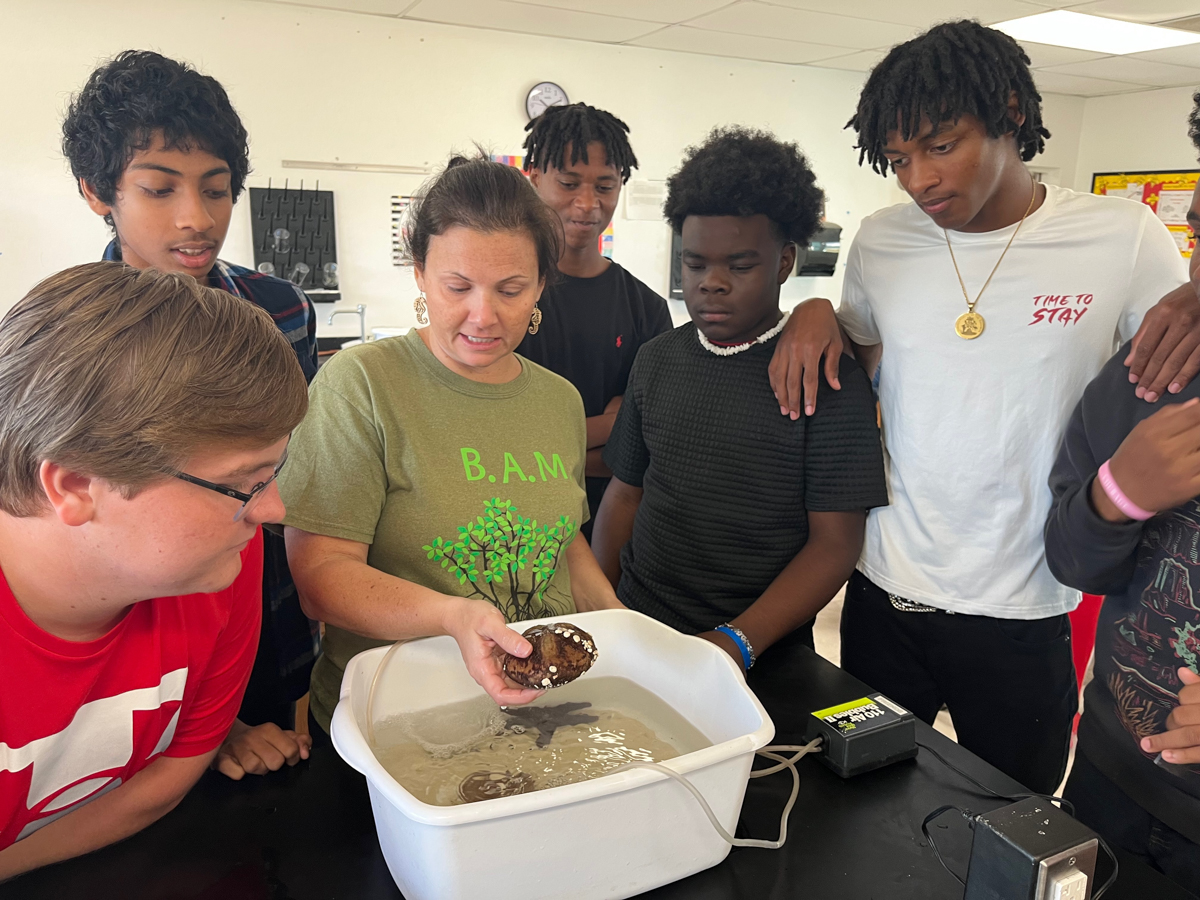
Moving on to the next activity, we transform the complexity of the classification system, a part of the curriculum, into an engaging experience for students. We revisit the classification system, emphasizing the reasons behind scientists’ classification of organisms. Exploring a few marine phyla and the distinct characteristics of organisms within them, we bring in live animals for show-and-tell. This interactive session highlights similarities in characteristics among animals in various marine phyla, accompanied by interesting behavioral facts about each creature.
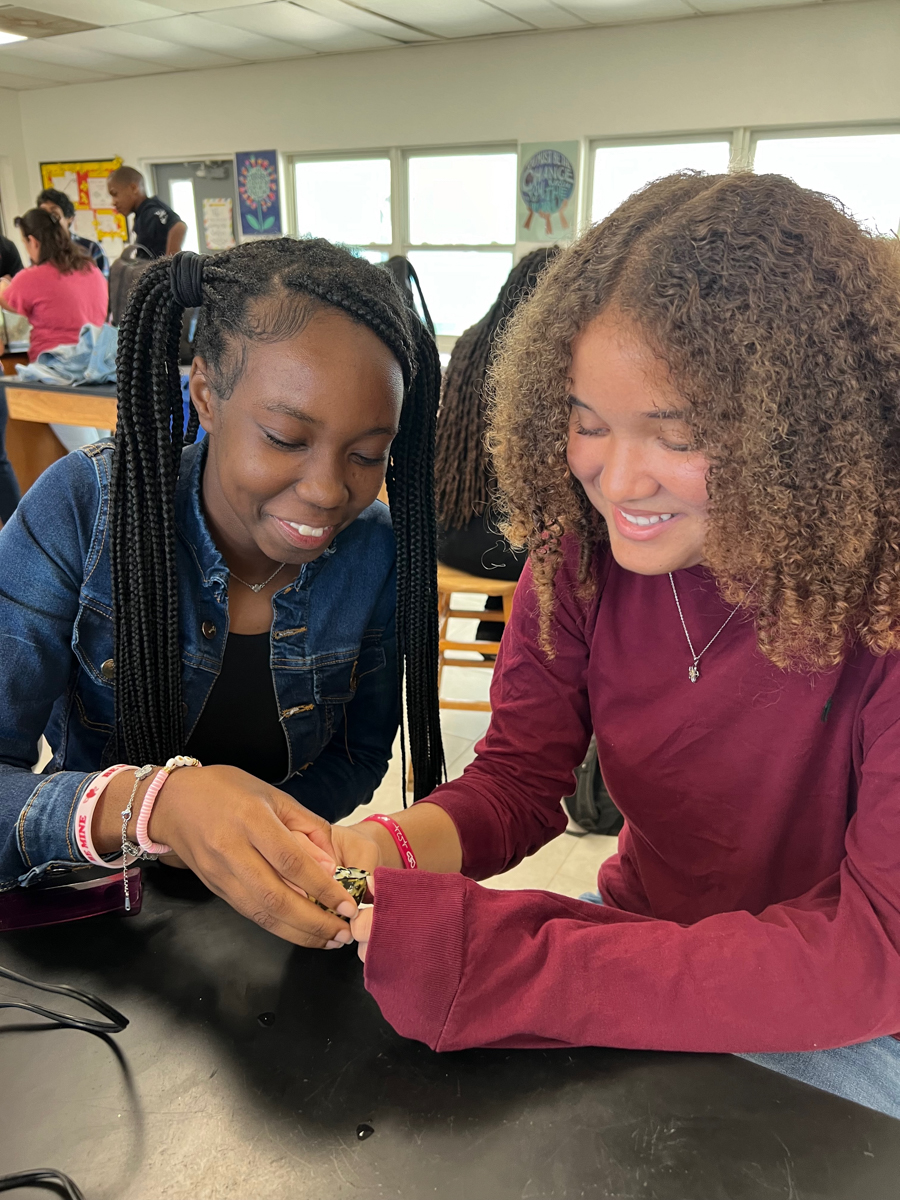
Finally, we conclude the week by constructing a physical food web. Each student is assigned an organism from the mangrove food web, armed with a ball of yarn; they toss it to the organism for which they believe it provides energy. Initially forming simple food chains, we gradually build upon them until each student is connected by at least one string, illustrating the creation of a comprehensive food web. We then discuss disruptions to the food web, particularly human disturbances to the mangroves, addressing threats previously discussed in the program and introducing new concepts regarding invasive species.
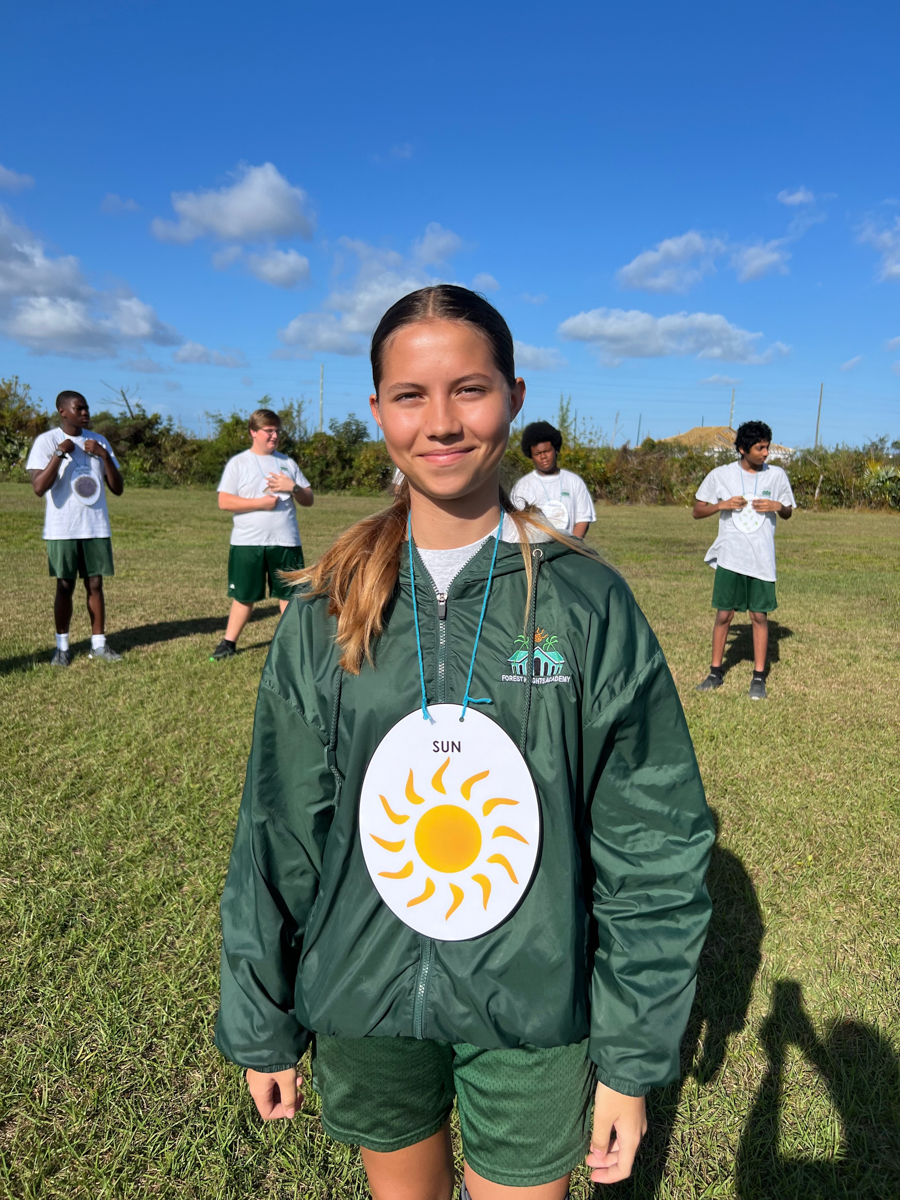
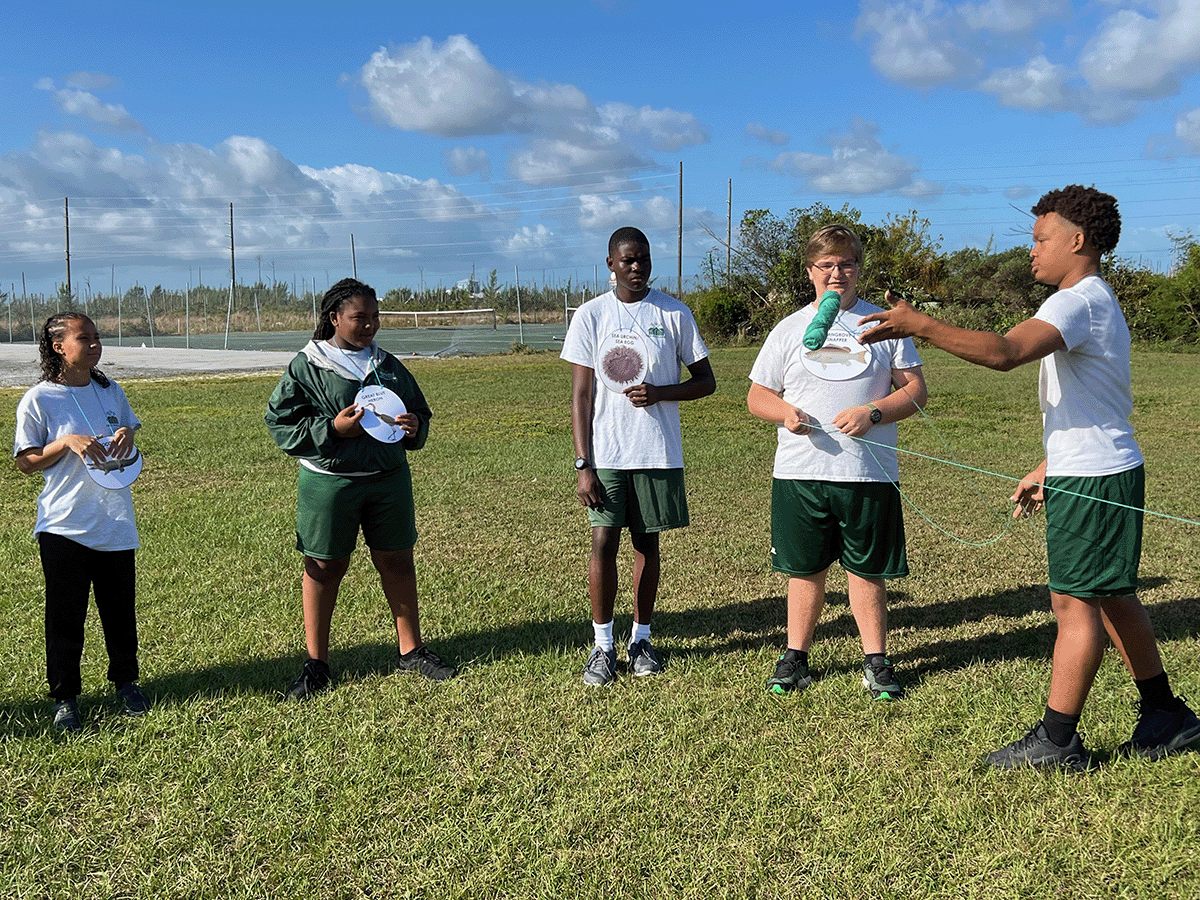
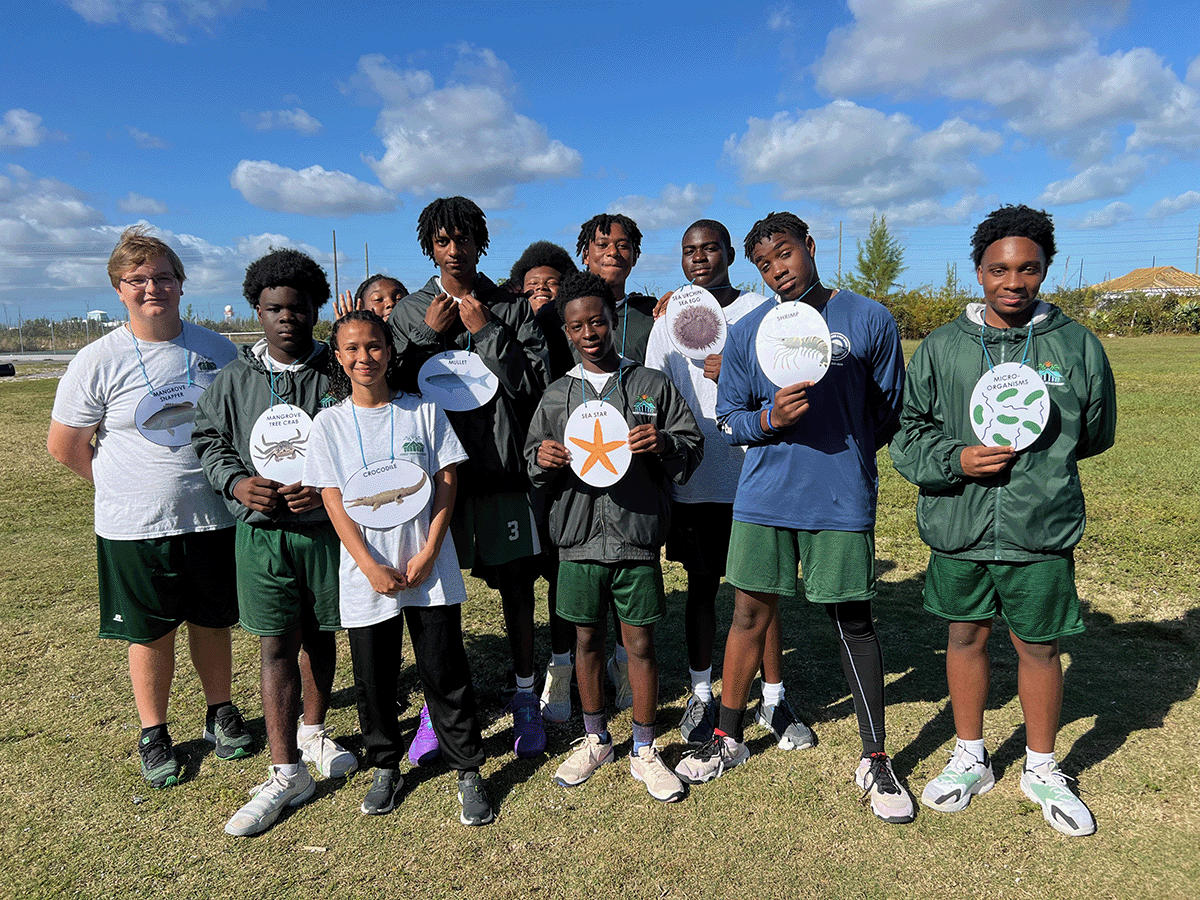
As we bring this week of mangrove exploration to students, the enthusiasm and knowledge we share of the mangrove forest helps to lay a strong foundation for the students as they become future environmental stewards. They can see how interconnected life is within the mangrove ecosystem, and how important mangrove conservation is to their community.
But our journey doesn’t end here – we invite you to continue following our work on the Bahamas Awareness in Mangroves (B.A.M.) and Jamaica Awareness of Mangroves in Nature (J.A.M.I.N.) programs. Stay tuned for more blogs in the coming days.
Dive Deeper
Interested in learning more about classification and food webs? Our Education Portal features comprehensive units dedicated to these subjects. Explore and enhance your knowledge with our educational resources.