The Khaled bin Sultan Living Oceans Foundation is honored to partner with the Global Coral Reef Monitoring Network (GCRMN) on the upcoming “Status of Coral Reefs of the World” report, which we plan to release next year. This report is an essential tool in the global effort to understand and protect coral reef ecosystems, and we are deeply committed to supporting its development.
As part of this collaboration, the Living Oceans Foundation has shared valuable findings from our Global Reef Expedition, the largest coral reef survey and mapping expedition ever conducted. The data collected during this expedition spans over a decade and includes reefs from around the globe, offering a unique and extensive perspective on the state of coral reefs at a critical point in time. By contributing this data, we are not only supporting GCRMN’s efforts to assess the world’s coral reefs, but also fulfilling our commitment to conducting Science Without Borders®.
In addition to sharing data, the Foundation is actively contributing our advice and expertise to the GCRMN for this upcoming report. Our CEO, Alexandra Dempsey, is working closely with an international cohort of experts to ensure the report provides the most accurate and up-to-date assessment of coral reef health. This collaborative approach underscores the importance of global partnerships in addressing the challenges faced by coral reefs, which are increasingly under threat from climate change, pollution, and overfishing.
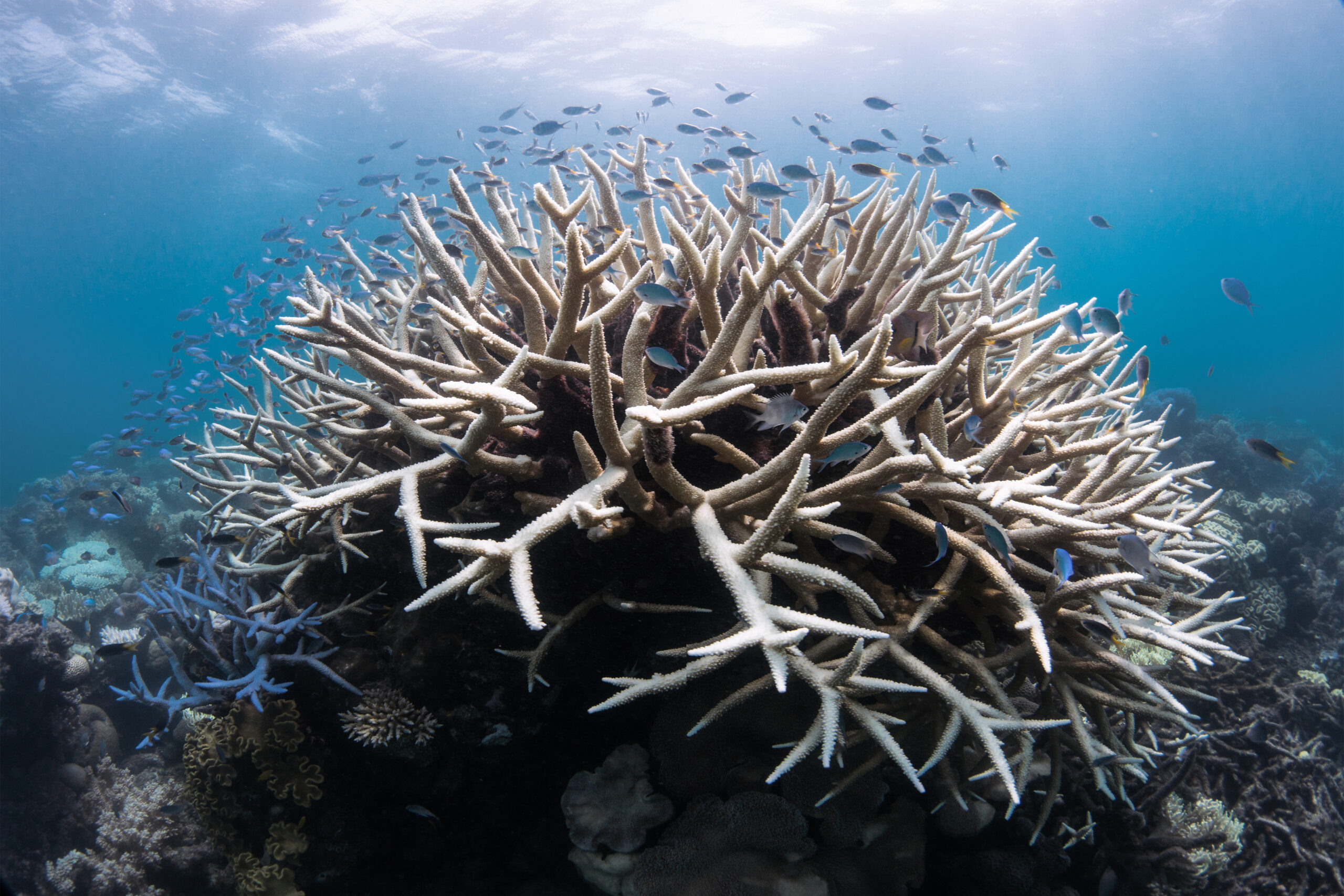
The last “Status of Coral Reefs of the World” report, released in 2021, highlighted the alarming rate of coral decline around the world. This report was based on a quantitative analysis of a global dataset compiled from monitoring data contributed by over 300 network members. This dataset covered more than 40 years of observations from 12,000 sites across 73 countries and provided critical insights into the health of coral reefs on a global scale. The upcoming 2025 report will build on this foundation, offering new insights and tracking changes in coral and algal cover over the past five years. To achieve the most comprehensive and accurate assessment possible, the GCRMN has launched a call for data contributions from researchers, institutions, and organizations worldwide.
The Khaled bin Sultan Living Oceans Foundation has already made significant contributions to this effort, but we encourage others to join us. By sharing your data, you will be playing a crucial role in helping to shape the global understanding of coral reef health and guiding future conservation efforts. For more information on how to contribute, please visit the GCRMN’s Guide for Contributors.
Together, we can make a difference in preserving the world’s coral reefs for future generations. The Khaled bin Sultan Living Oceans Foundation remains committed to this cause, and we look forward to continuing our work with GCRMN and the global community in the fight to save our ocean’s most precious ecosystems.
Status of the Coral Reefs of the World: 2025
The Global Coral Reef Monitoring Network (GCRMN) is an operational network of the International Coral Reef Initiative that aims to provide the best available scientific information on the status and trends of coral reef ecosystems for their conservation and management. The GCRMN is a global network of scientists, managers, and organizations that monitor the condition of coral reefs throughout the world. GCRMN’s upcoming 2025 Status of the Coral Reefs of the World report will describe the temporal trends of hard coral and algal cover (ideally at the resolution of macroalgae, turf algae, and coralline algae) at the global level, providing an update of the “Status of Coral Reefs of the World: 2020” report.