Expedition Log: Caribbean Mangroves – Day 1
I’ve just touched down in sunny Abaco, Bahamas and it is absolutely beautiful here. There are white sandy beaches, turquoise-colored ocean, palm trees, and mangrove trees. Yes, mangrove trees.
Mangroves are trees or shrubs that can tolerate living in salty conditions in coastal areas. Each species has specialized adaptations that allow them to get rid of the excess salt from the sea water. Mangroves are a really important ecosystem that provides billions of dollars in goods and services each year to individual countries. Not to mention, they are responsible for filtering nutrients and toxins out of the water, providing good water quality to coral reefs and seagrass ecosystems. These trees are the reason that I’m in Abaco.
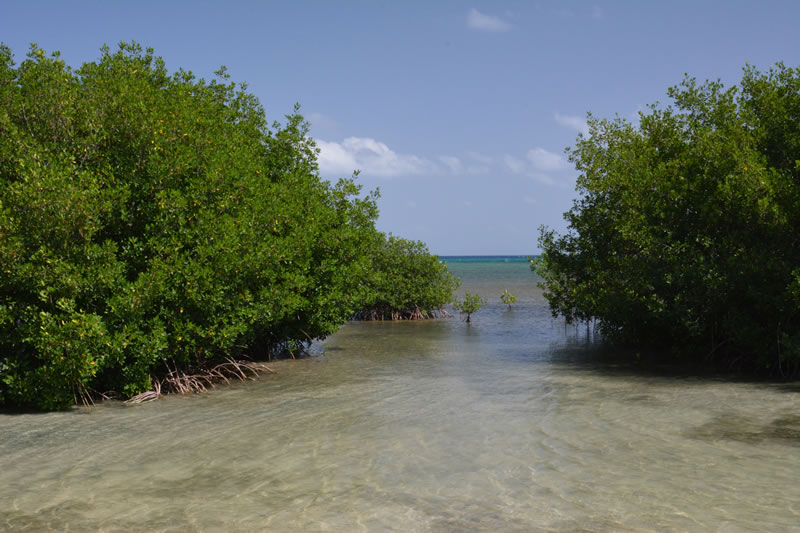
Red mangrove trees.
Last school year, we initiated a Mangrove Education and Restoration pilot program in Falmouth, Jamaica called the Jamaican Awareness of Mangroves in Nature (J.A.M.I.N.). I’m happy to announce that we have expanded the program this year to include schools in The Bahamas.
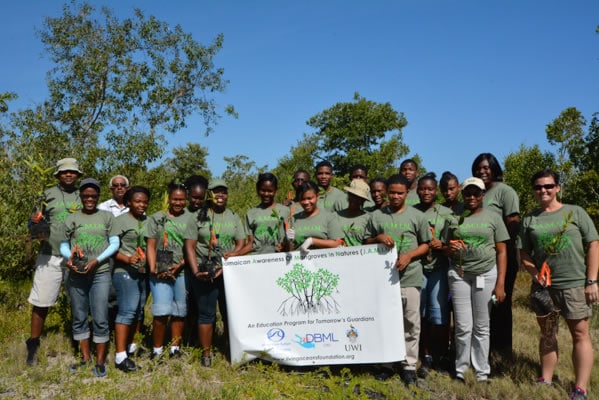
William Knibb High School students at the end of the J.A.M.I.N. pilot project.
Over the next two weeks, I will visit two schools in each country to implement the Mangrove Education and Restoration Programs with the help of our partners, Friends of the Environment (FRIENDS) and the University of the West Indies Discovery Bay Marine Lab (DBML).
We will provide classrooms with lesson plans and classroom activities as well as funding and support to take students on field trips to mangrove forests. The students will get a hands-on experience in the mangrove ecosystem and learn what they could do to restore it. Throughout the duration of the project, students will grow mangrove propagules (the mangrove equivalent of a seed), in their classroom and at the end of the school year, they will return to a local mangrove forest where they will plant their mangroves, helping to restore the ecosystem.
We’ll be sending updates about our Mangrove Education & Restoration projects over the next few weeks, until then, enjoy these pictures from last year’s project:
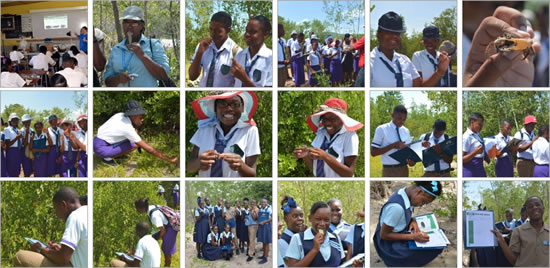
Photos by Amy Heemsoth.