Roko Laitia Raloa, Assistant Roko Tui Lau at the Lau Provincial Council’s Office, and I are greeted at the boat tender by the head teacher of the primary school to which we are presenting our talk on Fiji coral reef awareness. Walking up to the village, we are welcomed by loud, harmonious singing pouring out of a school classroom. They continue to sing as we remove our shoes, enter the classroom, and take a seat. It’s been the same procedure as the twelve schools prior to this one, but I’m still smiling from ear to ear and the loudness and clarity of the singing never ceases to amaze me.
Raising Fiji Coral Reef Awareness
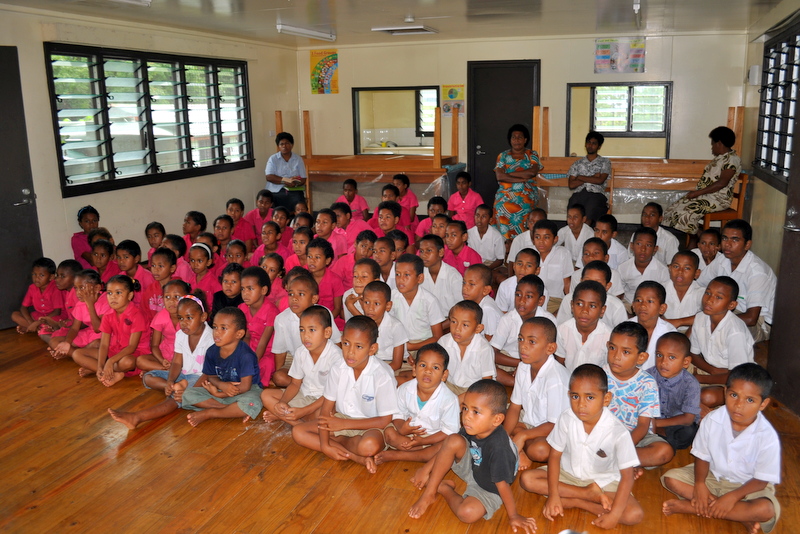
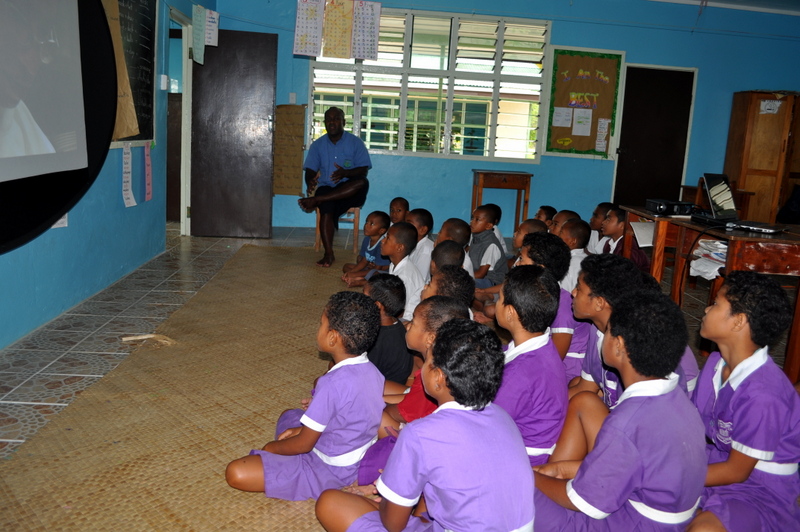
Students in identical uniforms from kindergarten through eighth grade sit side-by-side as we are formally welcomed by the principal. We are given permission to set up our projector, screen, and computer. Our generator is cranked on as we are nearing the end of our preparation. The students are anxious and a young female teacher leans over and says, “We don’t get visitors very often. The students are excited. ‘Ey?”
I nod my head and smile at the students. Roko and I are introduced and we begin our usual routine – I speak and Roko translates to the students. He’s a natural teacher asking questions and engaging the students as he translates. We both have the routine down so well that we know when the other one is going to speak or pause.
We begin our talk on Fiji coral reef awareness with information about the Khaled bin Sultan Living Oceans Foundation, followed by two short films that showcase the M/Y Golden Shadow and the coral reef research that we are conducting while scuba diving. It’s seems to be an effective way to show the students what we are doing.
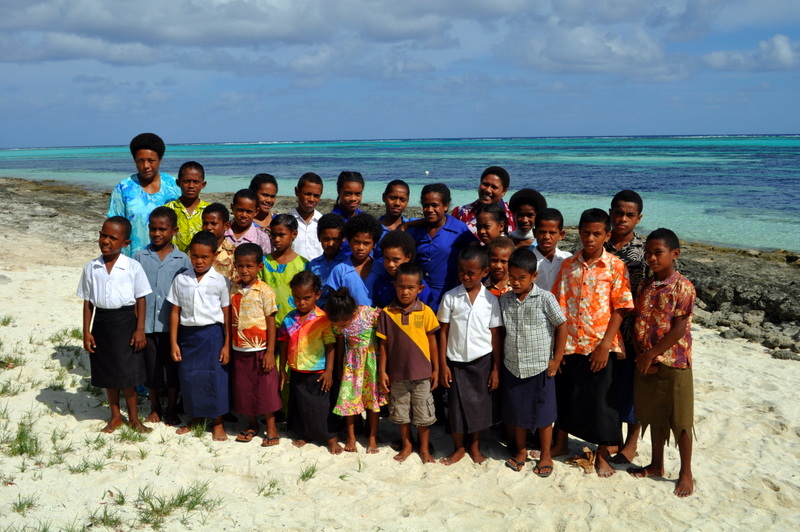
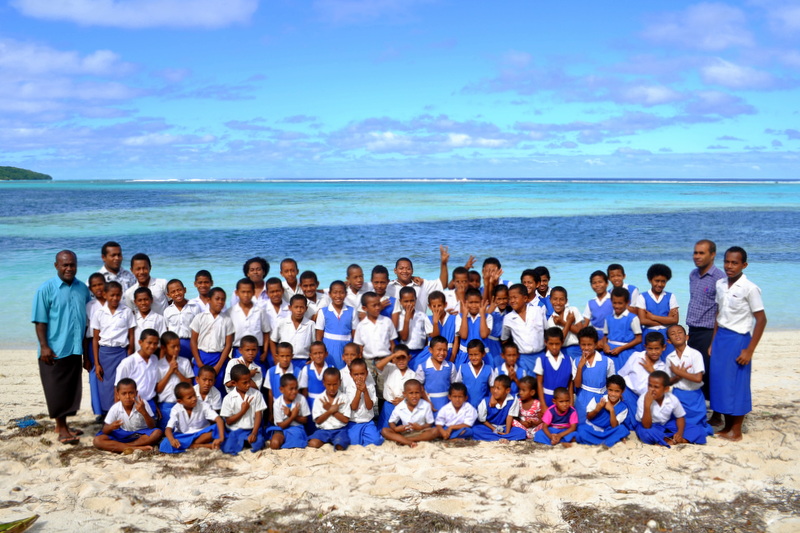
We continue teaching and I ask, “What is a coral? A plant, animal, or mineral?” Throughout the different schools the answer has been the same. About 95% of the students think that it’s a mineral because they believe it’s not living and it’s hard like a rock. We continue to explain that corals are animals and identify the relationships between the plant, animal, and mineral.
“In these remote islands, students are not taught about the environment around them. By providing this knowledge of Fiji coral reef awareness, we hope that they will better understand their resources and how to manage them,” states Raloa.
Next, we discuss the benefits of coral reefs. In the Lau Province, the villages depend on the reefs for fish and invertebrates, which is their main source of protein and for some, income. The students realize this importance and it’s a good transition into threats of coral reefs. We tell them that some coral reefs around the world are not doing well, but in Fiji, mostly they are much healthier. However, we inform them that if they don’t take care of their reefs, they too could become unhealthy.
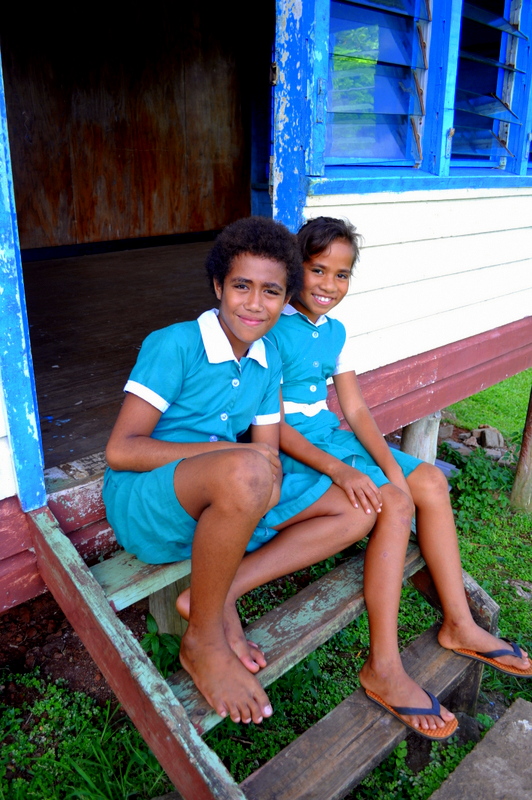
The three main threats to corals that we focus on during our talk on Fiji coral reef awareness is marine and land pollution, overfishing and destructive fishing practices, and crown-of-thorns (COTS) outbreaks. Using photos, we explain the different types of pollution. After a talk that we gave in Vanuavatu, with no instruction, a student began collecting the batteries that were polluting the beach.
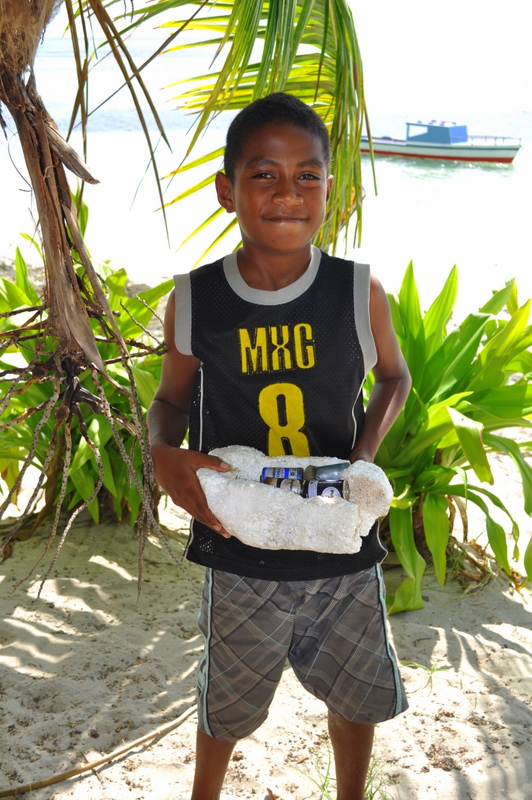
Ron Vave, who assisted with teaching explains, “The boy was young and it threw me off guard when I saw him collecting rubbish. No one told him to collect the litter. We raised the awareness and it shows that the talk had an impact on this kid. It makes it all worthwhile.”
When discussing overfishing, we show an educational video that discusses ‘fishing down the food chain’ and ‘catch per unit effort’. The students can see a realistic example of the devastation that overfishing can cause in villages that also depend on coral reefs for food. Additionally, we discuss how every single organism on the reef has a purpose whether it’s a plant or an animal, small or large. When we remove something from the food web, it impacts everything else.
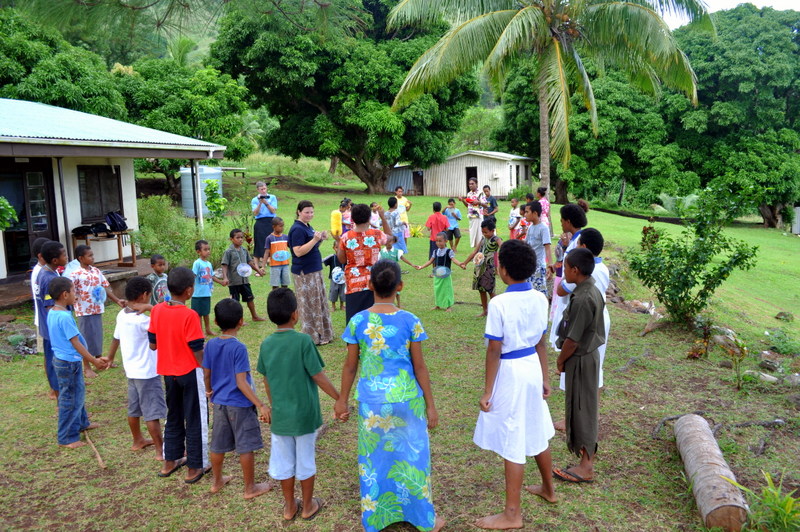
The last threat that we discuss are the crown-of-thorns seastar, known as COTS or bula. When the photo of the COTS appears on the screen, everyone gasps. When I ask, “Who has seen this animal?” With no translation needed, everyone raises their hand. We continue to explain the damage an outbreak of COTS can have on a coral reef using live footage from an outbreak that we found on a previous Fijian reef.
As we end our Fiji coral reef awareness presentation, I explain, “There is hope for coral reefs around the world. The more we learn about coral reefs, the better we will know how to manage them and sustain these resources.” I then ask them, “Who’s going to protect your reefs?” The students respond loudly, “Us!”
I look across the smiling sea of faces and think – these are the future stewards of coral reefs.
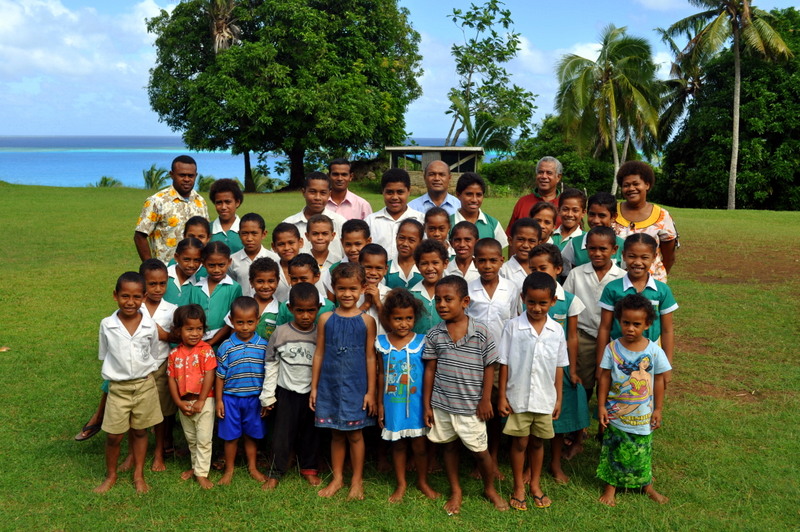
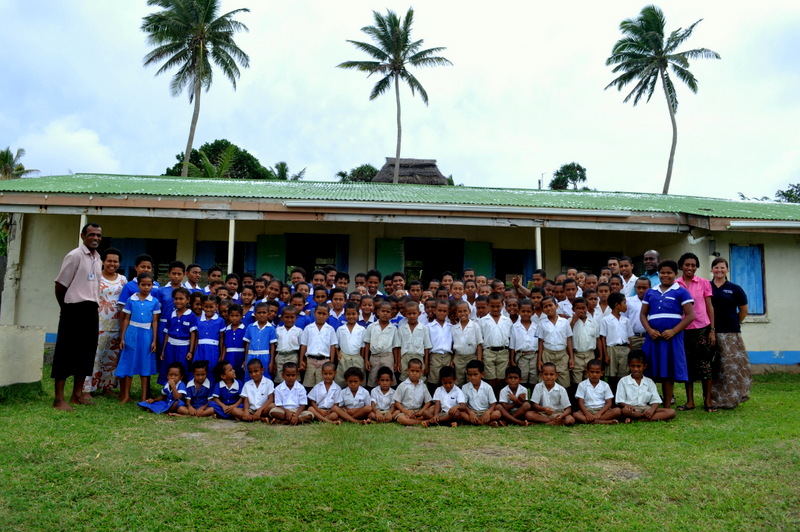
Throughout the Lau Province, we have conducted 14 school and 8 village presentations reaching over 1,500 people on ten different islands. We hope to continue raising Fiji coral reef awareness by working with our partners in the Fiji Locally Managed Marine Area network (FLMMA). – Amy Heemsoth, Director of Education, Khaled bin Sultan Living Oceans Foundation
Photos/Images by: Amy Heemsoth
To follow along and see more photos, please visit us on Facebook!