For the past eight years, the Khaled bin Sultan Living Oceans Foundation conducted a large-scale scientific research mission called the Global Reef Expedition (GRE). The primary goals of the GRE were to map and characterize coral reef ecosystems, identify their current status and major threats, and examine factors that enhance their ability to survive—and recover from—major disturbance events. Now, scientists at the Living Oceans Foundation are focused on analyzing data collected on the Global Reef Expedition and publishing reports that can be used to guide coral reef management.
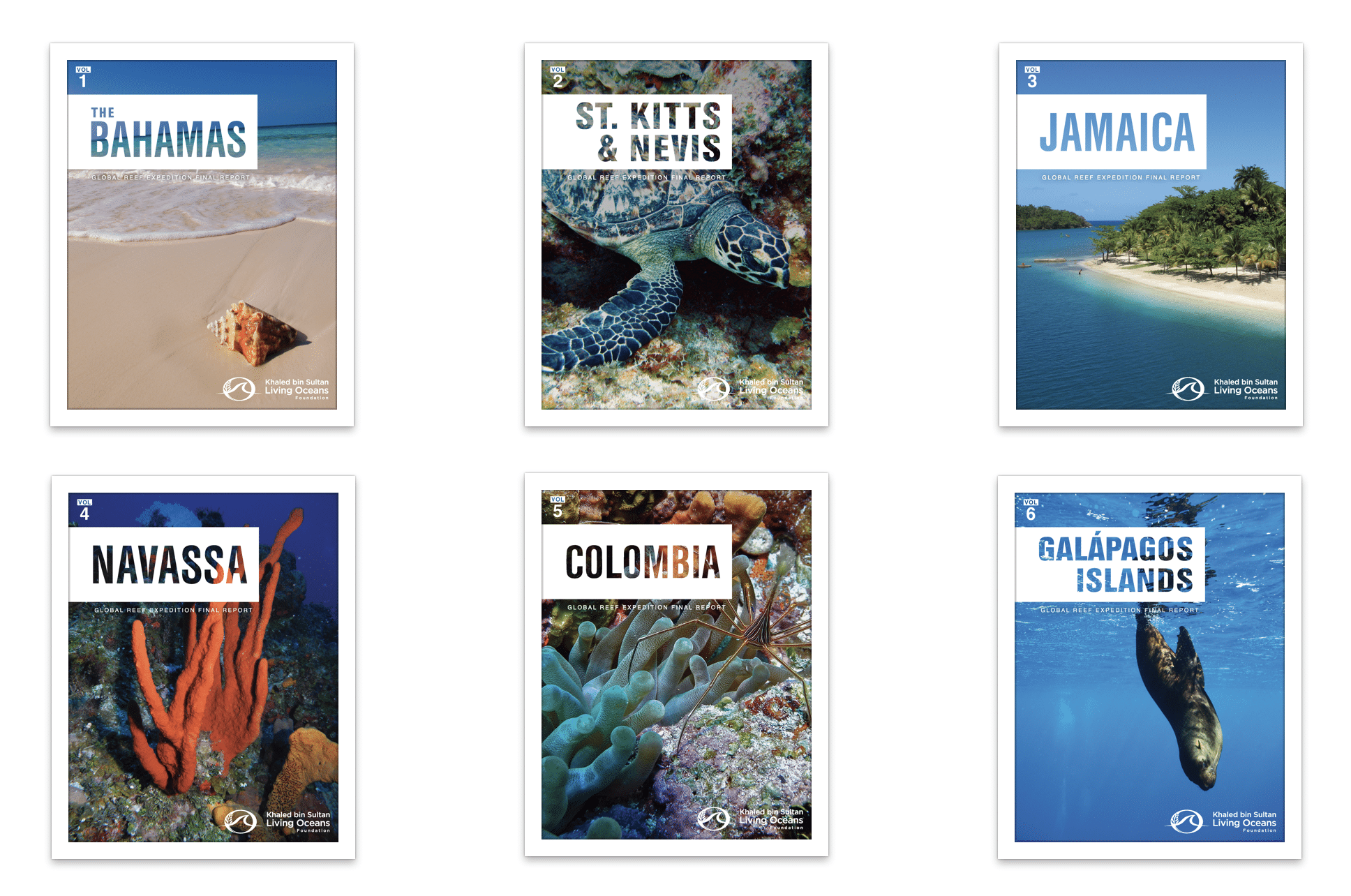
For each country visited on the GRE, the Khaled bin Sultan Living Oceans Foundation publishes a report summarizing our findings. These Global Reef Expedition Final Reports are the culmination of years of the Foundation’s research on the health and resiliency of coral reefs. Many of the reefs we surveyed and mapped had never been studied before, and our final reports could provide the first scientific information available on some of the most remote coral reefs on the planet.
So far we have completed final reports for seven of the 15 countries visited on the Global Reef Expedition: The Bahamas, St. Kitts & Nevis, Jamaica, Navassa, Colombia, Galapagos, and Fiji. They contain a wealth of information on corals, reef fish, and marine invertebrates, as well as an assessment of the overall health of the coral reef ecosystem. Many reports also contain detailed maps of shallow water marine habitats in the region. Now, all of these reports are available for you to read and download on our website.
All of our published Global Reef Expedition Final Reports have been shared with government officials, scientists, conservation organizations, traditional leaders, and local stakeholders to aid in the conservation and preservation of coral reefs and other coastal marine resources. We are excited to continue to share our findings from the Global Reef Expedition as we analyze and publish our results from research expeditions we conducted in the South Pacific and the Indian Ocean. We hope that these reports will be used to help coral reefs thrive for generations to come.