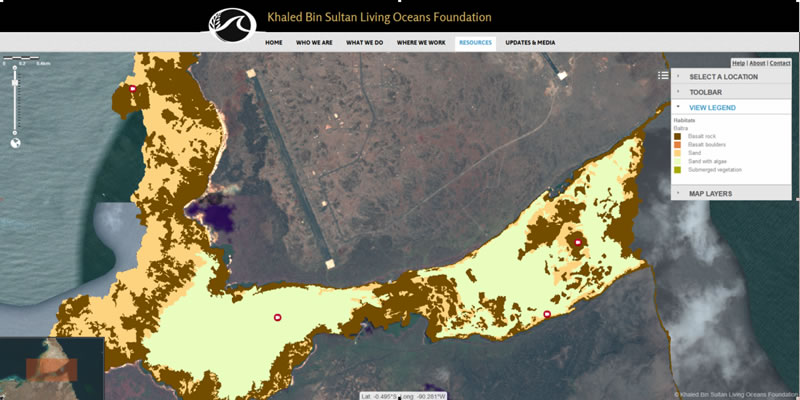
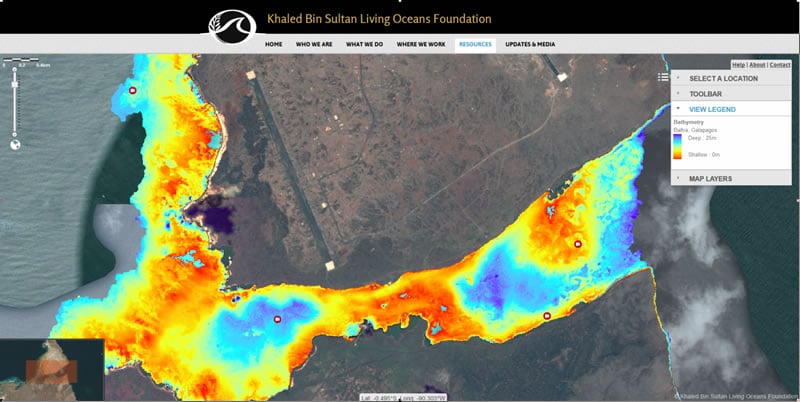
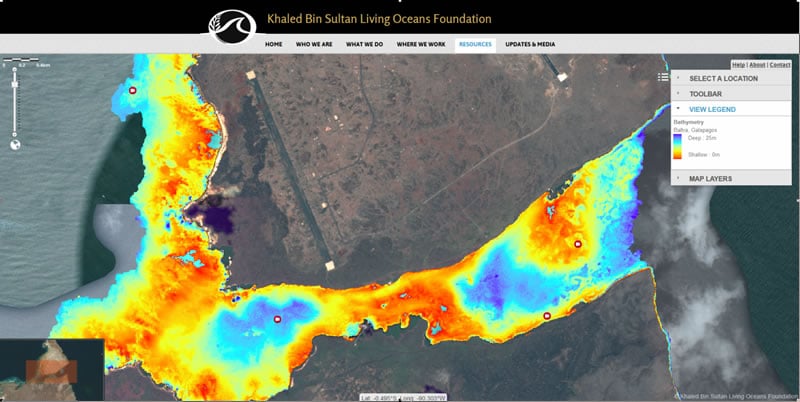
We have published the first ever high resolution seafloor habitat maps of several locations around the Galapagos Islands. They are on our map viewer, ready to explore.
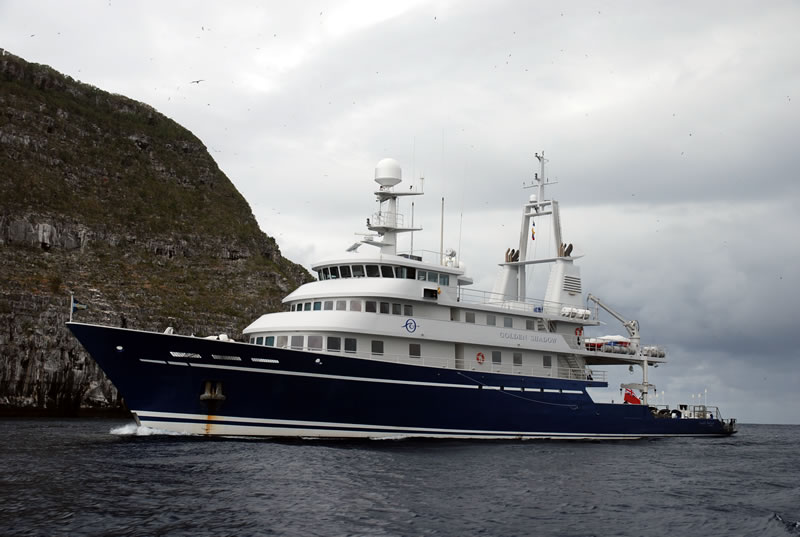
As part of the Global Reef Expedition we visited the Galapagos Islands in 2012. The data we collected has been turned into extremely high resolution bethic habitat maps showing exactly what makes up the seafloor round Baltra, Darwin, Floreana, Isabela, Marchena, Urvina, and Wolf Island. They break new ground in terms of the geographic scale of underwater mapping in the region.
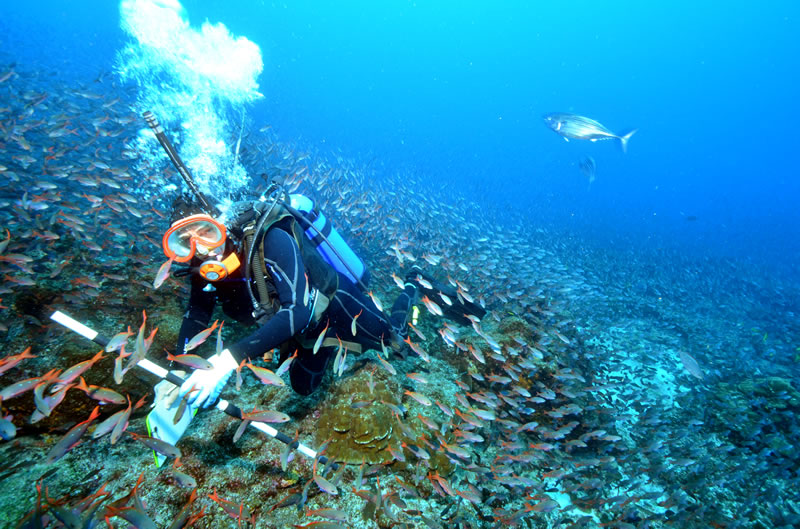
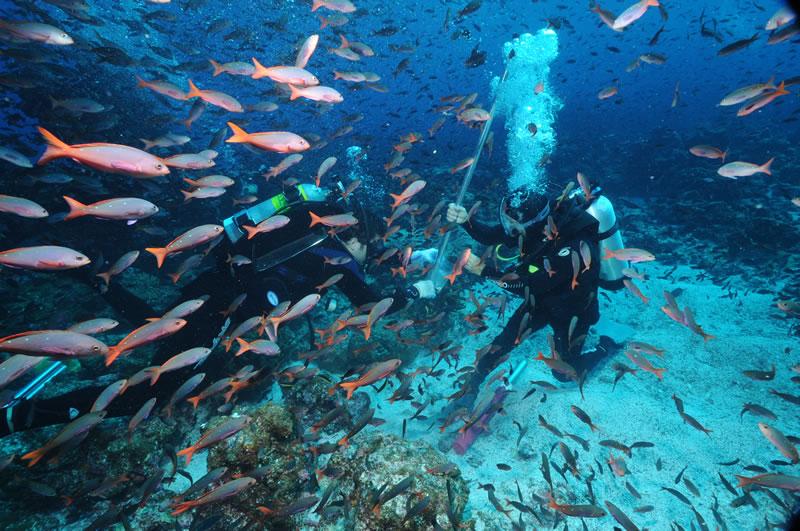
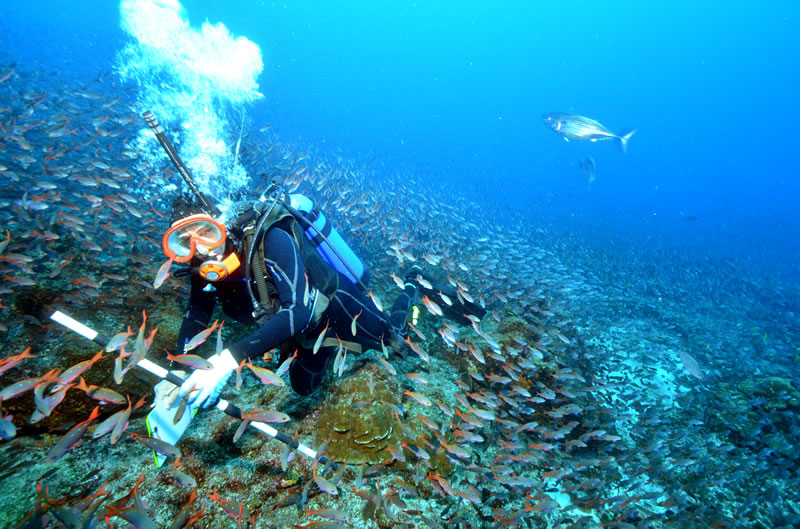
To make the maps, a team of scientists from the National Coral Reef Institute, Nova Southeastern University, conducted “groundtruthing” surveys across over 750 km2 of Galapagos seafloor. The groundtruthing team surveyed shallow marine habitats, collecting around 300 underwater videos using a tethered video camera and over a million depth readings. This map-making approach is innovative. It combines intense field effort with cutting edge satellite image analysis to categorize a satellite image into a habitat map based on properties of reflected light. You can read more about the process here.
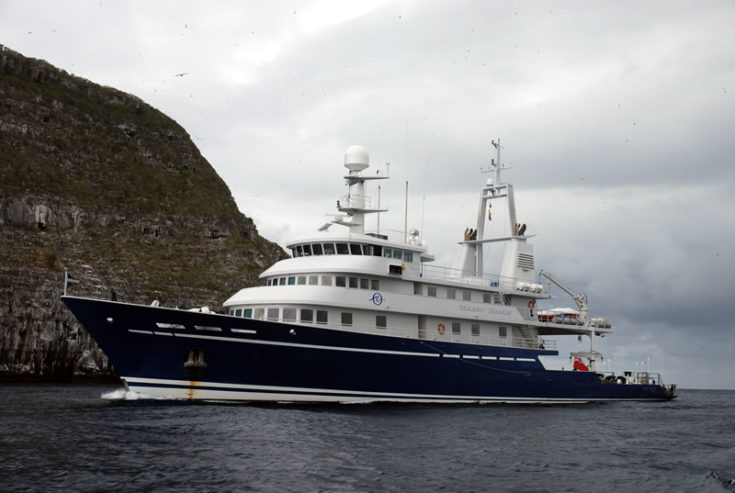
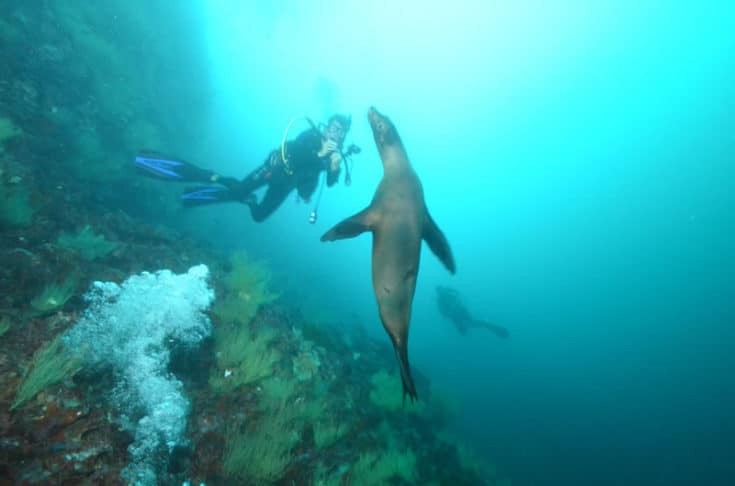
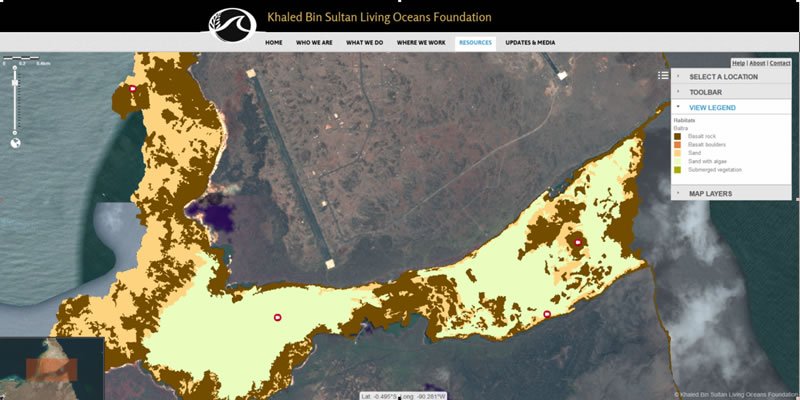
The maps, describe not only Galapagos seafloor habitats, but also the water depth in the different locations. Another cool feature of the maps is a geo referenced video layer. Camera icons on the maps show where scientists took a short video of the seafloor. By clicking on the icon you can see exactly what the seafloor looks like at that point of the Galapagos Islands.
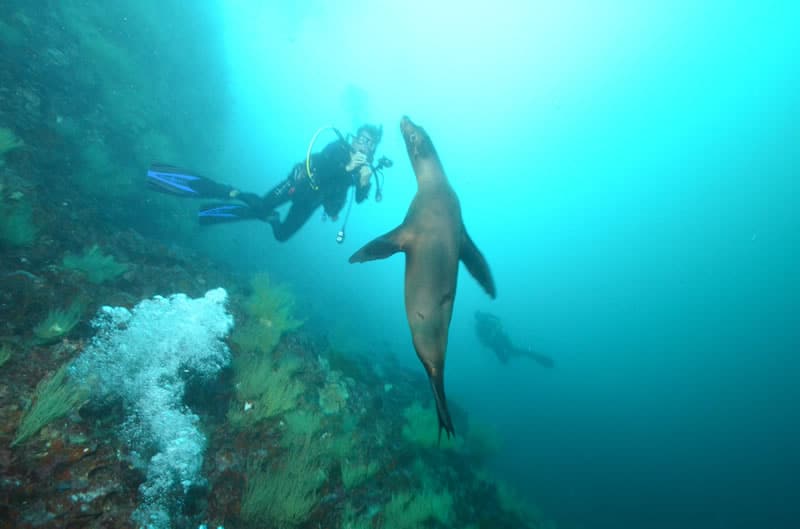
The density of marine life in the Galapagos is astounding, and created a novel challenge for the map-making scientists who are mostly interested in understanding what was growing on or covering the seafloor. The scientists views were often obscured by dense shoals of fish.
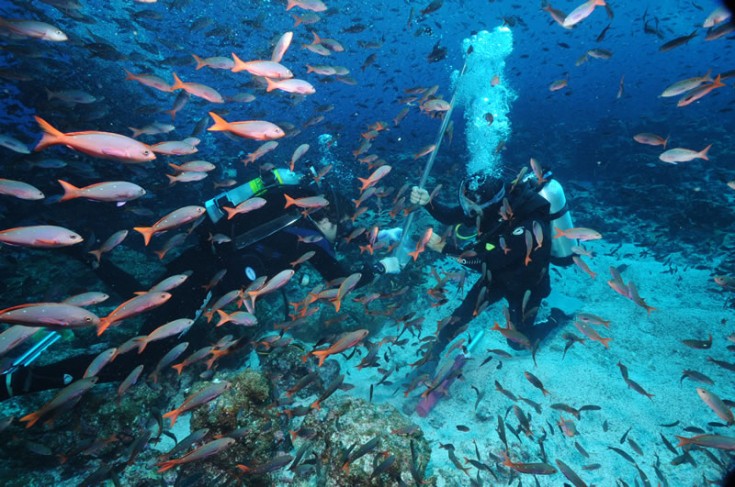
In contrast to other reef regions we visited on the Global Reef Expedition, the Galapagos seabed is relatively simple. The cold water and high levels of nutrients limit prolific coral reef development and we only see significant coral framework round Darwin Island. Elsewhere most of the hard substrate is made of basalt rocks and boulders, dominated by turf algae, macroalgae, and red calcareous algae with isolated or sparse coral cover.
You can explore the maps and download data for all areas of the Global Reef Expedition that we have mapped so far by exploring our web viewer.
Read our latest scientific paper from our Galapagos research.