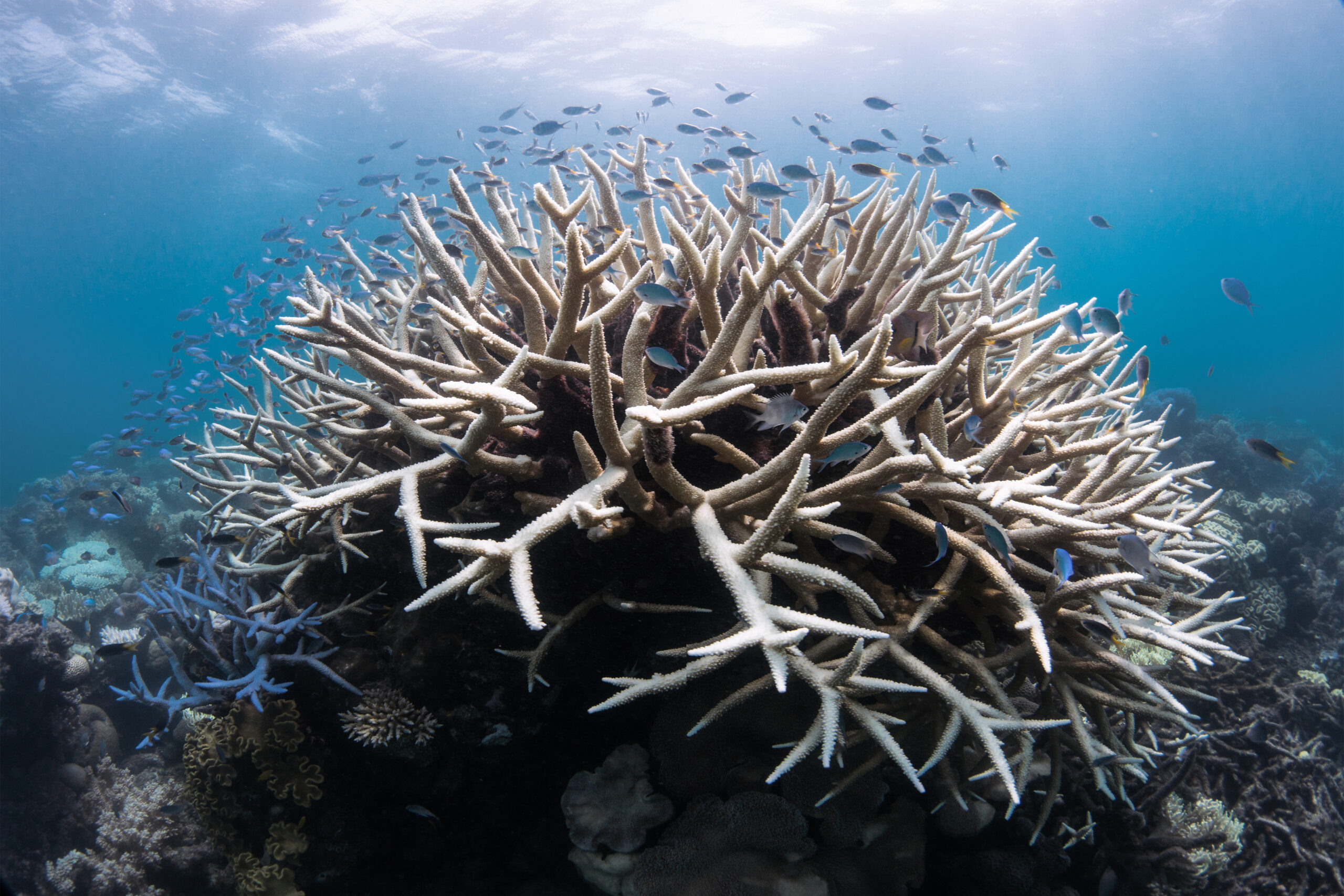
As we arrived into Ill des Pins (Isle of Pines) on the first day of the mission, one type of vegetation struck me. Pine forests tower above the landscape, and stretch right down to the shore! Though we came to Ill des Pins to study the marine life, these trees always dominate the background.
The Columnar Pine
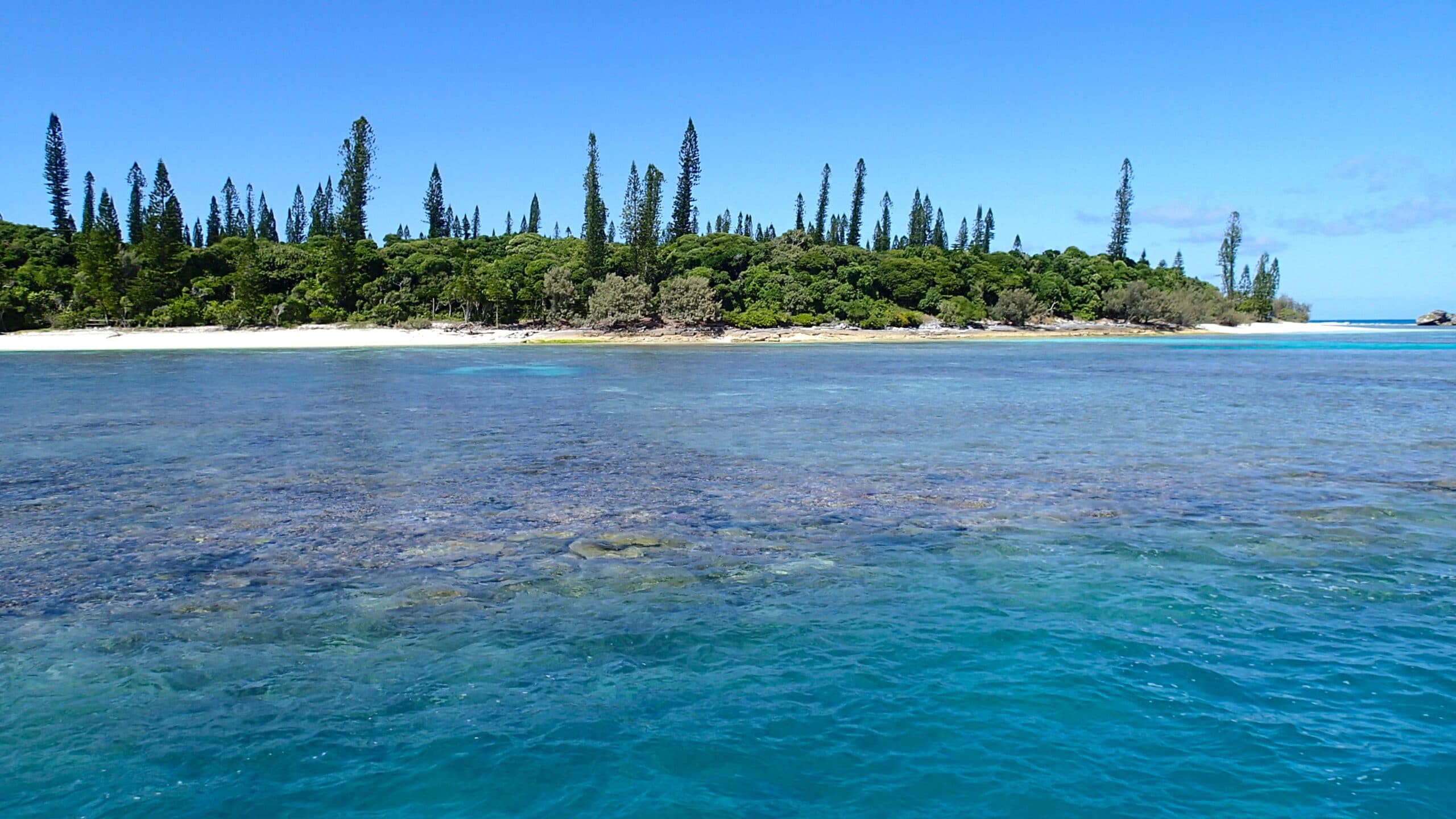
Columnar pine trees are native to New Caledonia and dominate the landscape.
The trees are a stark contrast to the stereotypical palm tree lined islands of the tropics. I almost feel as if I’ve sailed into a temperate climate. These tall narrow pines stand 10-20 meters (32 – 65 feet) above the canopy of any neighboring trees and can reach heights up to 60 meters (196 feet). It is quite an arresting scene.
During his second voyage, Captain Cook was intrigued by these unique trees and aptly noted the area as an Isle of Pines in the ships log. The pine was first classified by botanists aboard Cook’s ship, and so is often referred to as the ‘Cook Pine’. It is also known as the Columnar Pine, Coral reef araucaria, New Caledonia pine, Cook araucaria, or columnar araucaria. The scientific name is Araucaria columnaris.
An ancient survivor from the Triassic period, this living fossil belongs to the genus Araucaria. In the Mesozoic era (230 million years ago), the genus Araucaria contained a large variety of plant species. Many were lost, however, during an extinction event which also wiped out the dinosaurs. Today, 19 species of Araucaria exist worldwide, of which 13 are endemic to New Caledonia, including the columnar pine. The other 6 are spread throughout segments of ancient Gondwana; South America, Australia, New Guinea and Norfolk Island.
The paper-like bark of the columnar pine distinguishes it from similar pines. As the tree matures the bark peels away from the trunk in small thin sheets. Branches are short, mostly horizontal, and grow in whorls around a narrow trunk. The branchlets are long and slender with triangular and scale-like needles. The pines have both male and female cones. The female seed cones are approximately 15 cm (6 in) long, while the male pollen cones are smaller, 5 cm (2 in) long, more numerous, and grow from the tips of the branchlets.
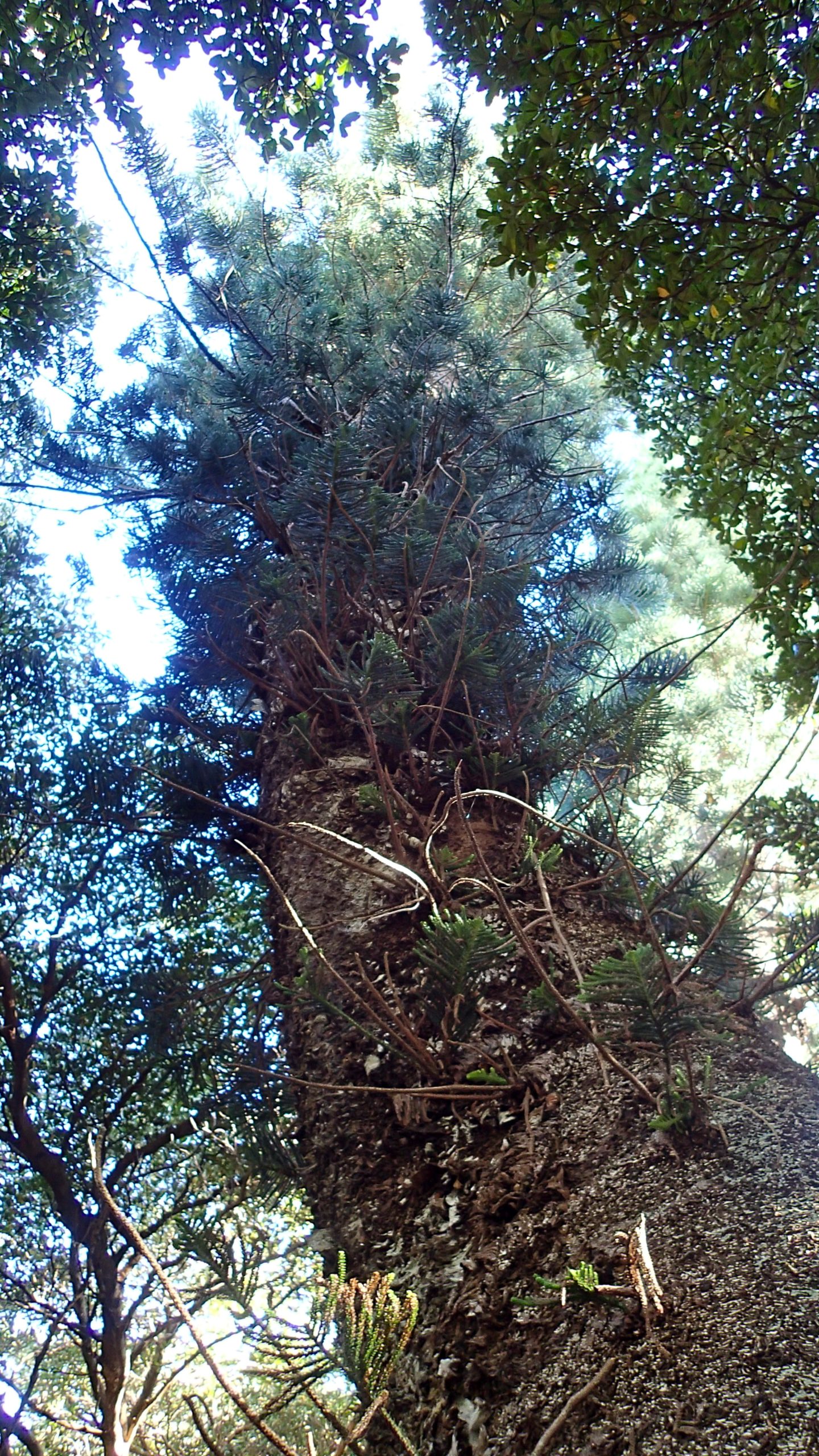
The tall Cook pines have a thin paper-like bark. Branches whorl horizontally around the central trunk.
Despite the name, the trunk of the columnar pine typically curves as it grows, making them undesirable for large scale logging. However, the trees are fast growing and produce a soft wood suitable for lumber so some straight growing trees are harvested on a small scale. The wood is less dense than other island trees and floats well making it perfect for pirogues (dugout canoes) and outriggers.

The trunk of the Columnar pines is rarely straight making them undesirable for lumber.
As we depart from Ill des Pins, I wonder whether we will see these pine trees in such quantities at the other study sites. It has been magical conducting our survey work with such a unique backdrop.
Photos: 1-2 Rob Gardiner, 3 Dawn Bailey