
search-icon
Living in Harmony, but Stress Can Kill

Coral reefs are often called the rainforests of the seas. Teeming with life, reefs harbor a broad range of organisms that rely on a complex network of ecological interactions and symbiosis (close and often long-term interaction between two or more different biological species).

The diversity and complexity of coral reefs starts at the microscopic level. Within the coral tissue, symbiotic algae (dinoflagellates), commonly called zooxanthellae (their scientific name is Symbiodinium), are crucial to the coral hosts. Like leaves from a tree, these microscopic algae harvest light and produce energy in the form of carbon rich compounds.
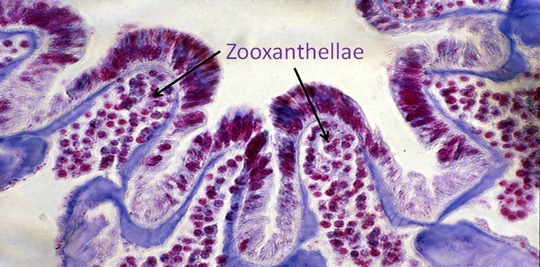
A cross section of a coral polyp showing the zooxanthellae, or symbiotic algae, within the tissue. The coral was preserved and processed for viewing under a microscope. The tissue has been stained with a purple dye.

These symbiotic algae remove and use the coral’s waste products (CO2, nitrogen) for growth and photosynthesis. In return the coral gains energy rich organic carbon, created by the algae through photosynthesis. This symbiotic relationship provides most of the coral’s energy needs and contributes to the production of the coral limestone skeleton.

The loss of these symbiotic algae, a process known as coral bleaching, reveals the coral’s white limestone skeleton as the tissue looses all pigmentation. On its own, the coral animal struggles to meet its’ energy requirements, and, if prolonged, this is usually lethal for the coral.
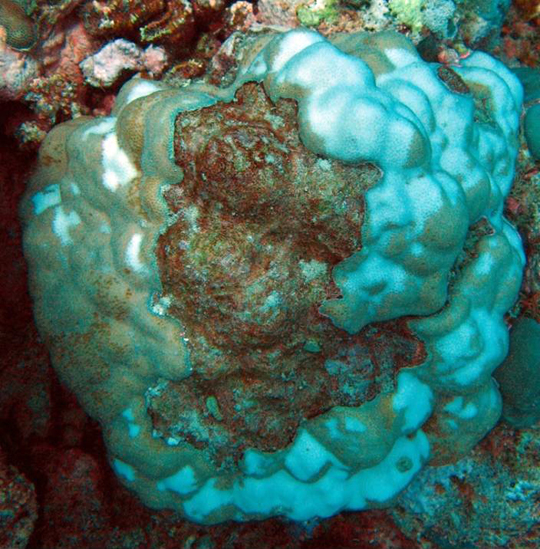
Porites lobata that is recovering from bleaching. The central part of the coral died and parts of the living tissue are still bleached (white).


The disruption of this obligate symbiosis can be triggered by a number of stress factors, including rapid and extreme temperature changes, high light levels and pollution. The susceptibility to these factors can vary according to the coral and type of symbiotic algae, or zooxanthellae, that they host.

Corals can harbor one or more types of zooxanthellae. The type of symbionts also varies with environmental conditions and geographic region. One of the many goals of our mission, here in French Polynesia, is to assess the diversity of symbiont types associating with the coral genus Pocillopora, a widely distributed branching coral found throughout the Pacific and Indian Oceans. So far, the scientific team has found and sampled several Pocillopora species that are abundant on the fore reef, but appear to be uncommon and rare on the inner lagoonal reefs. These samples will be taken to the laboratory to assess which symbionts they host. This information about symbiotic algae can help scientists and managers foresee some of the areas that will be more susceptible or more resilient to stress factors, such as increasing temperature.
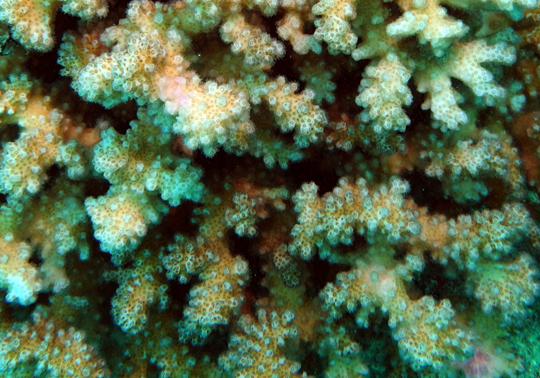
Closeup of a portion of a colony of Pocillopora damicornis. The brownish coloration is from the pigments in the zooxanthellae.


With over 250 samples collected thus far, the science team will continue their work to collect samples of symbiotic algae from multiple sites and over different environmental conditions. Also, we have been working on an overall assessments of the photosynthetic efficiency and photosystems “health” condition, using a special fluorometer that the foundation has recently acquired. Find out more on tomorrow’s post.

(Photos by: Dr. Andy Bruckner)

To follow along and see more photos, please visit us on Facebook! You can also follow the expedition on our Global Reef Expedition page, where there is more information about our research and team members.
Related Posts

From Dialogue to Action: Ocean Foundations Gather in Stockholm

What can philanthropy accomplish when foundations working across ocean science, conservation, and sustainable development come together around a shared purpose?

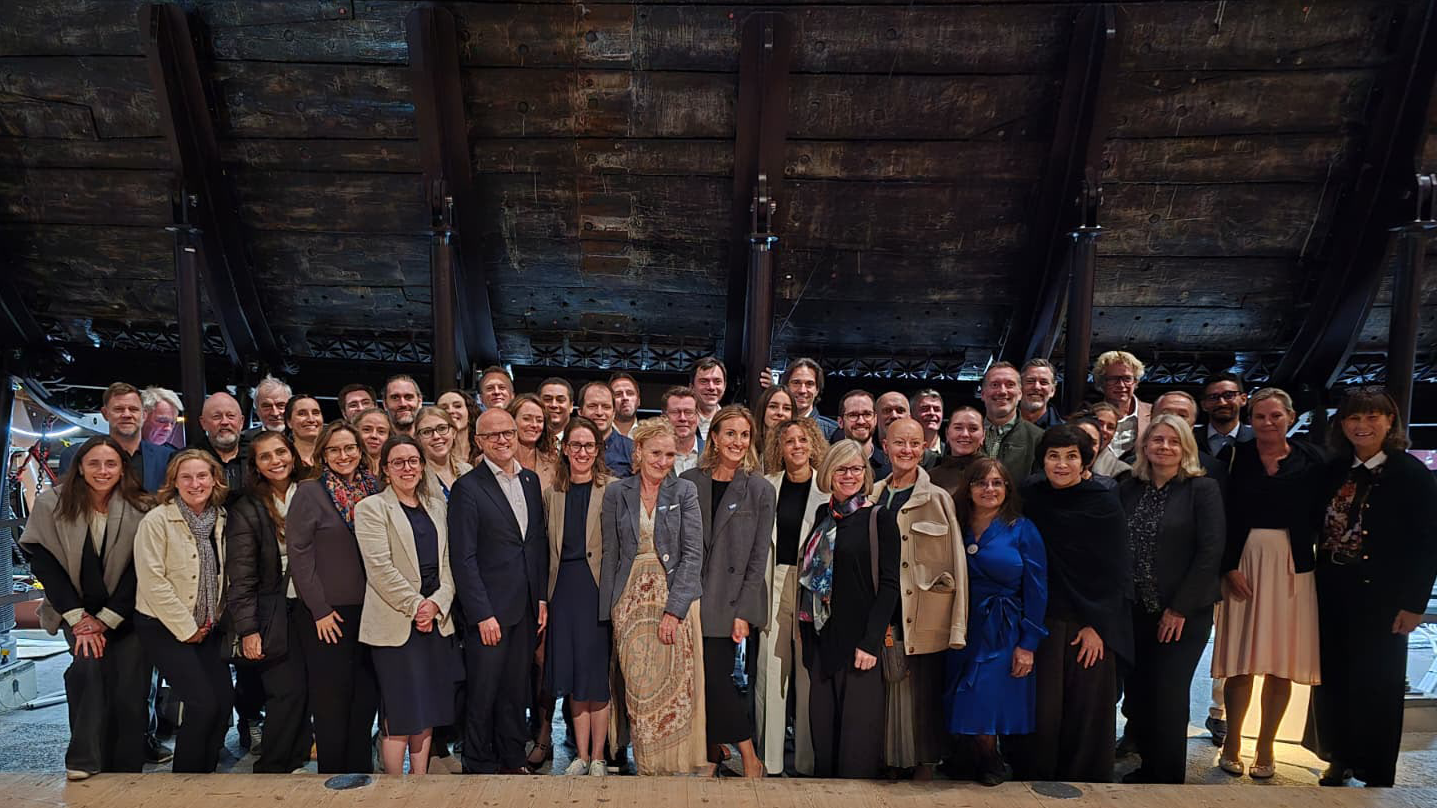
That question was at the heart of the 6th UN Ocean Decade Foundations Dialogue, held September 7–9 in Stockholm, Sweden. The Khaled bin Sultan Living Oceans Foundation joined philanthropic organizations from around the world for three days of discussion, collaboration, and planning focused on accelerating progress during the second half of the UN Decade of Ocean Science for Sustainable Development.

Facilitated by UNESCO’s Intergovernmental Oceanographic Commission (IOC), the UN Ocean Decade Foundations Dialogue is a growing network of more than 30 philanthropic organizations committed to advancing ocean science, collaboration, and action. Since its creation within the framework of the Ocean Decade, the Dialogue has provided foundations with a space to exchange ideas, develop partnerships, and explore how philanthropy can help advance a healthy and resilient ocean.

Hosted by the Voice of the Ocean Foundation (VOTO), this year’s gathering began with From Depth to Action, an Opening Forum that brought nearly 100 leaders from the Swedish and international ocean community together at…

Read More

Meet IFAN: Helping Bring Navigate with Care to the Next Generation

If you’ve ever seen a lighthouse flashing from the shore or a brightly colored buoy bobbing in the water, you’ve seen Aids to Navigation at work.

Aids to Navigation, often called AtoNs, help mariners navigate safely. They can mark channels, warn of hazards, help vessels determine their position, and provide other information people need to make safe decisions on the water. Around the world, these systems help guide everything from small recreational boats to large commercial or container ships. 

But safe navigation isn’t only about protecting vessels and the people aboard them. The choices mariners make can also affect the animals and ecosystems beneath and around them.

That connection between maritime safety and ocean conservation is at the heart of this year’s Science Without Borders® Challenge—and of our partnership with this year’s theme sponsor, the International Foundation for Aids to Navigation (IFAN).

Read More
Privacy Overview

This website uses cookies so that we can provide you with the best user experience possible. Cookie information is stored in your browser and performs functions such as recognising you when you return to our website and helping our team to understand which sections of the website you find most interesting and useful.  You can view our complete Privacy Policy here.

Strictly Necessary Cookies

Most of our cookies are used to improve website security and reduce spam. These cookies should be enabled at all times. They also enable us to save your preferences for cookie settings.

3rd Party Cookies

This website uses Google Analytics to collect anonymous information such as the number of visitors to the site, and the most popular pages. Keeping this cookie enabled helps us to improve our website.