Expedition Log: Maldives – Day 3
On every dive we have done around Gili Lankanfushi we have seen dozens of moray eels. We have seen two species so far; the giant moray (Gymnothorax javanicus) and the honeycomb moray (Gymnothorax favagineus). We commonly see them amongst the coral framework, hiding in alcoves and crevices with their head protruding outwards. Here, however, we have also seen many of the large giant morays out on the sand during the day. Their abundance is usually determined by the structural complexity and habitat type of a reef, with highly complex reefs offering an increased number of refuge areas. This particular reef was not unusually complex, though, so we are not quite sure why they were so abundant. As fascinating as these creatures are, they can look a little intimidating when we have to remove a crown of thorns starfish from right next to them!
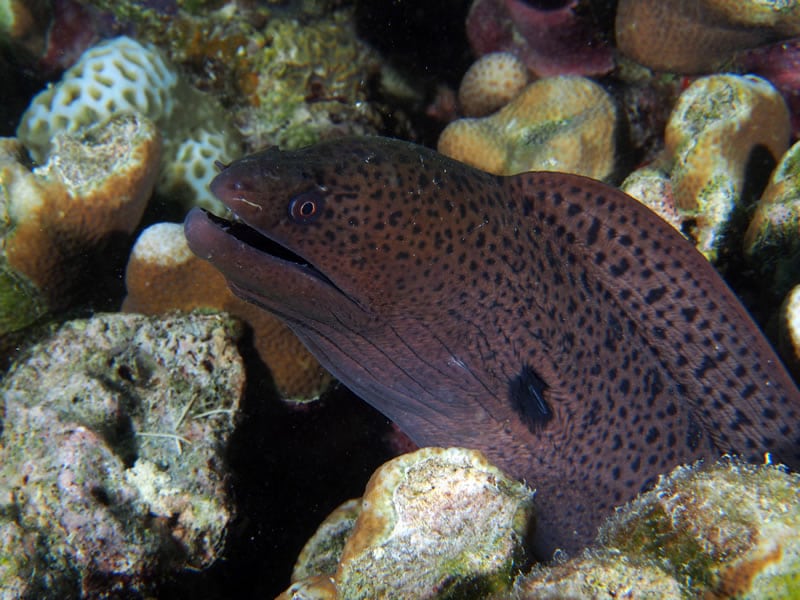
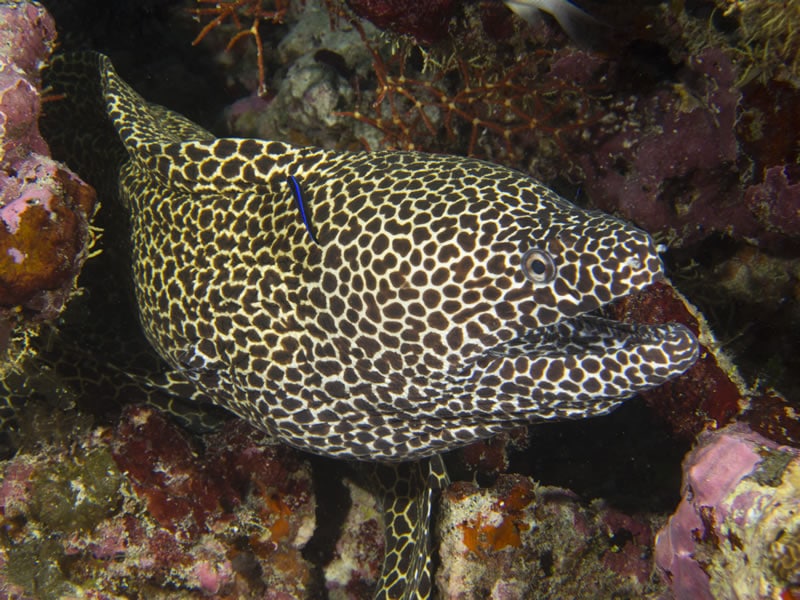
The giant moray (Gymnothorax javanicus) on the left, and the honeycomb moray (Gymnothorax favagineus) and cleaning wrasse on the right.
There are approximately 200 species of moray eels in the family Muraenidae. Most are found in warmer tropical waters, although some occur in temperate seas. The giant moray we have seen here in the Maldives is the largest of the moray eels; the largest can weigh up to 30kg. They are carnivorous animals, with wide jaws either full of sharp teeth for tearing flesh of fish, squid, cuttlefish and octopus, or blunt teeth to crush crustaceans. When eels need to get their teeth cleaned, they are visited by small cleaning wrasse and shrimp that will venture into their mouth and gills to remove any unwanted food particles and parasites.
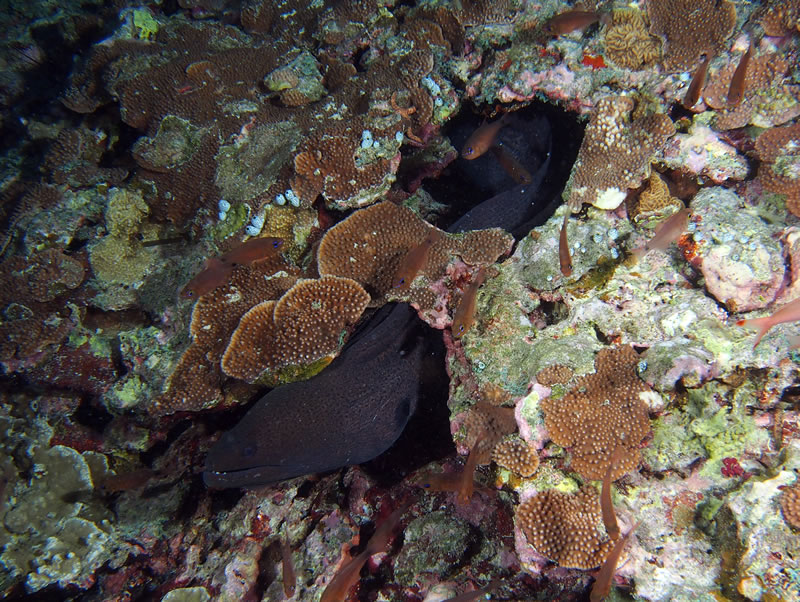
Giant moray eel protruding from its hiding spot in the reef.
Photos by Andrew Bruckner