There’s still time to enter this year’s Science Without Borders® Challenge! Students must submit their artwork by March 2, 2026, at 11:59 PM Eastern Time, for a chance to win scholarships of up to $500.
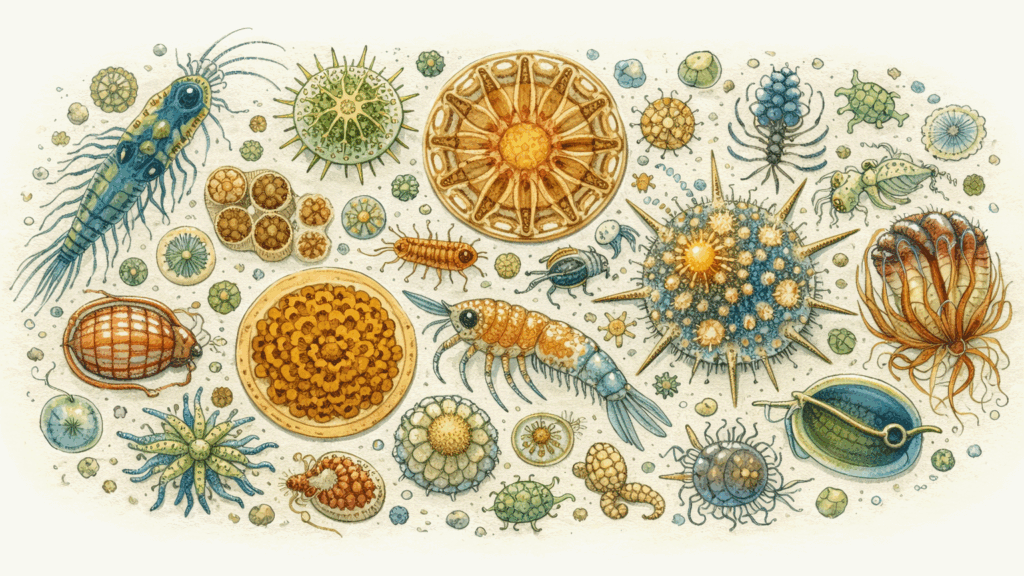
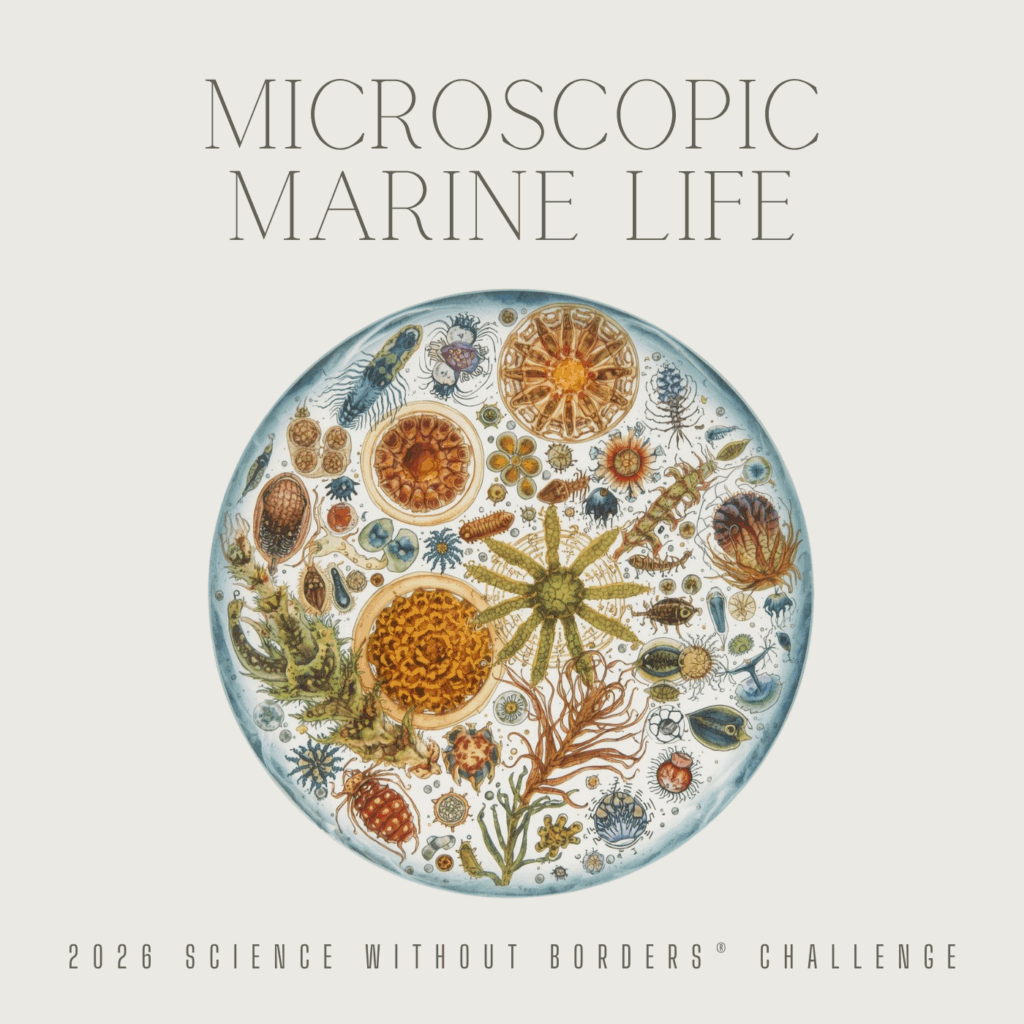
The theme for the 2026 Science Without Borders® Challenge is: Microscopic Marine Life. This year, we invite students to create artwork that highlights the tiny organisms that play an enormous role in keeping our ocean—and our planet—healthy.
Microscopic marine organisms may be invisible to the naked eye, but they are essential to ocean ecosystems and global processes. Phytoplankton produce a large share of the oxygen we breathe and form the base of marine food webs. Zooplankton feed on these producers and, in turn, support fish and other marine life. Bacteria and other microbes recycle nutrients, helping sustain productive ocean ecosystems. Some microscopic organisms even help remove carbon from the atmosphere and store it in the deep sea, playing a role in regulating Earth’s climate.
Through this year’s theme, students are encouraged to explore the beauty, diversity, and importance of life at the smallest scale—and show how microscopic marine organisms support entire ocean ecosystems.
About the Science Without Borders® Challenge
The Science Without Borders® Challenge is an annual art competition that engages students in marine science and conservation through art. It encourages students to learn about the ocean and raise awareness of the need to protect it.
This international competition is open to primary and secondary school students ages 11–19. Artwork is judged in two age categories:
- 11–14 years old
- 15–19 years old
In each age group, scholarships are awarded as follows:
- 1st Place: $500
- 2nd Place: $350
- 3rd Place: $200
We also offer a People’s Choice Award, with winners in each age group receiving a $50 scholarship.
We strongly encourage international students to apply and look forward to reviewing a diverse and creative group of submissions from around the world.
How to Enter
To apply to the Science Without Borders® Challenge, students must:
- Create an original, hand-drawn or painted, two-dimensional artwork that reflects the theme.
- Write an artist’s statement explaining how your artwork relates to the theme.
- Fill out the online entry form and upload a photo of your artwork.
If the student entering is under 13, a parental consent form is required, so don’t wait until the last minute! Please note that when the semi-finalists are announced, they must also mail in their original artwork to remain eligible to win.
Tips for Success
To help students create standout submissions, check out the Tips for Success and the Contest Rules on the Foundation’s website. We also strongly encourage students to Learn About the Theme and the species they choose to illustrate before they begin their artwork. These resources provide guidance on understanding the theme, crafting a compelling artist’s statement, and ensuring the artwork is neat, original, and impactful.
How Teachers and Parents Can Help
Teachers, this contest is a fantastic classroom project! It’s a great way to incorporate STEAM (science, technology, engineering, art, and math) education into your classrooms. It also helps to improve ocean literacy by getting students excited to learn more about the ocean through art. Although the contest requires students to apply individually, it is a great assignment to give to an entire class. We have provided Educational Resources for Teachers to help teachers integrate this into art and science classrooms worldwide.
Parents, you can encourage your child’s creativity at home and help them apply online before the deadline.
Inspire the Next Generation of Ocean Advocates
The Science Without Borders® Challenge is more than an art contest—it’s a way to empower students to think critically about ocean conservation and inspire others to take action. By participating, your students can become part of a global movement to protect our planet’s most precious resource.
For more information and to apply, visit www.lof.org/SWBChallenge.
Learn More & Apply
Don’t miss your chance to showcase your creativity and make a difference for the ocean through art. The Science Without Borders® Challenge invites students ages 11–19 to create original artwork inspired by this year’s theme, Microscopic Marine Life, and compete for scholarships of up to $500.
This international competition is open to primary and secondary school students worldwide, with awards in two age categories (11–14 and 15–19). The deadline to apply is March 2, 2026, at 11:59 PM Eastern Time.
Start creating today and help shine a spotlight on the tiny organisms that play a big role in keeping our ocean healthy.