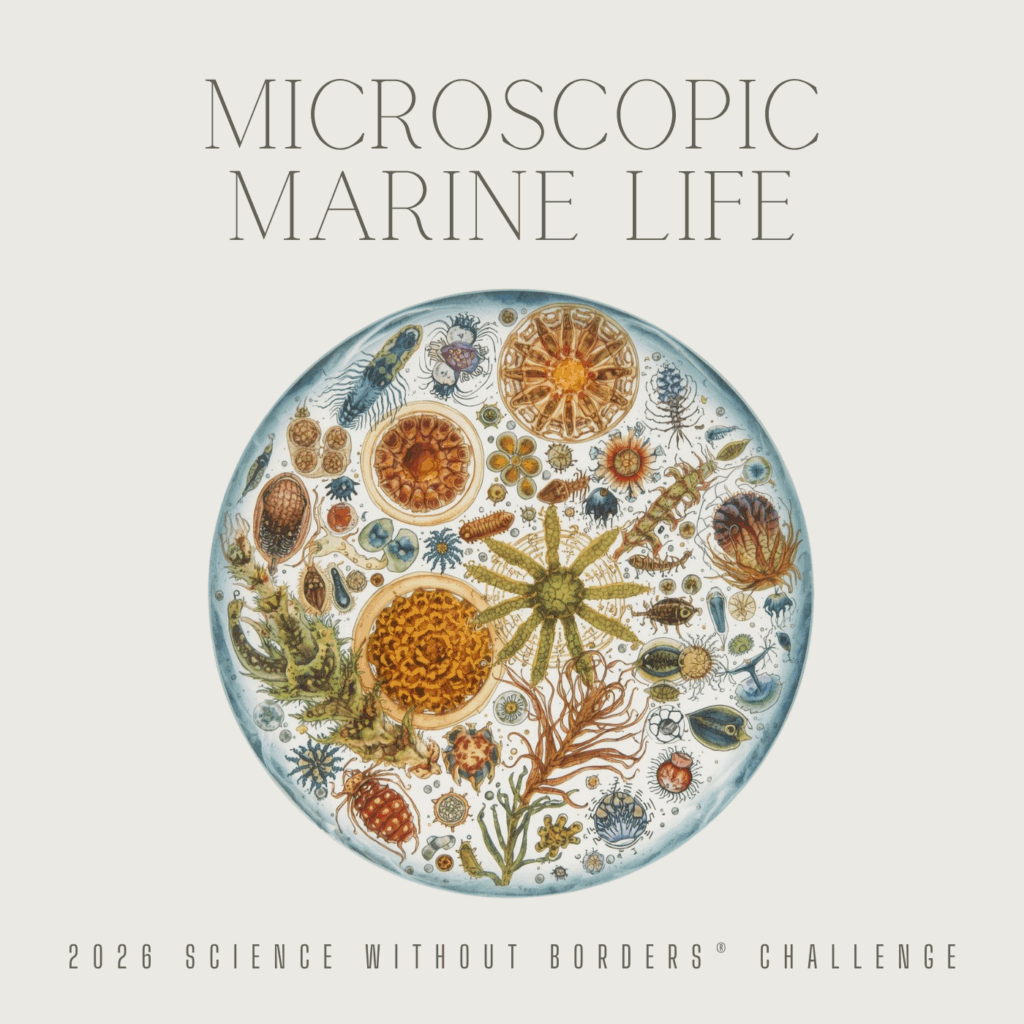
Some of the most important life in the ocean is invisible to the naked eye. Microscopic marine organisms produce oxygen, support marine food webs, recycle nutrients, build sediments, and even help regulate Earth’s climate. These tiny organisms are the foundation of ocean ecosystems, and they are the focus of this year’s Science Without Borders® Challenge, an international student art contest organized by the Khaled bin Sultan Living Oceans Foundation.
The theme for the 2026 Challenge is Microscopic Marine Life, inviting students to look closely at the organisms that quietly sustain the ocean. Through the process of researching and creating artwork, students learn how these tiny life forms shape coral reefs, fisheries, and even the air we breathe.
Phytoplankton such as diatoms are among the ocean’s primary producers. These single-celled algae, encased in delicate silica shells, use sunlight to create food and release oxygen. Zooplankton feed on phytoplankton and pass that energy up the food chain, supporting fish, seabirds, and whales. Without these microscopic organisms, marine food webs would collapse.
Other tiny organisms help scientists understand the ocean’s past and present. Foraminifera build calcium carbonate shells that become part of reef sand and marine sediments. Because different species thrive under different environmental conditions, scientists study them to monitor reef health and track changes in ocean chemistry over time. Radiolarians, plankton that form intricate glass-like skeletons, accumulate on the seafloor as radiolarian ooze. Layers of these microscopic shells provide clues about ancient ocean temperatures, circulation patterns, and climate history.
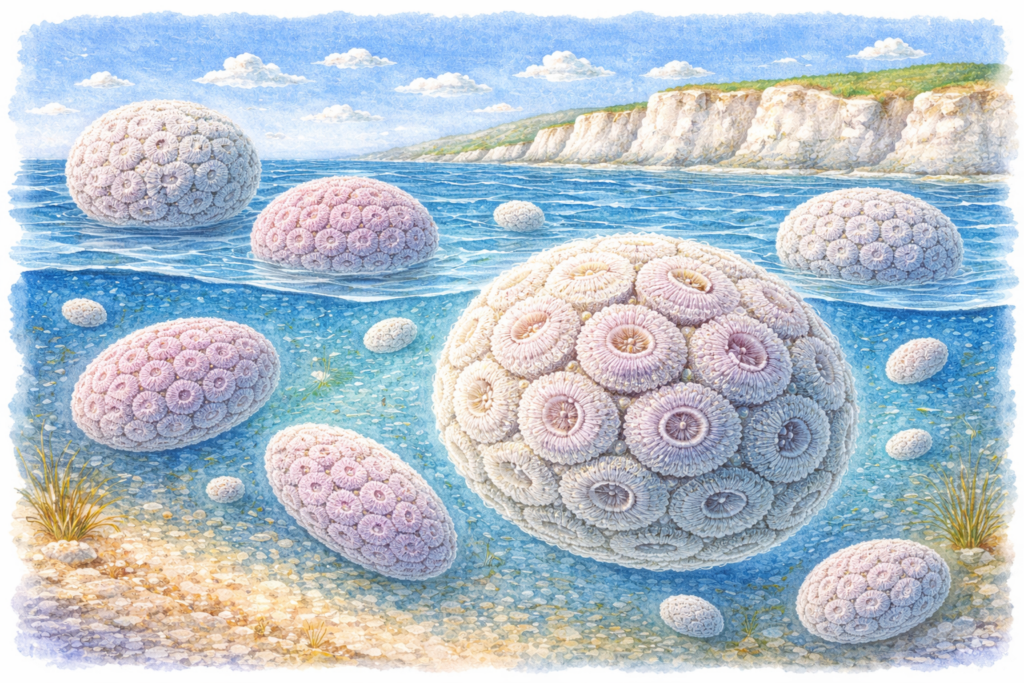
Some microorganisms play important roles in Earth’s carbon cycle. Coccolithophores, microscopic algae covered in calcium carbonate plates, help move carbon from the atmosphere into deep-sea sediments. Over millions of years, the remains of coccolithophores helped form massive chalk deposits, including England’s famous White Cliffs of Dover. Marine bacteria and archaea recycle nutrients, breaking down organic matter so ecosystems remain productive.
Others produce one of the ocean’s most mesmerizing sights. Certain dinoflagellates and other plankton glow through bioluminescence, creating sparkling waves and shimmering wakes. These light-producing reactions help organisms communicate and defend themselves in the dark ocean.
Microscopic partnerships are also essential to ocean life. Many radiolarians host symbiotic algae inside their cells, and coral reefs depend on microscopic algae called zooxanthellae that live within coral tissue and provide energy through photosynthesis. These tiny collaborations help build entire ecosystems.
Turning Ocean Science Into Art
The Science Without Borders® Challenge invites students to explore these organisms through art. By researching microscopic marine life and creating original drawings or paintings, students learn how the smallest creatures influence the largest environmental systems. The contest is open to primary and secondary school students ages 11–19 around the world, and scholarships of up to $500 are awarded to winning entries in two age categories.
With one week left before the submission deadline, the Foundation is encouraging students, teachers, and families to consider participating. The contest is free to enter, and teachers can use classroom resources provided by the Foundation to incorporate the theme into science and art lessons.
Artwork must be submitted by March 2, 2026, at 11:59 PM Eastern Time. Students interested in participating can learn more and apply at LOF.org/SWBChallenge.
By inviting young people to study and illustrate microscopic marine life, the Science Without Borders® Challenge highlights an essential truth about the ocean: the smallest organisms often have the biggest impact. Understanding them helps scientists track environmental change, protect coral reefs, and safeguard the health of our living oceans.
Learn More & Apply
Don’t miss your chance to showcase your creativity and make a difference for the ocean through art. The Science Without Borders® Challenge invites students ages 11–19 to create original artwork inspired by this year’s theme, Microscopic Marine Life, and compete for scholarships of up to $500.
This international competition is open to primary and secondary school students worldwide, with awards in two age categories (11–14 and 15–19). The deadline to apply is March 2, 2026, at 11:59 PM Eastern Time.
Start creating today and help shine a spotlight on the tiny organisms that play a big role in keeping our ocean healthy.