Science
By Liz Pennisi
Dec. 16, 2019
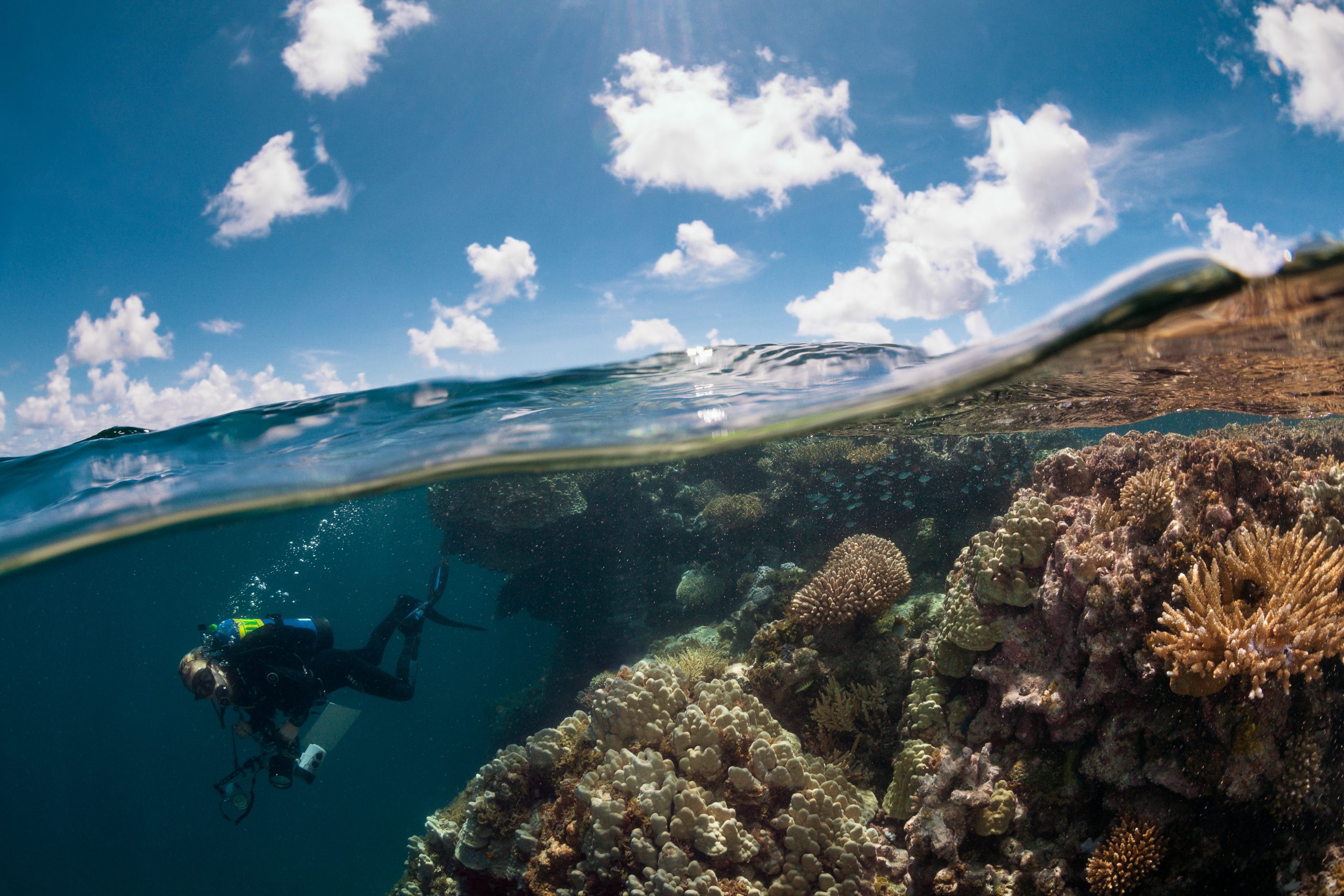 In a world where warming seas, pollution, and predation are killing coral around the world, an extensive survey of French Polynesia has found a ray of hope. On some atolls there, live coral covers 70% of the reef’s surface; on others, big fish such as grouper and barracuda that have almost disappeared elsewhere are thriving.
This survey is “of great importance,” says Derek Tittensor, a marine ecologist at Dalhousie University in Halifax, Canada. The findings, he says, could help scientists understand how reefs in French Polynesia and elsewhere may respond to climate change, and how they might be protected in the future.
For the past decade, the Khaled bin Sultan Living Oceans Foundation, based in Annapolis, has been mapping the health of coral reefs around the world. In 2012 and 2013, its divers investigated 264 sites across 29 islands in French Polynesia’s four major archipelagos in the South Pacific Ocean. Working with researchers at the University of Miami in Florida, foundation scientists have fed their data into supercomputers to divine what makes coral reefs resilient—results they hope will help conservationists better manage and conserve these hot spots of biodiversity. This month, the foundation released its public report about the French Polynesia findings.
There were a few places where coral cover was down to just 5%, thanks to cyclones (also known as hurricanes) and invasions of crown-of-thorns starfish. But in the Gambier archipelago, 1600 kilometers southeast of Tahiti, living corals populate almost three-quarters of the reef in some places. That compares with less than 10% in some parts of the Caribbean Sea, and rarely more than 45% in the northern part of Australia’s Great Barrier Reef. Overall, French Polynesia coral cover averages 58%, the Living Oceans Foundation reports.
“That’s very high; even an average of 58% is high,” says Nancy Knowlton, a coral reef biologist emeritus at the Smithsonian National Museum of Natural History in Washington, D.C., who was not involved with the study. “It’s nice to see that places like that still exist.”
High coral cover tended to coincide with high densities of fish. In some places, there were about 300 fish per square meter. That’s much better than 50 per square meter in the Caribbean and even the 220 per square meter in the northern Great Barrier Reef found in other surveys.
Knowlton worries that coral-killing high temperatures, increasingly common worldwide, might soon cloud this rosy picture. And although Living Oceans Foundation coral reef biologist Alexandra Dempsey agrees these reefs are changing, some of them remain quite healthy, she says. The survey revealed, for example, that reefs with a particular type of seaweed—coralline algae—recover faster from high temperatures or predation. By understanding how those reefs are able to cope with such stressors, she and her colleagues hope to learn how to help damaged reefs around the world.