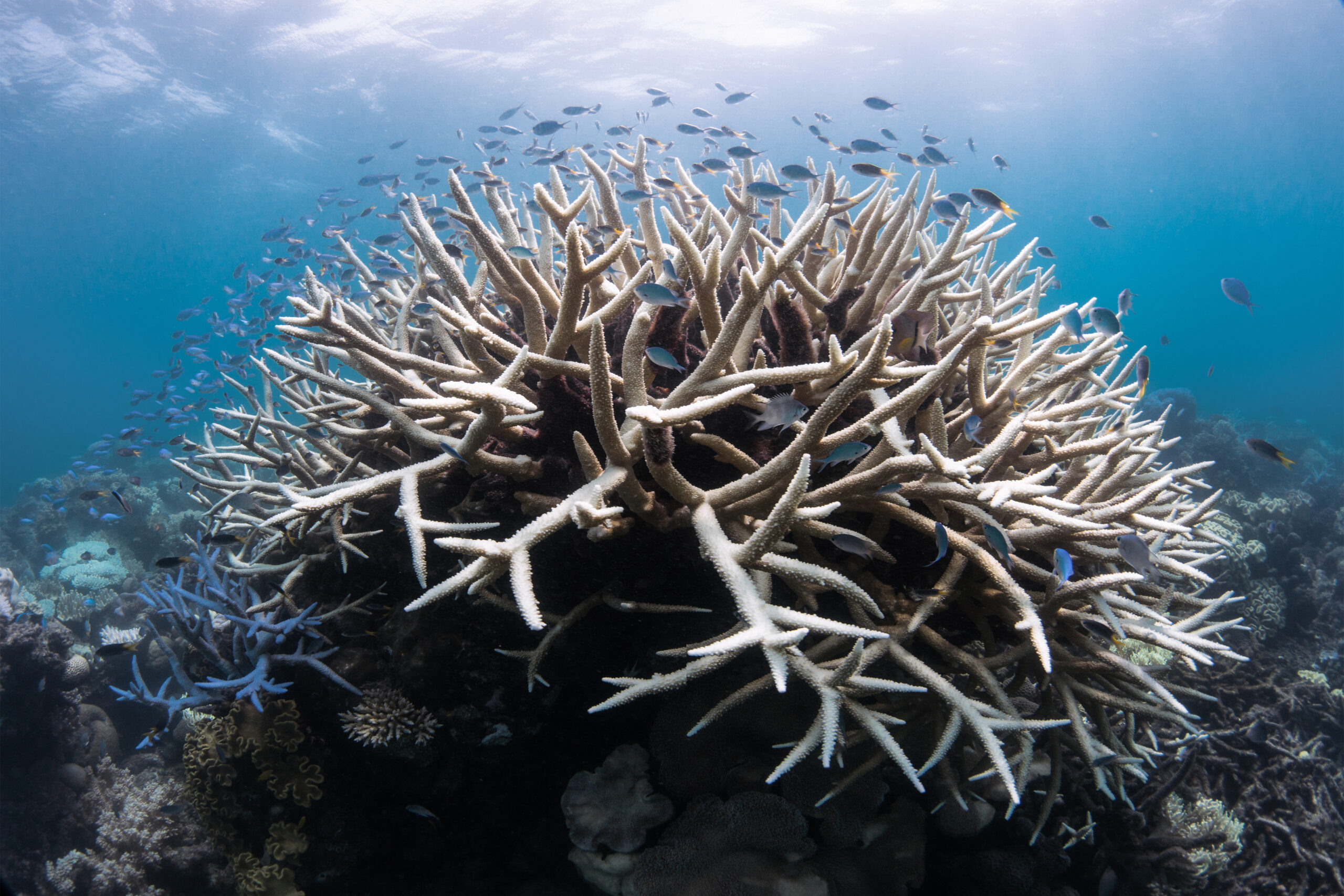
This article, published by one of the Living Oceans Foundation Fellows, Andersen Mayfield, PhD, looks at compartment-specific transcriptonimics in a reef-building coral exposed to elevated temperatures.
Compartment-specific transcriptomics in a reef-building coral exposed to elevated temperatures
Molecular Ecology
November 27, 2014
By Andersen Mayfield, PhD, Yu-Bin Wang, Chii-Shiarng Chen, Chung-Yen Lin,Shu-Hwa Chen
 Although rising ocean temperatures threaten scleractinian corals and the reefs they construct, certain reef corals can acclimate to elevated temperatures to which they are rarely exposed in situ. Specimens of the model Indo-Pacific reef coral Pocillopora damicornis collected from upwelling reefs of Southern Taiwan were previously found to have survived a 36-week exposure to 30°C, a temperature they encounter infrequently and one that can elicit the breakdown of the coral–dinoflagellate (genus Symbiodinium) endosymbiosis in many corals of the Pacific Ocean. To gain insight into the subcellular pathways utilized by both the coral hosts and their mutualistic Symbiodinium populations to acclimate to this temperature, mRNAs from both control (27°C) and high (30°C)-temperature samples were sequenced on an Illumina platform and assembled into a 236 435-contig transcriptome. These P. damicornis specimens were found to be ~60% anthozoan and 40% microbe (Symbiodinium, other eukaryotic microbes, and bacteria), from an mRNA-perspective. Furthermore, a significantly higher proportion of genes from the Symbiodinium compartment were differentially expressed after two weeks of exposure. Specifically, at elevated temperatures, Symbiodinium populations residing within the coral gastrodermal tissues were more likely to up-regulate the expression of genes encoding proteins involved in metabolism than their coral hosts. Collectively, these transcriptome-scale data suggest that the two members of this endosymbiosis have distinct strategies for acclimating to elevated temperatures that are expected to characterize many of Earth’s coral reefs in the coming decades.