Abstract
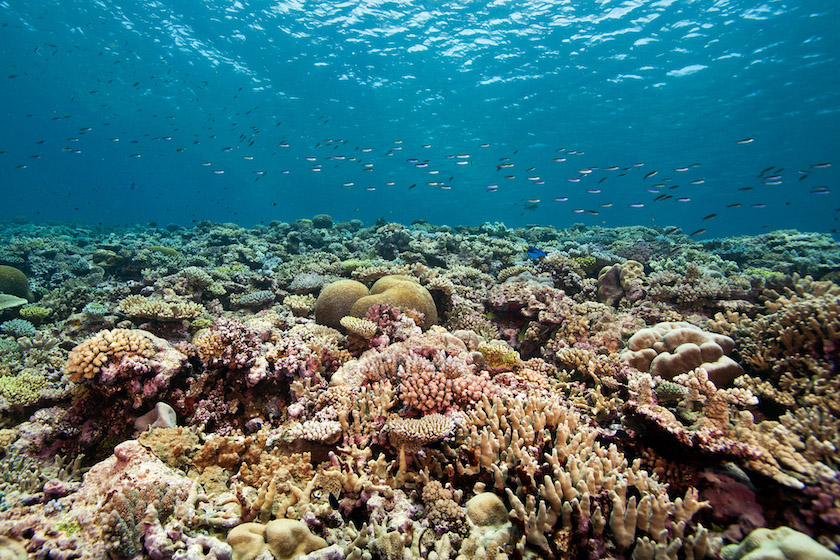 Given the widespread threats to coral reefs, scientists have lost the opportunity to understand the basic biology of “pristine” corals whose physiologies have not been markedly perturbed by human activity. For instance, high temperature-induced bleaching has been occurring annually since 2014 in New Caledonia. Because most corals cannot withstand repeated years when bleaching occurs, an analysis was undertaken to showcase coral behavior in a period just before the onset of “annual severe bleaching” (ASB; November 2013) such that future generations might know how these corals functioned in their last bleaching-free year. Pocillopora damicornis colonies were sampled across a variety of environmental gradients, and a subset was sampled during both day and night to understand how their molecular biology changes upon cessation of dinoflagellate photosynthesis. Of the 13 environmental parameters tested, sampling time (i.e., light) most significantly affected coral molecular physiology, and expression levels of a number of both host and Symbiodiniaceae genes demonstrated significant diel variation; endosymbiont mRNA expression was more temporally variable than that of their anthozoan hosts. Furthermore, expression of all stress-targeted genes in both eukaryotic compartments of the holobiont was high, even in isolated, uninhabited, federally protected atolls of the country’s far northwest. Whether this degree of sub-cellular stress reflects cumulative climate change impacts or, instead, a stress-hardened phenotype, will be unveiled through assessing the fates of these corals in the wake of increasingly frequent marine heatwaves.
Data for this study was collected on the Global Reef Expedition mission to New Caledonia.