Global Reef Expedition Navassa Field Report March 25‐31, 2012
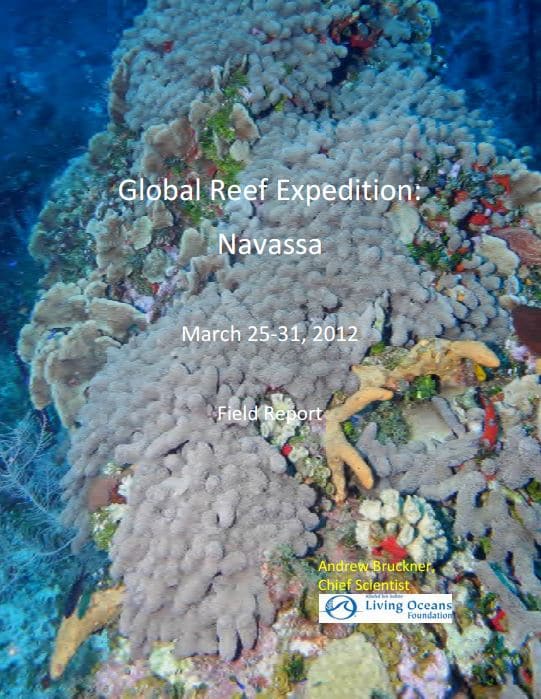
Navassa Island (18◦24’10’’ N, 75◦0’45’’W) is a U.S. possession that is approximately 5 km2 in area. The island lacks permanent human population. The island is comprised of a raised plateau surrounded by steep cliffs reaching to a submarine terrace of approximately 23–30 m in depth (Miller et al. 2003). A second raised terrace on the island and additional drop-offs and terraces at depth yield an overall ‘wedding cake’ topography to the region (Miller et al. 2008a). The cliffs surrounding the island preclude the standard coastal mosaic of habitat types such as beaches, mangrove shorelines, and seagrasses. Consequently fish groups dependent on these habitats (e.g., grunts (Haemulidae)) are largely absent from the Navassa assemblage. The primary reef habitats are the steep reef walls formed by the cliffs, large boulders located at the base of the wall, patch reefs, a limited amount of low-relief spur and groove, and rubble covering the terrace. Reefs of the island are exploited by transient subsistence Haitian fishers The island lacks local anthropogenic land-based sources of pollution and has minimal terrestrial run-off due to an absence of rivers.
The island’s oceanic position exposes it to substantial physical energy, and thus most of the sampling in the past was carried out on the leeward side of the island (SW), with only occasional sampling past the northwest point. Ecological assessment of reefs at Navassa Island began around the turn of the 21st century. The first through assessment of reef habitats, and associated habitat mapping was undertaken beginning in 2002 through multidisciplinary efforts of NOAA, US FWS and partner institutions (Miller and Gerstner 2002). These researchers identified major changes to reef communities due to several catastrophic events including a widespread outbreak of a coral disease (white plague-like condition) in 2004 and a mass bleaching event 2006 (Miller and Williams 2007). Changes in benthic community structure from 2002-2009 include a dramatic loss of coral cover and a subsequent dramatic increase in macro-algal cover, particularly in the best-developed reef habitats. The current study focused on an evaluation of patterns of recovery since the last surveys (2009), current impacts affecting the reefs, and characterization of the resilience of these reefs.