The two organizations will collaborate to advance marine conservation and sustainable marine tourism in the Saudi Arabian Red Sea
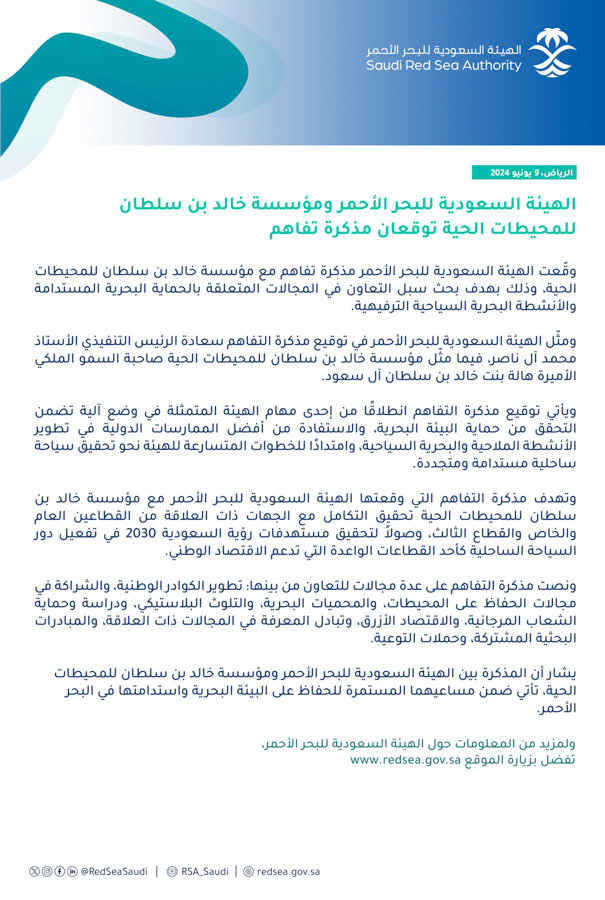
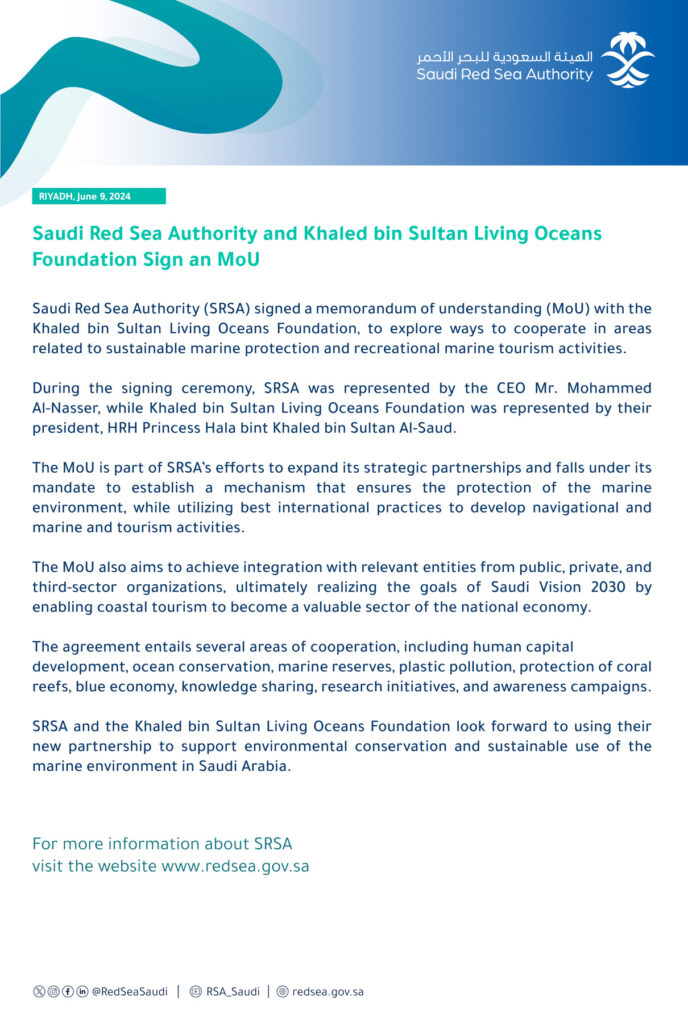
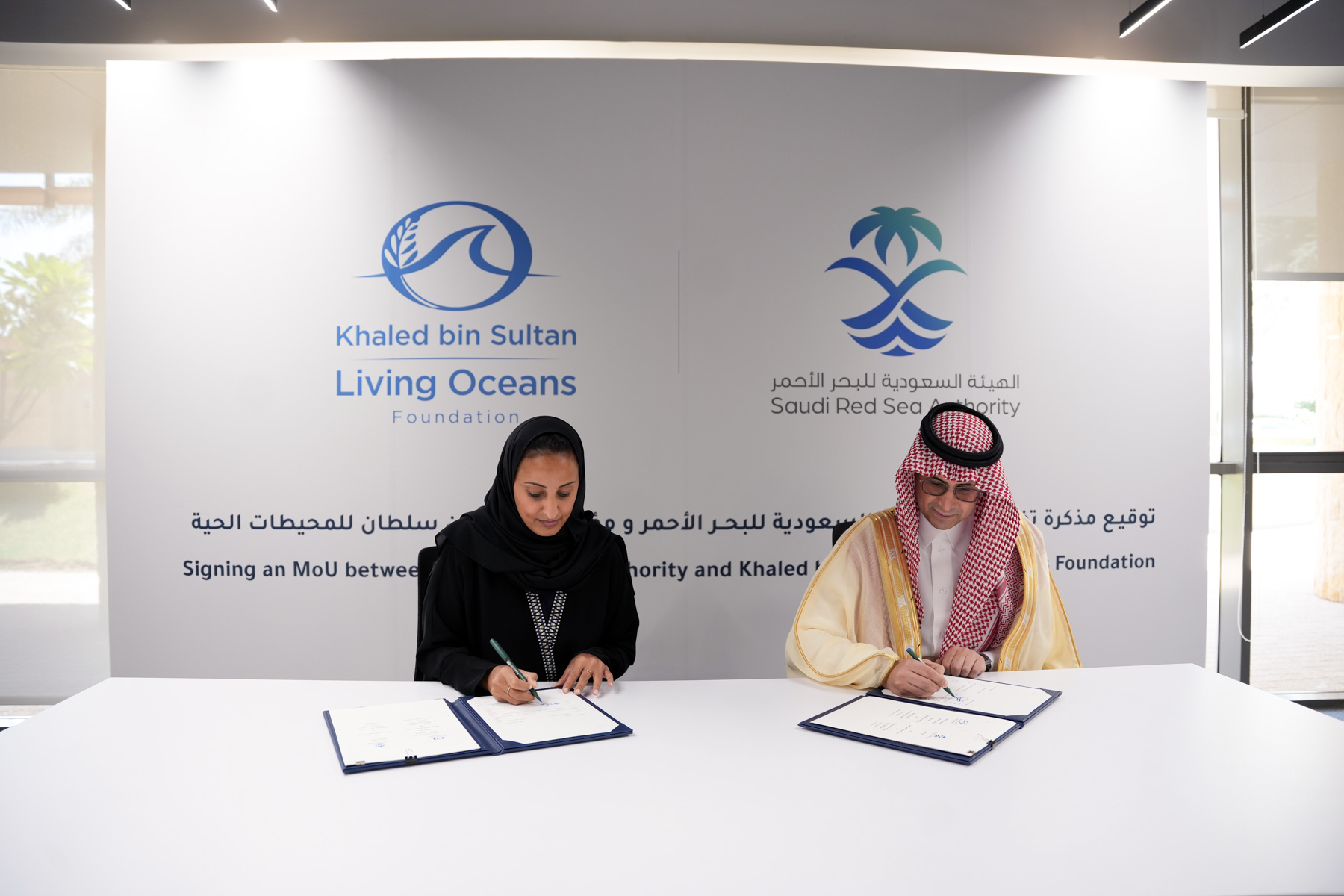 RIYADH, SAUDI ARABIA — Saudi Red Sea Authority (SRSA) signed a memorandum of understanding (MoU) with the Khaled bin Sultan Living Oceans Foundation to explore ways to cooperate in areas related to sustainable marine protection and recreational marine tourism activities.
During the signing ceremony, SRSA was represented by the CEO Mr. Mohammed Al-Nasser, while Khaled bin Sultan Living Oceans Foundation was represented by its president, HRH Princess Hala bint Khaled bin Sultan Al-Saud.
The MoU is part of SRSA’s efforts to expand its strategic partnerships and falls under its mandate to establish a mechanism that ensures the protection of the marine environment, while utilizing best international practices to develop navigational and marine tourism activities.
The MoU also aims to achieve integration with relevant entities from public, private, and third-sector organizations, ultimately realizing the goals of Saudi Vision 2030 by enabling coastal tourism to become a valuable sector of the national economy.
Areas of Cooperation
The agreement entails several areas of cooperation, including:
- Supporting future leaders and researchers in the field of environmental protection through scholarships and educational opportunities.
- Exchanging knowledge and expertise in the areas of sustainability, climate change, and environmental conservation.
- Hosting conferences, seminars, and workshops in the fields of ocean conservation, marine reserves, and coral reef protection.
- Collaborating on research initiatives and projects to find new solutions for global challenges.
- Raising awareness on environmental issues and promoting positive change.
SRSA and the Khaled bin Sultan Living Oceans Foundation look forward to using their new partnership to support environmental conservation and sustainable use of the marine environment in Saudi Arabia.