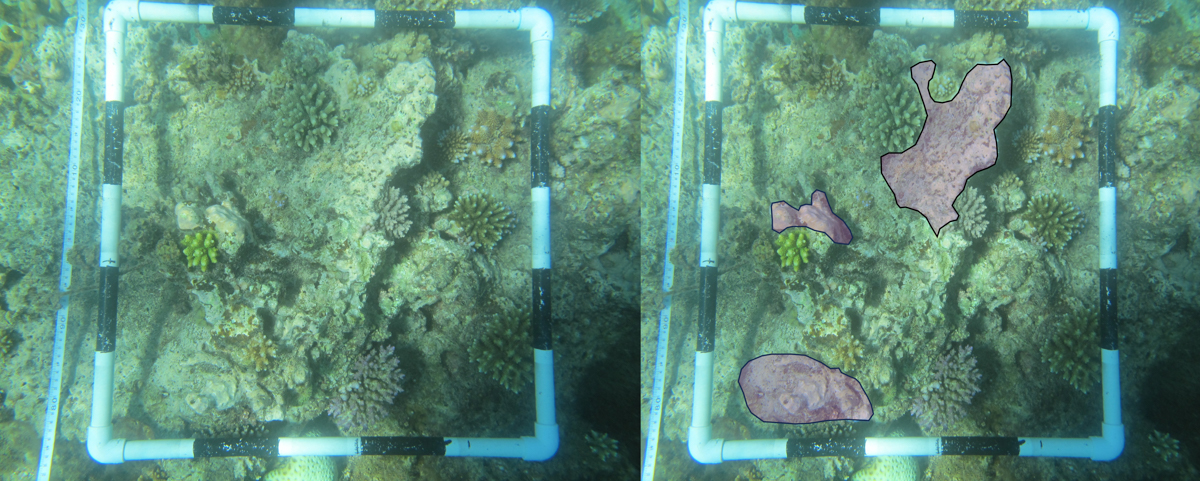
One sign of a recovering reef is coral recruitment, and thankfully it was abundant during the field surveys in Beqa Lagoon. On the fringing reef surrounding Rukua village, hundreds of small branching and boulder corals can be seen successfully growing on the substrate. Coral reef recruitment refers to the process by which young corals, also known as coral larvae, settle and establish themselves on the substrate of the existing reef. This process is crucial for the growth, maintenance, and recovery of coral reef ecosystems.
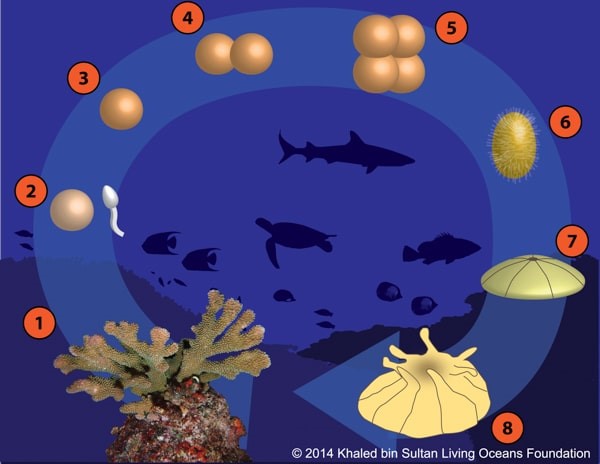
Corals can reproduce both sexually and asexually. Sexual reproduction involves several stages for it to be considered successful: reproduction, fertilization, larvae development, settlement, metamorphosis, and finally, colony growth. Recruitment success is influenced by various factors, including water temperature and quality, clean substrate, ocean currents, and others. Asexual reproduction in corals occurs when a piece of coral breaks off the parent colony and is able to regrown its own colony.
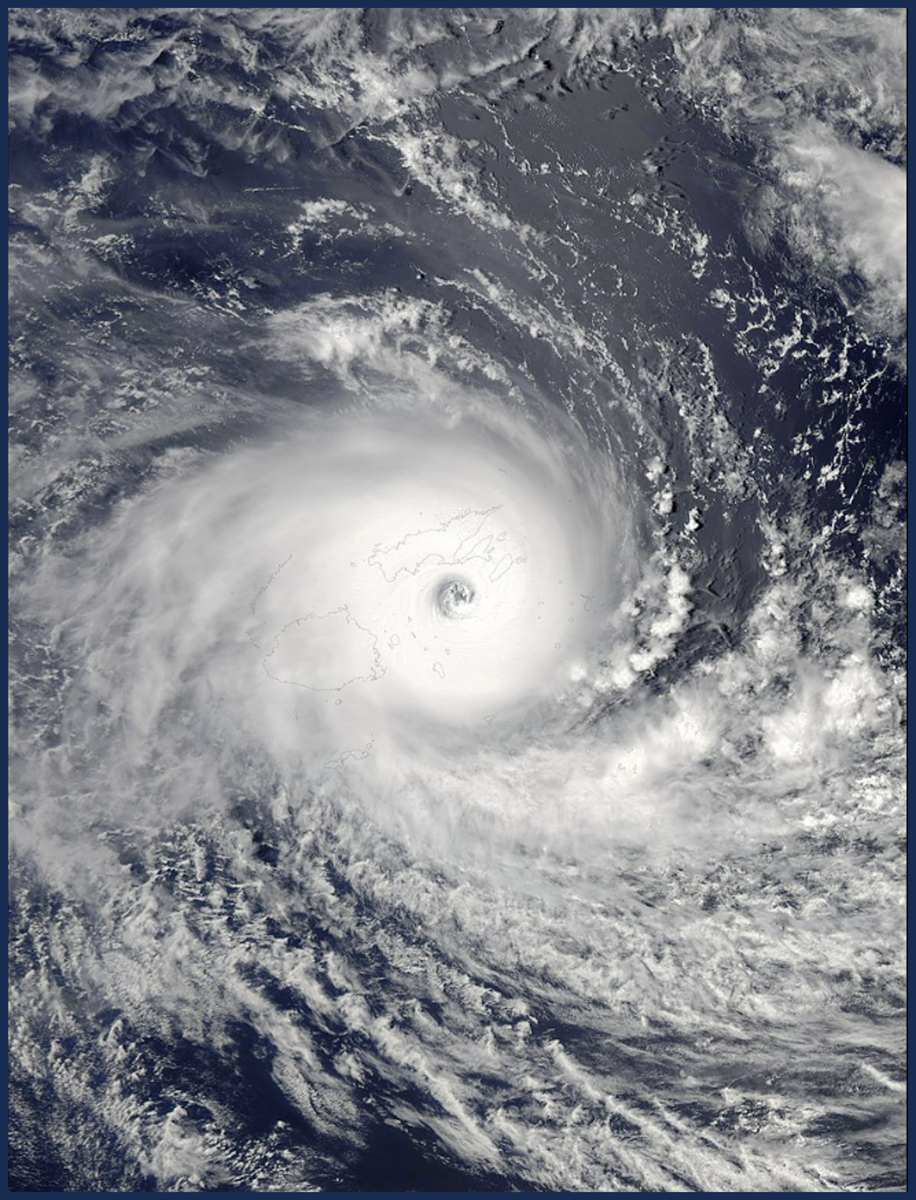
When Severe Tropical Cyclone Winston made landfall in Fiji during the winter of 2016, it was recorded as one of the strongest storms to date. Cyclones typically cause severe wind speeds and intense wave action. As the storm approaches land, coral reefs are often the island’s first line of defense to help dissipate wave energy. This can result in overturned boulder corals and the breaking of more delicate branching or foliose corals as well.
The fringing reef surrounding the village of Rukua was particularly impacted by the rough seas brought on by Cyclone Winston. In the seven years since Winston’s landfall, the Rukua fringing reef has started to show signs of regrowth with small coral recruits (<4cm in diameter) and slightly larger corals (>4cm in diameter) that are at the early stages of their live cycle. But why has this fringing been so successful with their coral recruitment?

One possible answer is the amount of clean substrate that was available for successful coral recruitment. The preferred real estate for recruits to settle on is called crustose coralline algae or CCA. CCA is a hard, rocklike red algae that fulfills two key functional roles. They act as cement or binding agents to help with reef calcification as well as provide the perfect landing spot for coral larval settlement. Another possible answer for the Rukua reefs recruitment success is the natural fragmentation of the branching corals that occurred during Cyclone Winston. Strong storms, such as cyclones can break apart coral colonies, and the resulting pieces are called coral fragments. Coral fragments often appear to grow faster and thus help the reef to regenerate quicker.
The community of Rukua will continue to monitor and report back on the regrowth of their reef, but as ocean warming and other threats are still looming over the reefscape we hope that these new recruits will have the genetic adaptability and resilience to overcome those obstacles.