
Youth for the SDGs Journal – Day 4
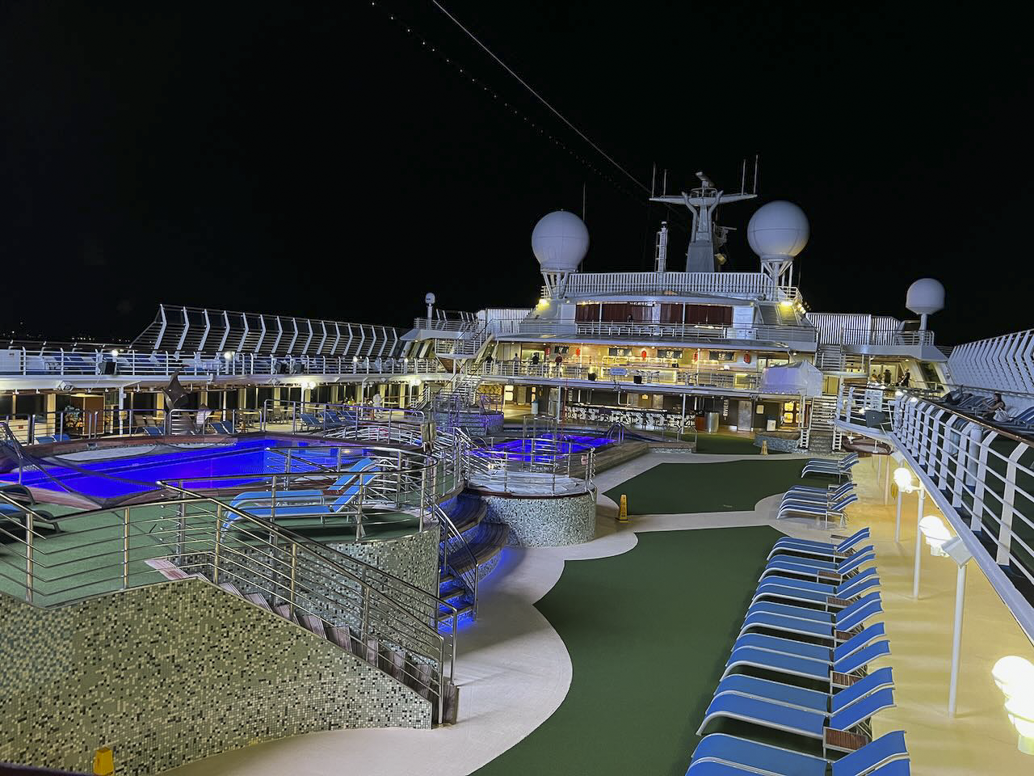
After a few whirlwind days on land, today gave us something we hadn’t had yet—time at sea. We spent the day aboard MV Pacific World, Peace Boat’s vessel, getting our sea legs and settling into life onboard as we sailed toward Cristóbal, Panama.

This isn’t your typical cruise. The Peace Boat is part classroom, part community hub, and entirely mission-driven. Its global voyages connect people and places through programs focused on peace, sustainability, and intercultural exchange. These voyages span multiple months and continents, creating floating campuses where changemakers, educators, and civil society leaders learn from one another and the world.


We started the morning at the Peace Boat Center with staff introductions and a ship tour essential for learning how to navigate the labyrinth of decks (and figuring out which stairwell leads where!). Despite the rocking transit, we settled into a full schedule of activities and opportunities to meet the incredible staff, guest educators, and passengers onboard.
Later in the morning, we heard from guest lecturer Roberto Zamora, a human rights lawyer from Costa Rica, whose talk on the concept of neutrality challenged us to consider how neutrality can either perpetuate injustice or serve as a tool for peace, depending on the context.
In the afternoon, I had the honor of giving a guest lecture on coral reefs on behalf of the Khaled bin Sultan Living Oceans Foundation. I spoke about the ecological importance of these fragile ecosystems, the threats they face, especially in Jamaica.

The highlight of the day was the Youth for the SDGs Introductory Event. Each of us had the chance to share who we are, where we come from, and what we hope to contribute to this experience. The event was interpreted in Japanese, Chinese, and Korean, reflecting Peace Boat’s commitment to inclusive, multilingual dialogue. It was an inspiring start to what promises to be a deeply collaborative journey.
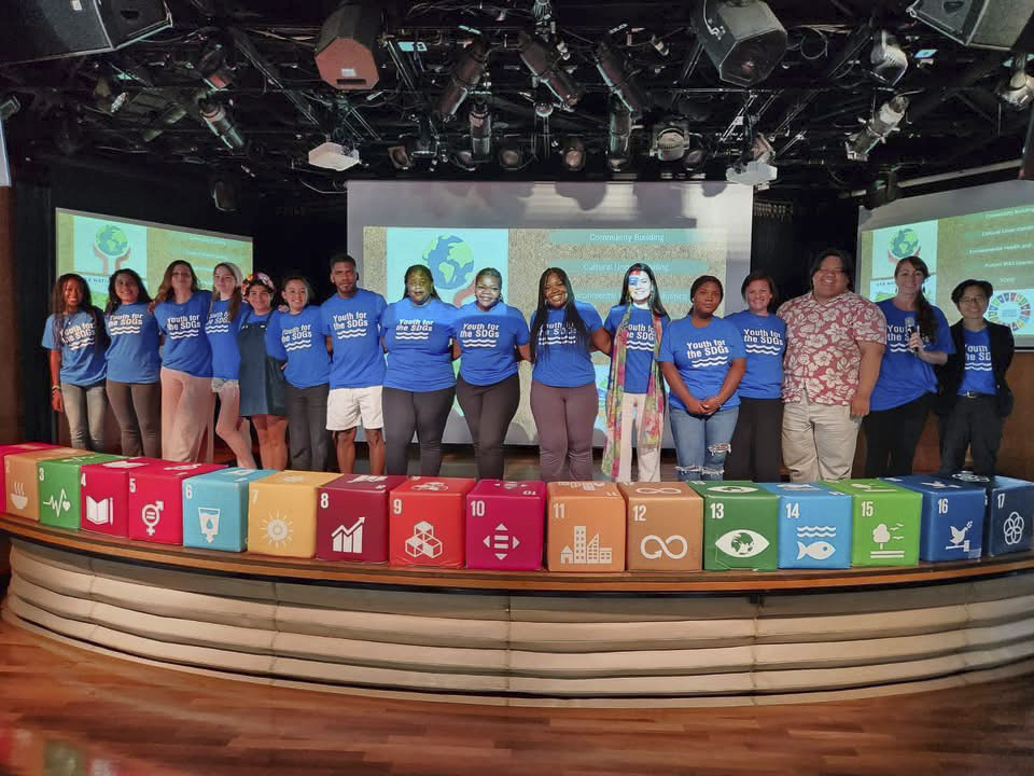
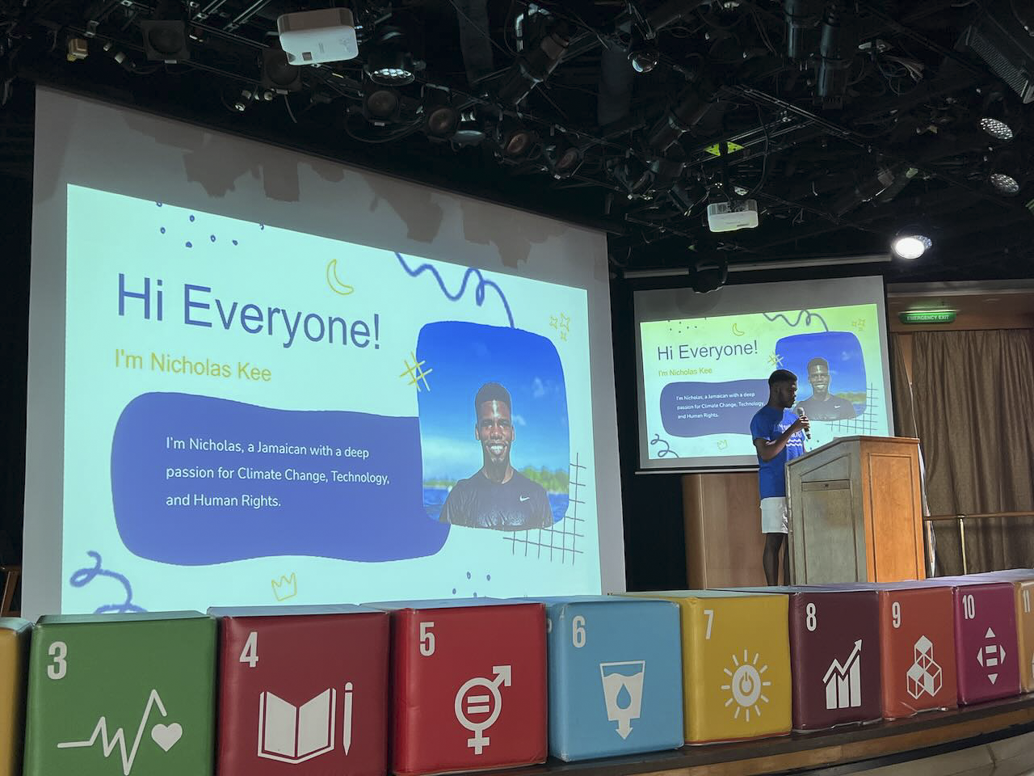
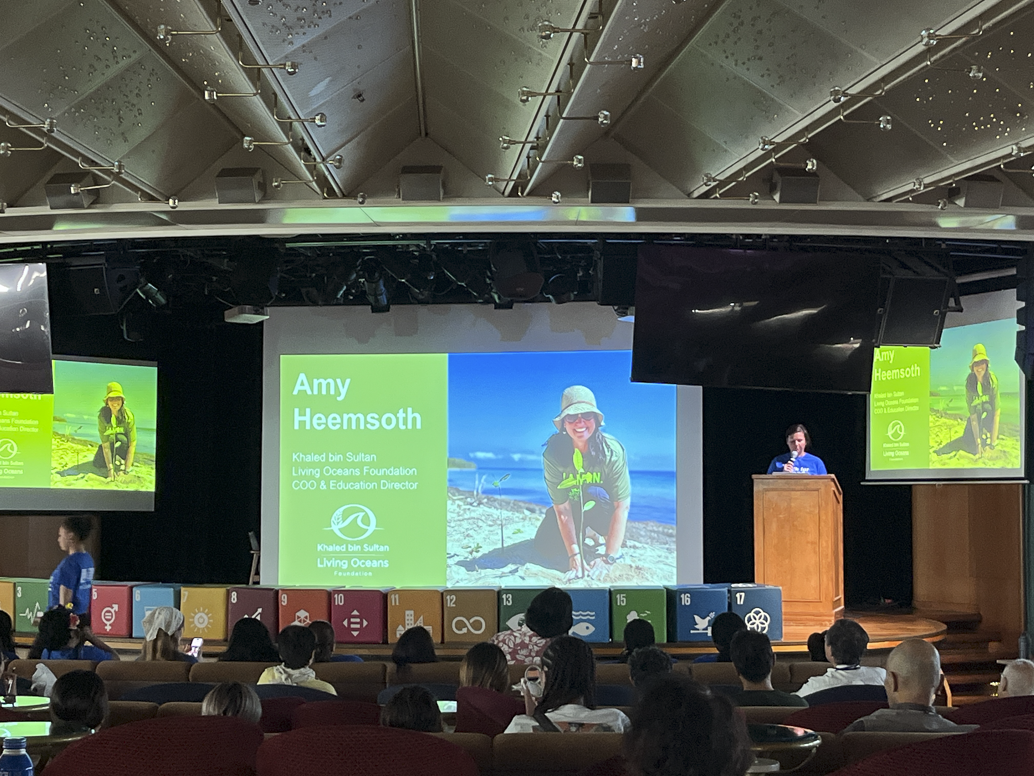
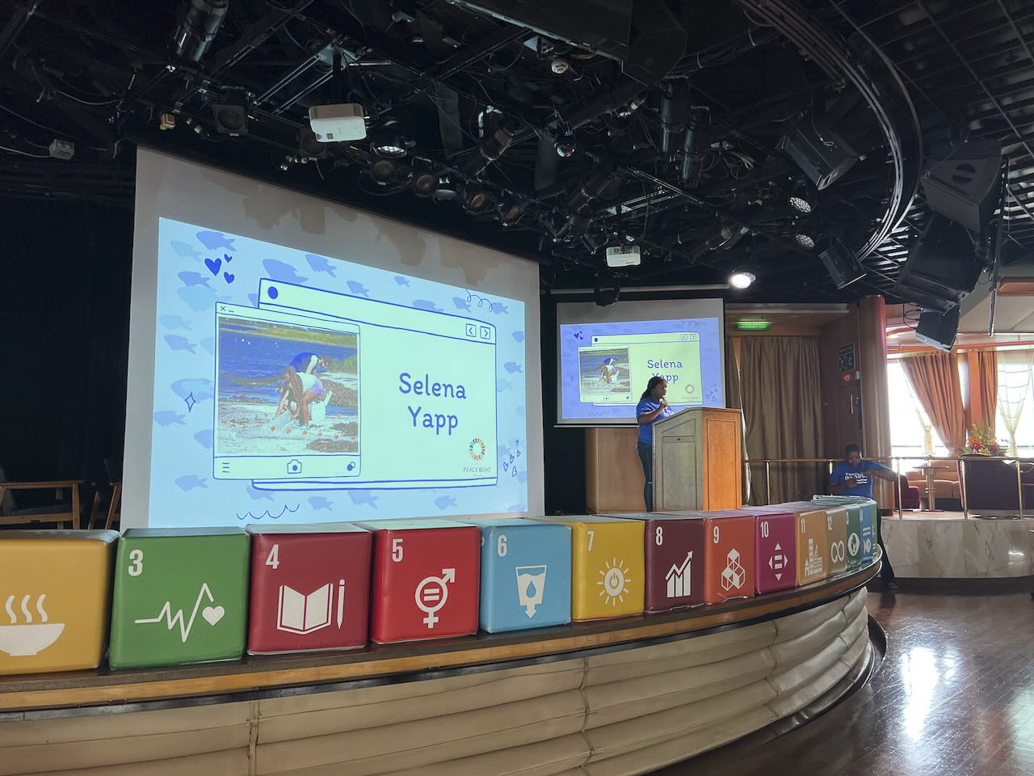
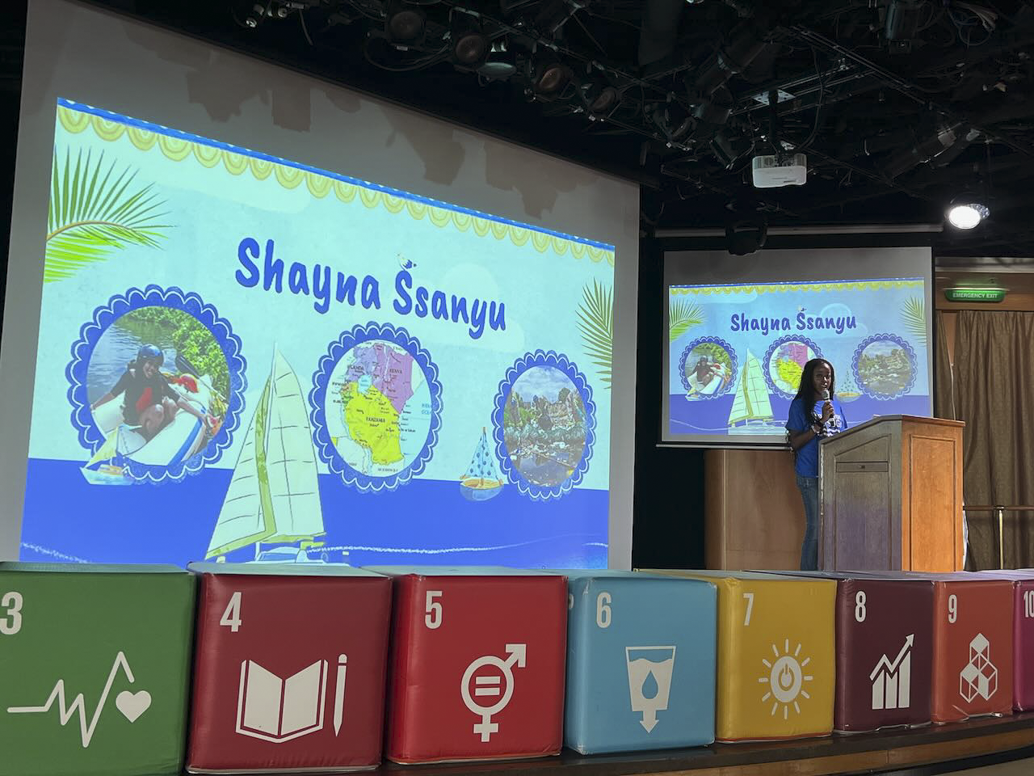
Youth for the SDGs, leaders, and guest lecturer Amy Heemsoth introduced themselves to the ship’s passengers, sharing a little background about each participant and the SDGs they are most passionate about.
It marked the beginning of what we knew would be a meaningful and collaborative voyage. We ended the day with dinner alongside special guests, sharing stories, building community, and discovering what it truly means to live and learn together at sea. For those of us who speak Spanish, it was also a perfect chance to practice our language skills in a warm and inclusive environment.
Today’s activities supported several of the United Nations’ Sustainable Development Goals (SDGs). Discussions on neutrality and human rights advanced peace, justice, and strong institutions (SDG 16), while my presentation on coral reef conservation elevated life below water (SDG 14) and climate action (SDG 13). Our Introductory Event promoted quality education (SDG 4), reduced inequalities (SDG 10), and highlighted the importance of inclusive and equitable global dialogue. Most importantly, the day emphasized partnerships for the goals (SDG 17), as we came together across cultures, languages, and disciplines to work toward a more sustainable future.
With nightfall, we looked ahead with excitement to our arrival in Panama. With new friendships forming and our purpose taking shape, we’re ready to step back on land and continue this global journey together.

Join the Youth for the SDGs 2026 Latin America Voyage
June 15 – July 1, 2026
If you are interested in participating in the next Youth for the SDGs voyage, Peace Boat US is now accepting applications.
Peace Boat’s 123rd Global Voyage will sail from Panama City through the Panama Canal to Puerto Quetzal, Guatemala, and arrive in Manzanillo, Mexico.
This program will focus on the impacts of climate change and ocean conservation efforts for coastal communities in the Latin America region.
Endorsed by the UN Ocean Decade, Peace Boat’s “Youth for the SDGs” programs create experiential learning opportunities for young activists and community leaders from around the world who are advocating for the SDGs.