As a coral surveyor, it often happens that I can while away an hour-long dive almost thoroughly upside down, my face only inches away from the substrate as I count and measure colonies. This means I often miss the ‘big stuff’ going on around me, and, at the end of my dive, it’s not surprising when other divers regale me with stories of huge schools of trevallies or turtle encounters – some of which occur only metres away from my blissfully unaware self. That said, down in the coral, I often find far more interesting creatures roaming about – the best of which, I believe, is the little nudibranch.
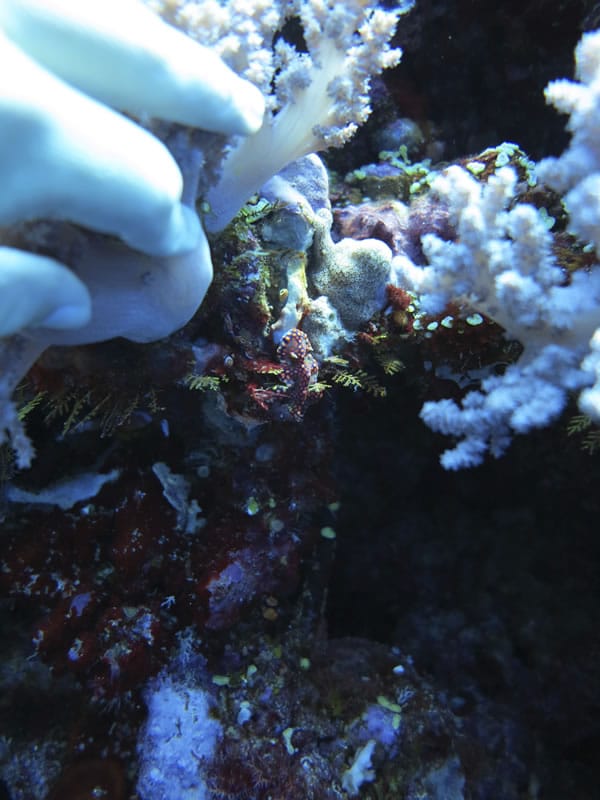
Ceratosoma sinuata hiding between some soft coral.
Often referred to as the ‘butterflies of the sea’, this peculiar looking group of soft-bodied mollusks is one of the world’s most fascinating marine groups. There are currently more than 3,000 species of nudibranch described, and they can be found dotted about shallow water habitats all over the world – from temperate to tropical waters (even the Antarctic!). Their vibrant colors, shapes, and cryptic natures make them a much-adored photographic subject – however, apart from their wide variety of morphologies, little is known about the life of these small creatures.
Nudibranches are most often described as a colourful sea slug – though they have little in common with your garden variety, lettuce-eating slug. They are a part of the mollusc family, alongside oysters, mussels, clams, squid and octopus. However, much like the octopus, nudibranches no longer retain their shell and have a completely soft body. They move along the substrate with a strong, muscular ‘foot’ and can range in size from millimeters to up to almost 40cm in the bigger species.
Most nudibranches have a ‘naked’ gill midway down their back, known as a ‘branchial plume’, which allows them to filter oxygen from the water and breathe. This appendage looks rather like a little pompom, and is the inspiration for their name – where nudi is derived from the Latin nudus meaning ‘naked’, and branch from the Greek brankhia meaning ‘gills’. Some species lack a branchial plume, but instead have a series of appendages called ‘cerata’ down their body – thin enough to filter oxygen from the water.
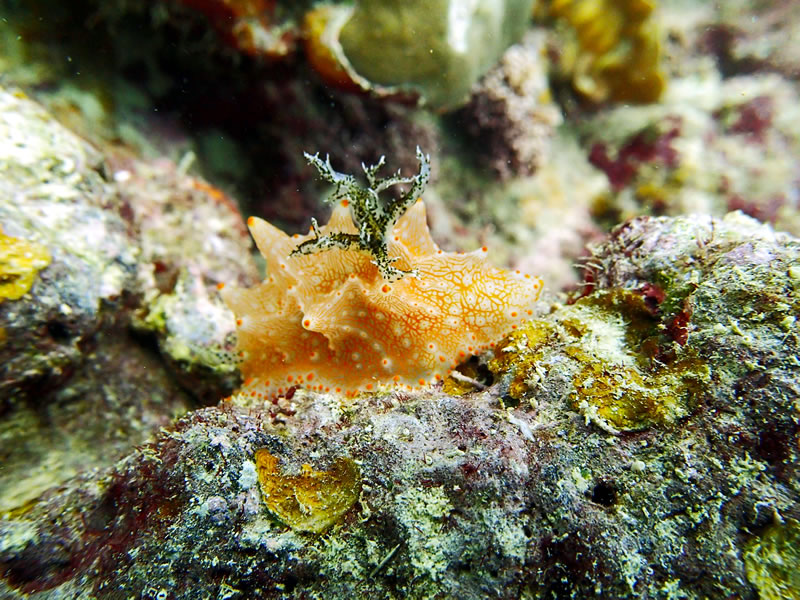
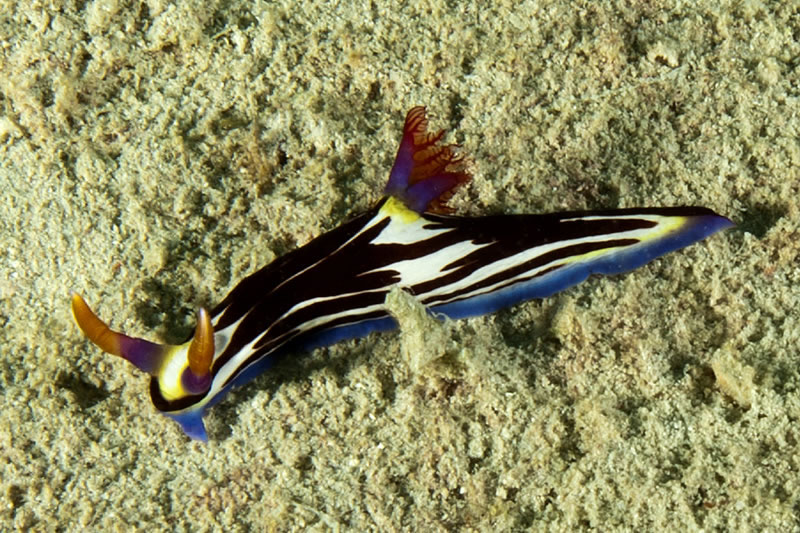
Notice the black and white branchial plume on a Batangas halgerda nudibranch (left photo), and the reddish purple plum on another Nembrotha spp. (right photo).
(Click-thru on images for greater detail.)
One of the most amazing adaptations of some nudibranch species is their ability to digest prey that is often toxic, such as sponges or anemones, and then to be able to reuse the stinging cells found within their prey for their own defense. Scientists have shown through chemical analysis of nudibranch tissue that they can transfer the cells they ingest to be stored within their upper side, or inside their cerata. Some other species of nudibranch are also able to reuse photosynthetic algae from their prey – storing the algal cells completely whole within their own tissues and feeding off the sugars that the cells produce. This remarkable adaptation essentially makes them little solar-powered sea slugs!
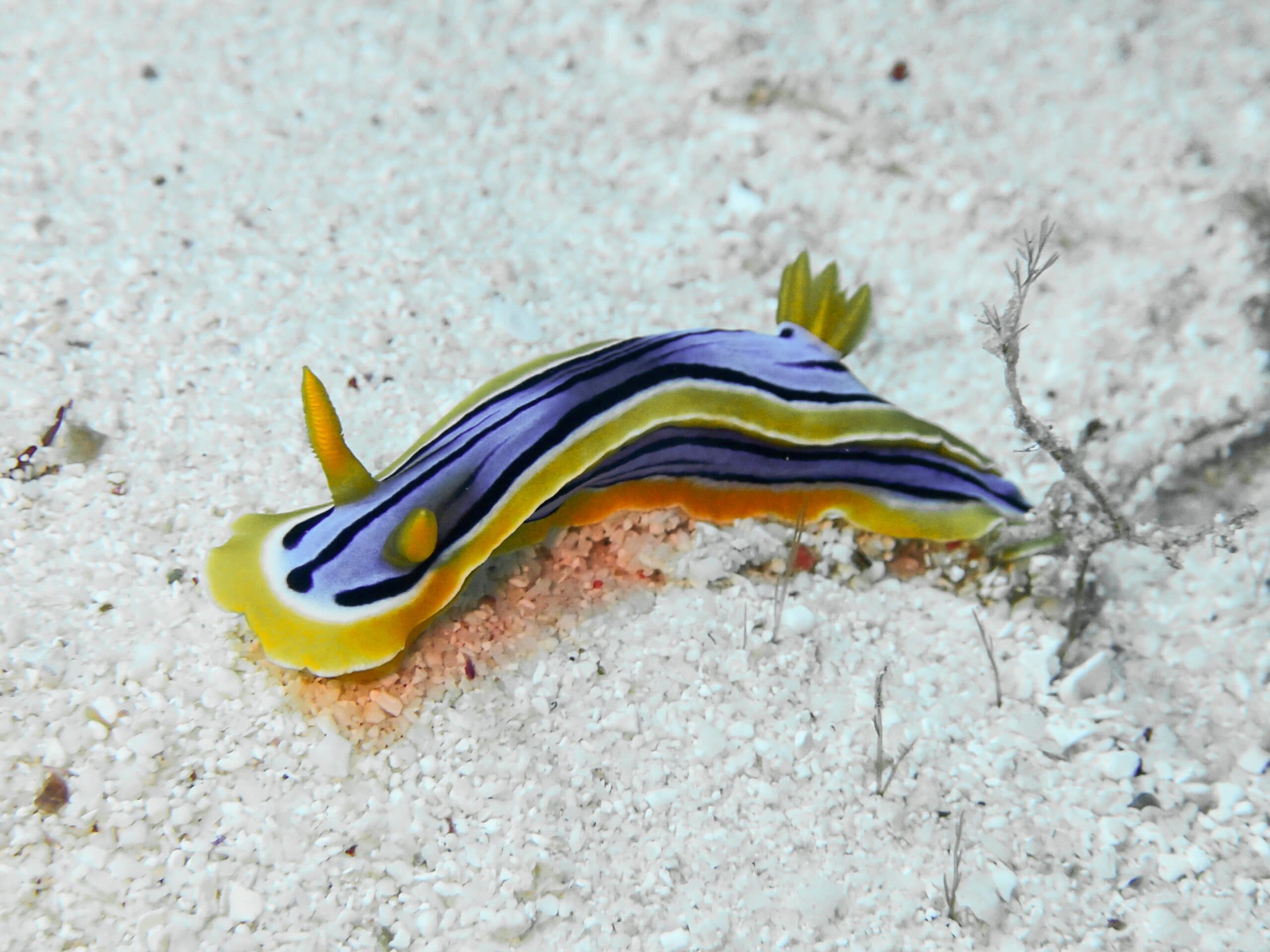
Some nudibranchs skin, like this Chromodoris, contains secondary metabolites and toxins absorbed from the sponges they eat. The bright, striped colouration acts to warn predators of their toxicity.
Take a look in this album for a glimpse into the diversity of nudibranches:
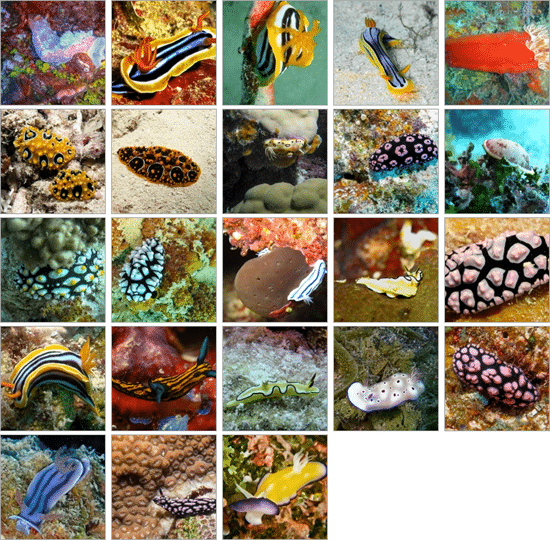
Photos: 1 Grace Frank, 2 Kristen Stolberg, 3-4 Ken Marks