Two days of diving and our coral reef research is well underway in Isle de Pins, New Caledonia. Although sea conditions were very murky, we explored three lagoonal patch reefs yesterday and successfully completed our standardized coral, benthic and fish surveys. We also sampled corals and algae and collected information needed to map the shallow marine habitats. Today’s dives focused on the fore reef, the part of the reef that is sloping seaward; fortunately, the visibility was better and the sea was fairly calm.
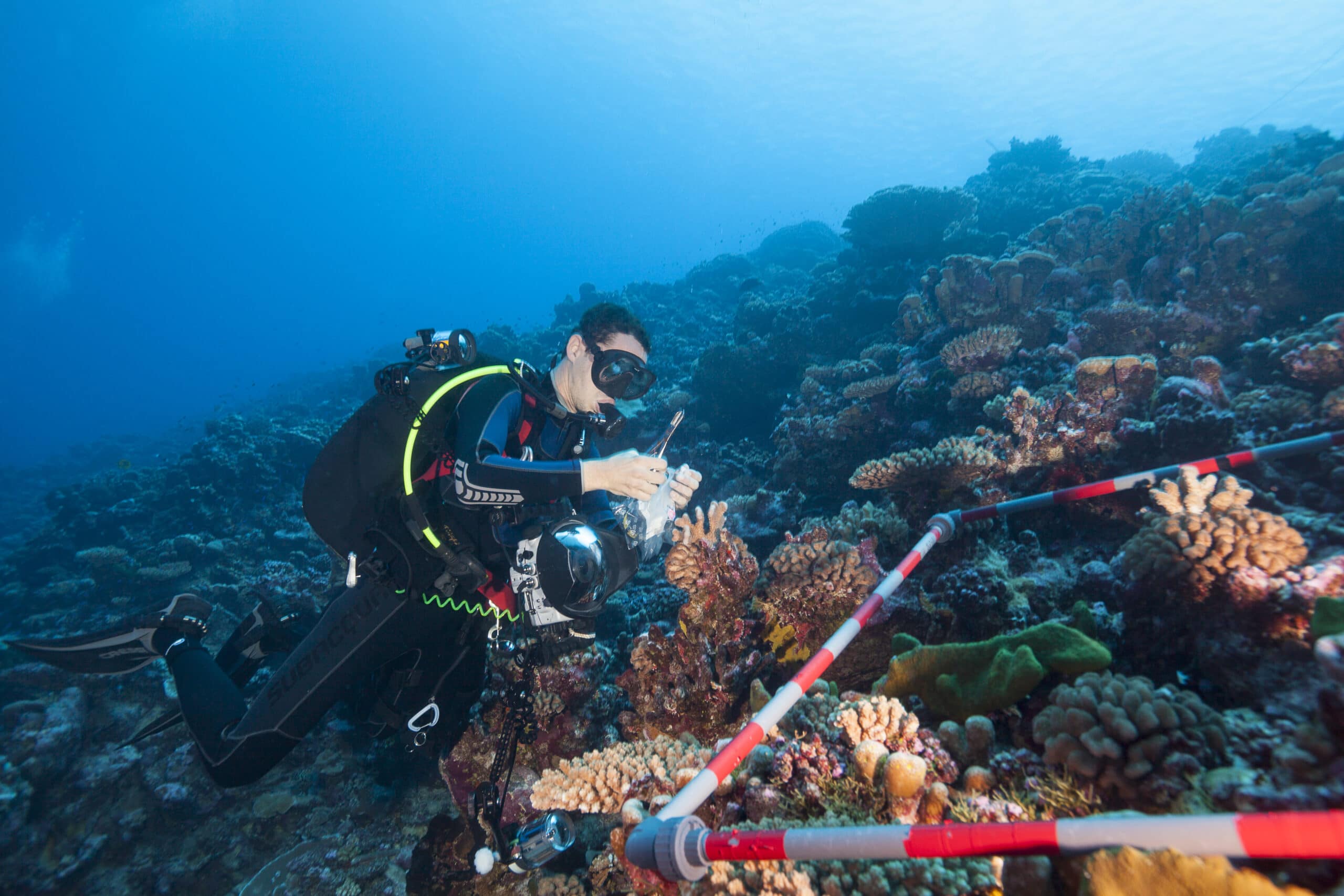
João Monteiro collects coral samples.
As part of our standard survey methodology, we sampled branching corals (Pocillopora) to evaluate their health, the symbionts (zooxanthellae) associated with the corals, and how variations in the environment alter their ability to make food (“i.e. photosynthetic efficiency”). We continue measuring the water chemistry and taking cores of the massive framework corals (Porites) to assess changes in growth and the effects of ocean acidification. Our coral reef research research is expanding our understanding of coral reefs around the world.
A member of the Science Team taking a core sample.
During this mission we are working with the Institut de Recherche pour le Développement (IRD). One team of scientists is evaluating how food sources including plankton, organic material in the water and sediment, and the food produced by the symbionts vary among corals exposed to different levels of human pressure. Another scientist is cataloging the different species of algae found on the reefs. A third researcher is collecting, identifying and genetically barcoding all of the motile invertebrates he can find. The fourth team is completing a population genetic survey of giant clams, to assist in the management of these commercially harvested species. Over the next month you’ll hear more about our coral reef research here in New Caledonia and each of their findings.
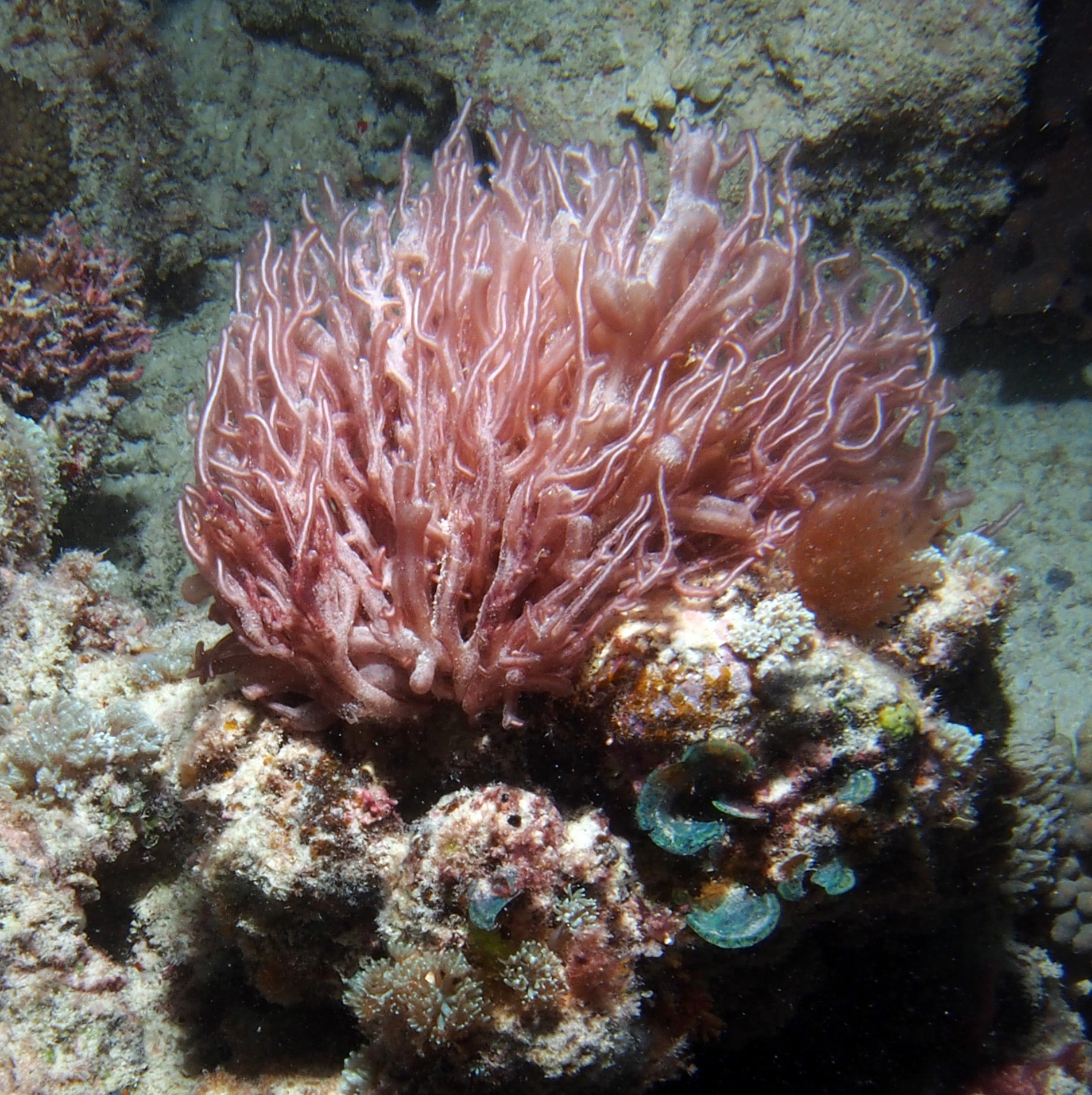
Trichoglea Algae
Photos by: 1 – Michele Westmorland , 2 – Eddie Gonzales, 3 – Andrew Bruckner