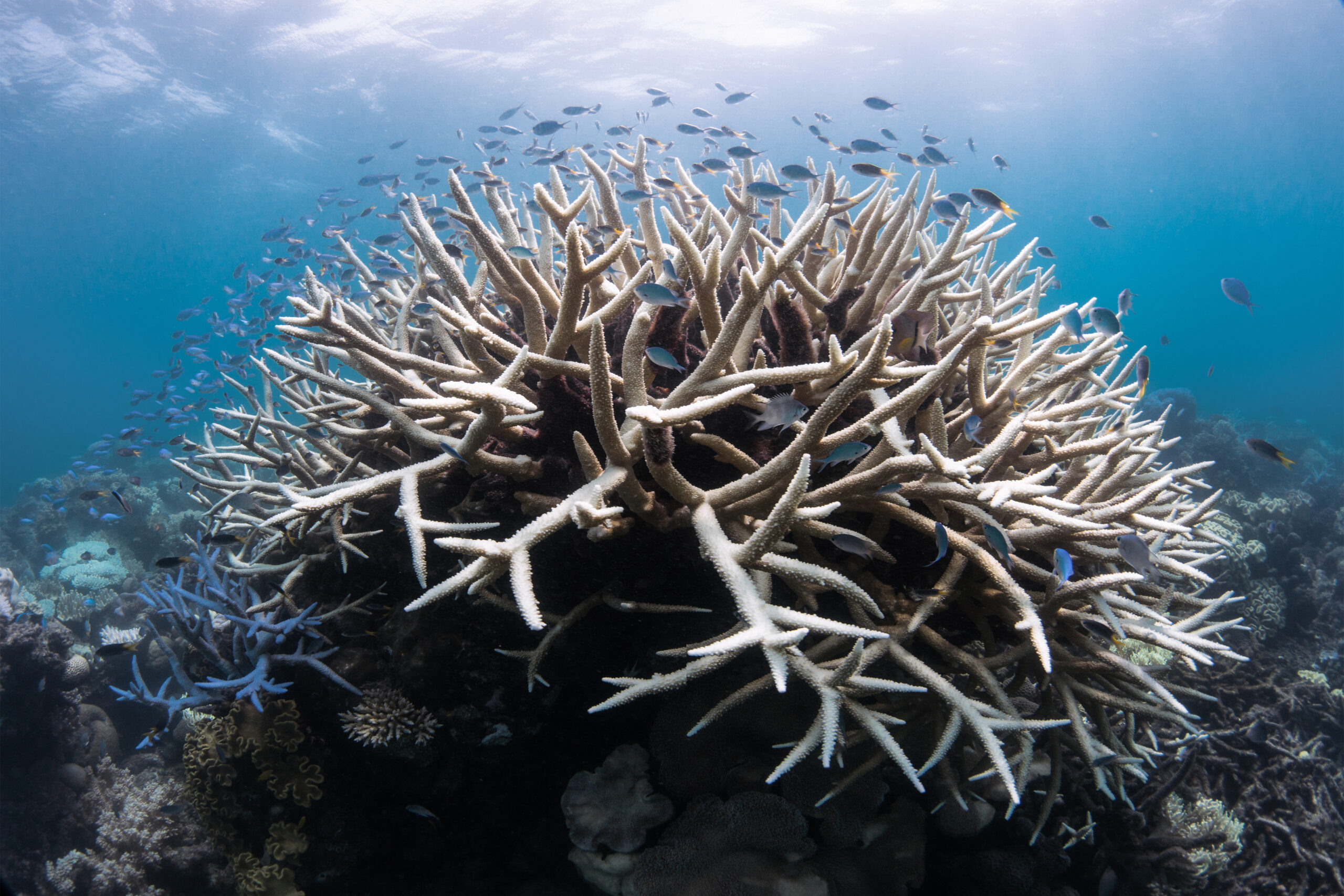
The Indo-West Pacific is known for their rich, diverse soft coral (octocoral) communities, and the Ribbon Reefs were no exception. They are plant-like, resembling trees or bushes, but they are made up of polyps just like a stony coral. Distinguished by having polyps that bear eight hollow, feather-like tentacles, most (except for blue coral, Heliopora) lack a hard skeleton like that found in stony corals. Instead, most have minute, spiny skeletal elements called sclerites which are used for protection and help them. Gorgonians also have a solid internal axis made of a proteinaceous material similar to horns or antlers.
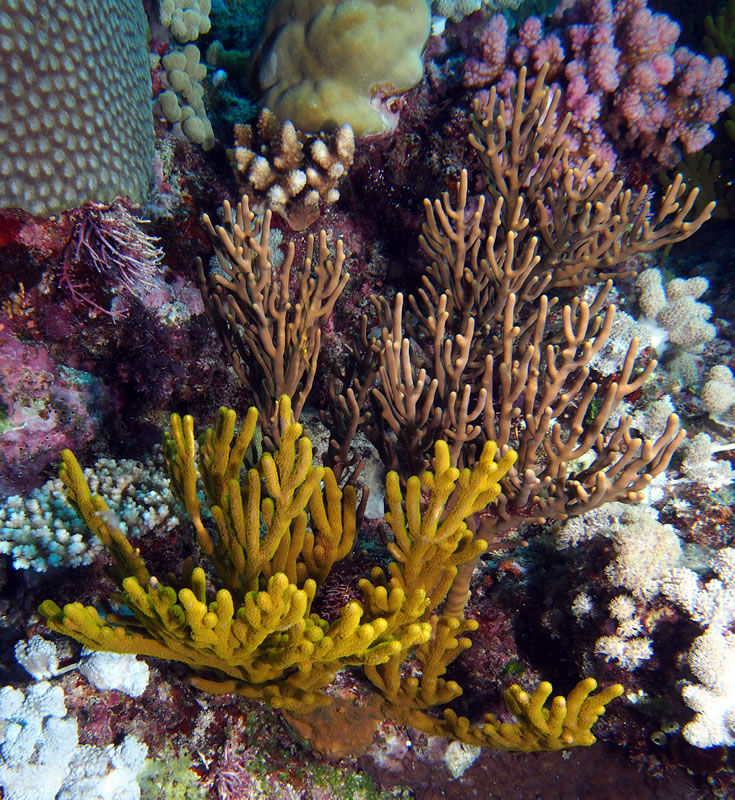
Two branching gorgonians.
Like stony corals, soft corals are very sensitive to the environment, with changes in the abundance of species along gradients of turbidity, sedimentation, wave exposure, light, currents and other factors. On clear offshore reefs at the edge of continental shelves, such as the Ribbon Reefs of the Great Barrier Reef, the most abundant soft corals are the species with symbiotic algae (zooxanthellae) and they can carpet more than 50% of the bottom. Reefs in turbid nearshore environments tend to have fewer species, most without zooxanthellae.
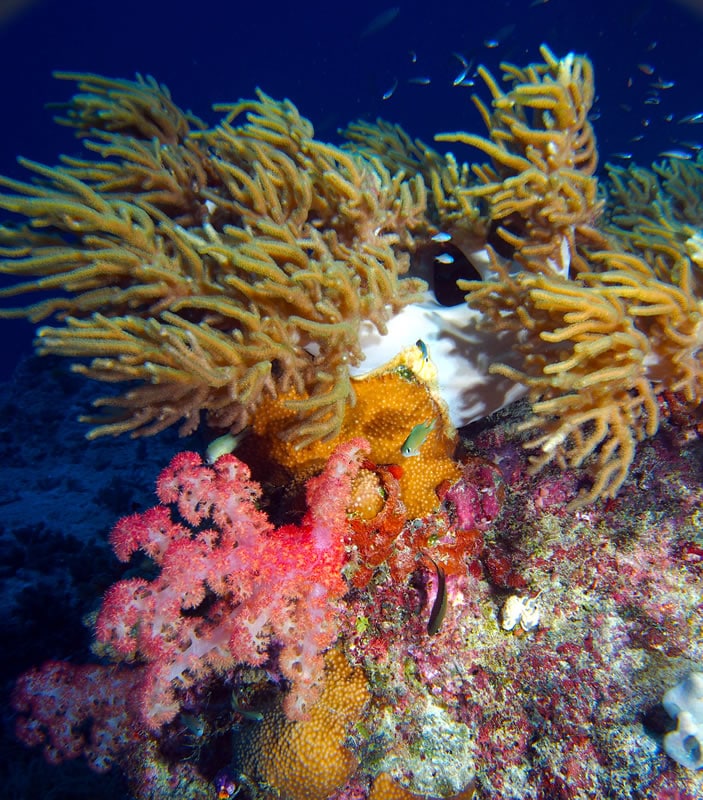
Colorful soft coral community.

See More Soft Coral Images in our Great Barrier Reef Photo Album.
The highest number of soft coral species tend to be found on the mid-shelf reefs, as species that prefer clear, nutrient-poor water coexist with those that inhabit turbid waters. The leeward side of Ribbon Reef #6 was a great example of this. Soft corals of every growth form (encrusting, massive, fan-shaped, and bushy colonies), many brightly colored, competed for space among the stony corals. In places, yellow-brown mats of the leather-like Sinularia, often 2-3 m in diameter, covered the steep walls. Under ledges, purple and red, bushy Dendronepthya were intermixed with branching gorgonians (sea fans). Flower-like Xenia have polyps that pulsate in synchrony, like a beating heart, as they filter water.
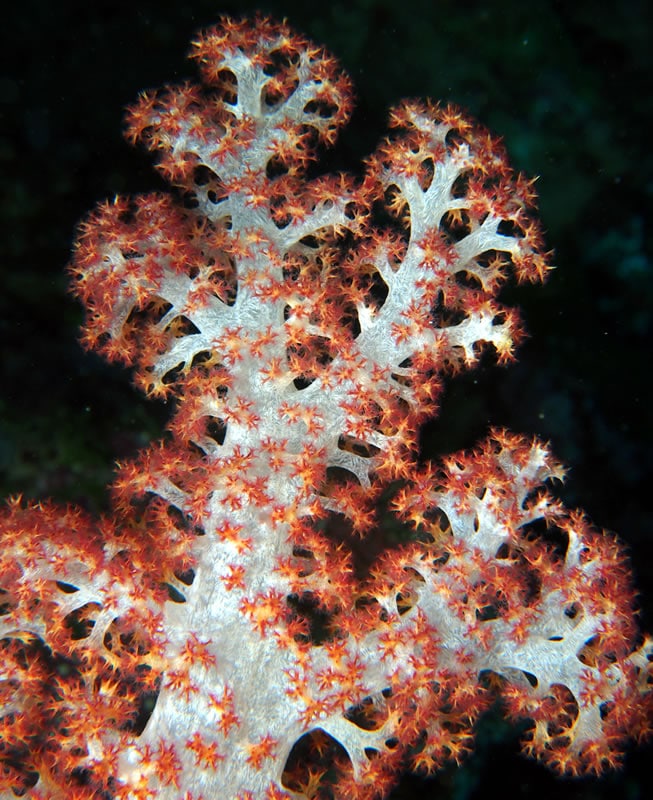
Dendronepthya soft coral.
While only a few soft corals contribute directly to reef growth, their sclerites are slowly cemented together, forming structures similar to corals. Some can live hundreds of years. They play other very important roles on coral reefs as well. Many contain chemical compounds that are harvested by humans for their medicinal uses, cosmetics, and other usages.
Photos: 1,2,4 – Andrew Bruckner; Soft Coral Album pics – Ken Marks.