search-icon
Midshelf Reefs

After diving our first set of offshore Ribbon reefs we began exploring the Green, Pink and Blue Zones on a set of midshelf reefs.  The depths, water clarity and habitat structure are all vastly different from offshore reefs.  Most of these reefs have discontinuous reef habitat and they lack the deeper zones seen out at the shelf edge.  The reef structure was less solid.  Many of the corals were loose, some were overturned and the bottom was covered in thick algae.  With exception of some massive (up to 10-15 m diameter) pore corals (Porites lobata) and a few other giant star corals (Diploastrea), coral cover was much less than on the Ribbon Reefs.  Large bommies, some over 50 m in diameter and 5-10 m tall, were separated by low relief habitat with scattered coral heads.   Among the bommies, we observed many more coral trout, squaretail coral groupers, schools of snappers, and rabbitfish, while the smaller bodied fishes, such as damselfish and wrasses, seemed to prefer the stands of branching corals and rubble areas.  There were also noticeably fewer sharks.
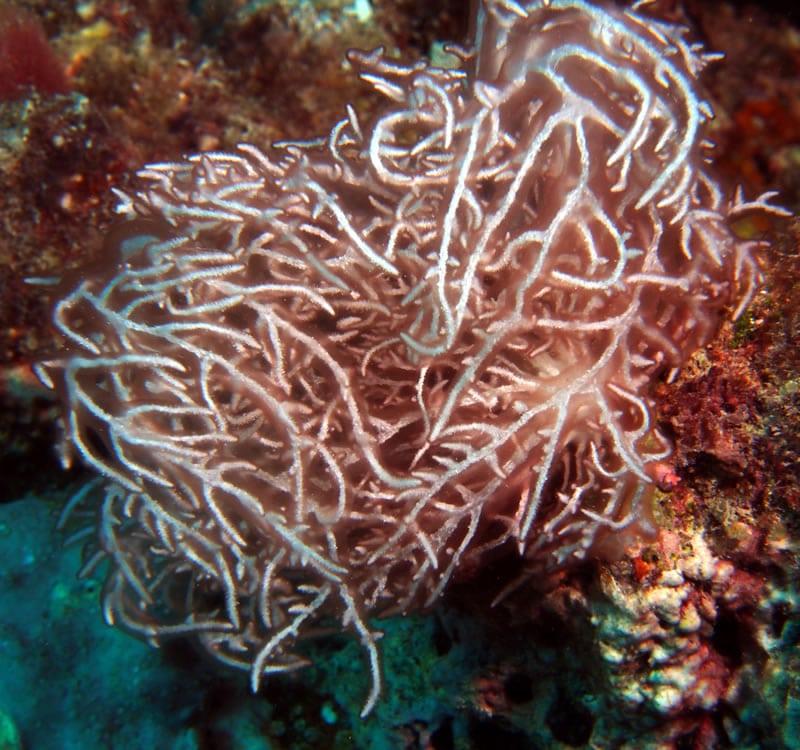
Trichoglea Coral on a Midshelf Reef of the Great Barrier Reef
A red macroalgae, Trichogloea.
(Click-thru for detail on larger image.)

Unique species were found here as well.  Many of the more sediment tolerant corals were prominent such as Goniopora and Alveopora, two massive corals that extend their long tentacles during the day.  We’ve also seen large thickets of fragile corals such as a type of lettuce coral (Leptoseris) and branching Porites, both of which were absent on the outer reefs.
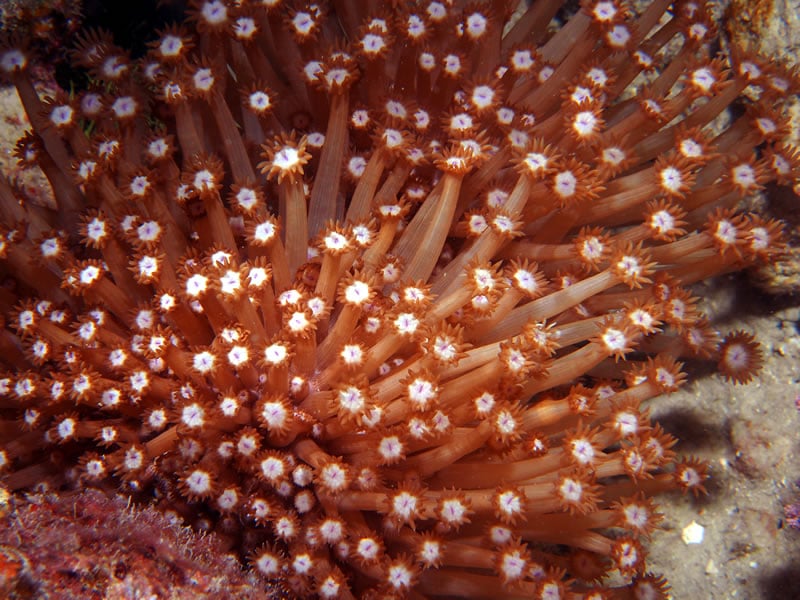
Goniopora Coral on a Midself Reef of the Great Barrier Reef
A close-up of the tentacles of the stony coral Goniopora.
(Click-thru for detail on larger image.)

Fish species appeared to segregate by habitat, with lots of activity near the corals, similar biomass but less diversity within stands of dead corals, and both lower biomass and species diversity in some of the flattened, rubble dominated and sand habitats.  Sea cucumbers also prefer these habitats, with high numbers of eight different species recorded throughout the reef environments.  Even giant clams are more common.  We’ve seen dozens of clams that were each nearly a meter in length!
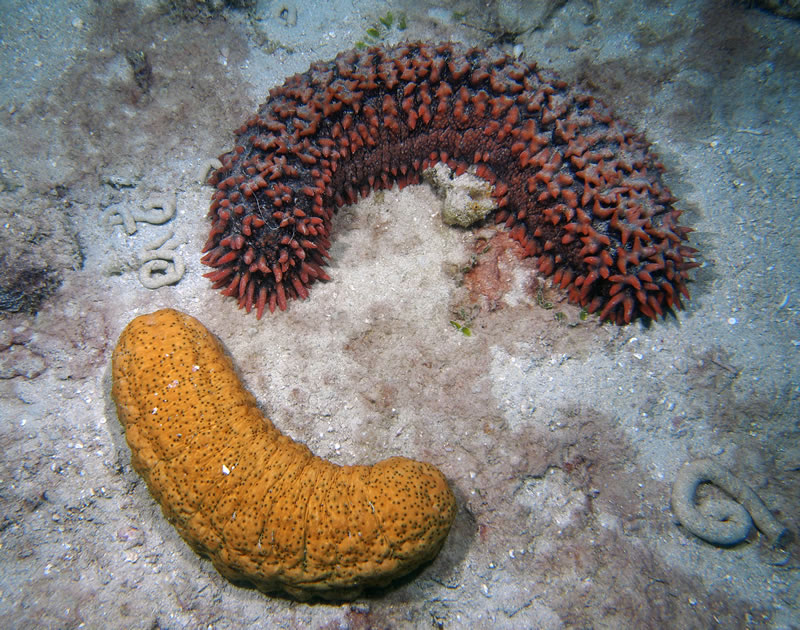
Two Sea Cucumbers on a Midself Reef of the Great Barrier Reef
Two commercially valuable sea cucumbers, prickly redfish (Thelenota ananas) and a curryfish (Stichopus hermanni).
(Click-thru for detail on larger image.)
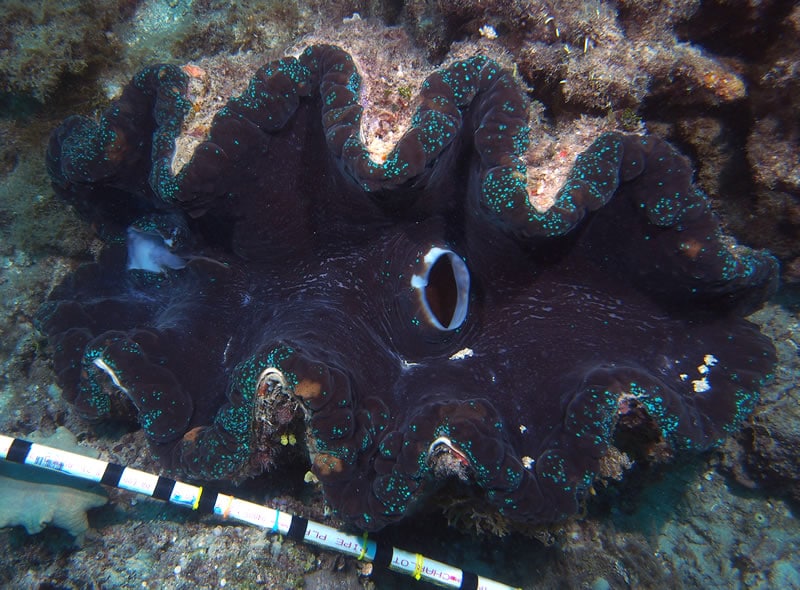
Giant Clam, Tridacna Gigas, on a midshelf reef of the Great Barrier Reef.
A large (75 cm) giant clam (Tridacna gigas). Scale bar= 50 cm.
(Click-thru for detail on larger image.)
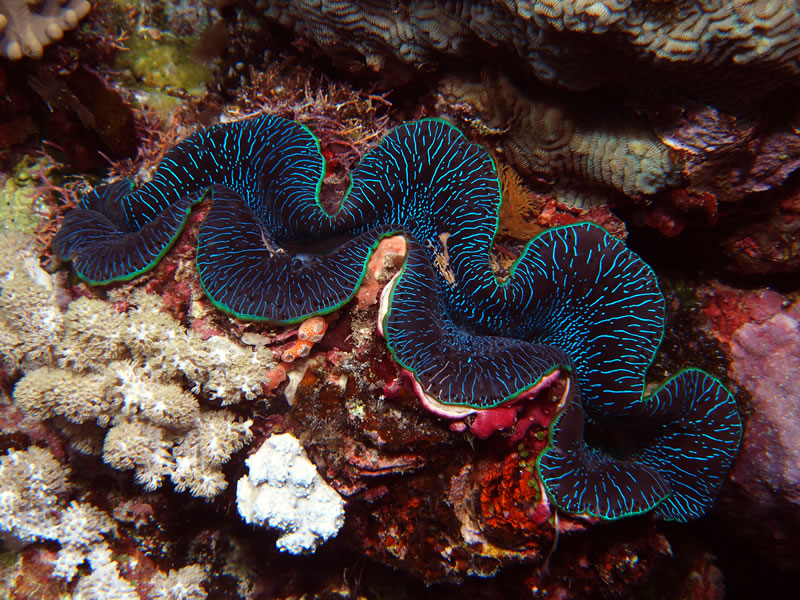
Giant clam, Tridacna Maxima, on a midshelf reef of the Great Barrier Reef.
One of the small giant clams, Tridacna maxima.
(Click-thru for detail on larger image.)
Related Posts

After the Storm: Standing with Our J.A.M.I.N. Family in Jamaica

There are moments in this work that feel heartbreakingly familiar.

Two weeks after we completed our Jamaica Awareness of Mangroves in Nature (J.A.M.I.N.) programming, Hurricane Melissa made landfall. A powerful Category 5 hurricane, Melissa is now tied with Hurricane Allen in 1980 for the strongest winds ever recorded in an Atlantic storm. Like Hurricane Dorian, which devastated The Bahamas in 2019, Melissa will be remembered as one of the strongest hurricanes on record in the region.

For 11 years, the University of the West Indies Discovery Bay Marine Laboratory and William Knibb Memorial High School have been more than program partners. They have welcomed us into their classrooms and labs, shared meals and laughter, and committed themselves to educating their students about mangroves and coastal resilience. These colleagues and students are not distant collaborators. They are family.

And they were hit hard…

Read More

B.A.M. Turns 10: A Year of Milestones, Resilience, and Growth

The 2025–2026 academic year was one of those defining years for our Bahamas Awareness of Mangroves (B.A.M.) and Jamaica Awareness of Mangroves in Nature (J.A.M.I.N.) programs. It was a year marked by celebration, challenge, growth, and powerful full-circle moments, and a reminder of why mangrove education matters.

In The Bahamas, B.A.M. reached a major milestone: ten years of partnership and environmental education in Abaco. Since 2015, in collaboration with Friends of the Environment, we have worked alongside Patrick J. Bethel High School and Forest Heights Academy to bring hands-on mangrove science into classrooms and into the field. This year, we were proud to expand the program to S.C. Bootle High School, increasing access for students who live…

Read More
Privacy Overview

This website uses cookies so that we can provide you with the best user experience possible. Cookie information is stored in your browser and performs functions such as recognising you when you return to our website and helping our team to understand which sections of the website you find most interesting and useful.  You can view our complete Privacy Policy here.

Strictly Necessary Cookies

Most of our cookies are used to improve website security and reduce spam. These cookies should be enabled at all times. They also enable us to save your preferences for cookie settings.

3rd Party Cookies

This website uses Google Analytics to collect anonymous information such as the number of visitors to the site, and the most popular pages. Keeping this cookie enabled helps us to improve our website.