Changing Tides
As the crew and science team watched from the M/Y Golden Shadow, a bigger, brighter moon filled the night sky rising above the island of Vanuabalavu on June 23, 2013. When the moon is closest to Earth, called perigee, it


As the crew and science team watched from the M/Y Golden Shadow, a bigger, brighter moon filled the night sky rising above the island of Vanuabalavu on June 23, 2013. When the moon is closest to Earth, called perigee, it
It’s been two weeks since the Gambier portion of the Global Reef Expedition to French Polynesia ended. In less than two weeks, our science team will be heading back to French Polynesia to conduct research in Rangiroa. In the meantime,
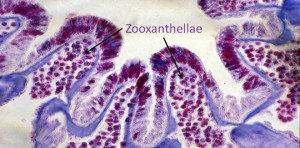
Coral reefs are often called the rainforests of the seas. Teeming with life, reefs harbor a broad range of organisms that rely on a complex network of ecological interactions and symbiosis (close and often long-term interaction between two or more
Peter Glynn, Professor of Marine Biology and Fisheries at the University of Miami, was one of the first scientists to study the coral reefs of the Galapagos. He’s the head of the U. Miami team on board the Golden Shadow,
Throughout this week, students from two high schools—Gig Harbor High School in Gig Harbor, Washington and Corona del Sol High School in Tempe, Arizona—have been virtually following the Global Reef Expedition to learn more about the work of the Living
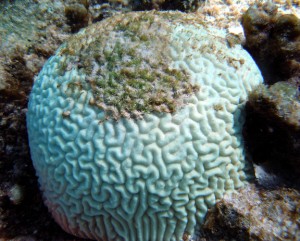
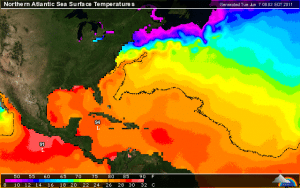
In 1997-1998, the marine equivalent of a massive and destructive forest fire overwhelmed numerous coral reefs around the world. Caribbean coral biologists still speak of the coral bleaching event of 1998 in reverential tones. A powerful El Niño season was
Afternoon Dive A major component of our work during the Global Reef Expedition focuses on understanding factors and processes that enhance the resilience of coral reefs (reef resilience). We evaluate a number of ecological, physical and chemical parameters at each reef