The Khaled bin Sultan Living Oceans Foundation’s Director of Science Management, Alex Dempsey, had the prestigious opportunity to present at the IUCN World Conservation Congress in Marseille, France. Her presentation, entitled “The Global Reef Expedition (GRE): Circumnavigating the Globe to Address the Coral Reef Crisis,” focused on the plight of coral reefs and how the Global Reef Expedition assessed the state of coral reefs around the world.

Held once every four years, the IUCN World Conservation Congress brings together “several thousand leaders and decision-makers from government, civil society, indigenous peoples, business, and academia, with the goal of conserving the environment and harnessing the solutions nature offers to global challenges.” As coral reefs are rapidly declining globally due to a host of different stressors such as climate change and overfishing, they are a key example of a critical habitat in need of global awareness and protection using a multifaceted approach of conservation disciplines and stakeholder involvement. The presentation highlighted how the GRE was meticulously planned under the framework of Science Without Borders©, and the foundation’s three-pronged approach of using scientific research, education, and outreach to address the coral reef crisis. In each country the GRE visited, an international team of scientists together with local leaders, conservationists, government officials, and subject matter experts worked in tandem to assess the state of the reefs.
The IUCN World Conservation Congress presentation detailed the accomplishments from the 10-year Global Reef Expedition. This included an impressive stats sheet with over 53,000 km traveled, 16 countries visited, 65,000 km2 of coral reef habitat maps, close to 17,000 benthic and fish surveys, 9,000 mapping validation transects for a total of 541 days of SCUBA diving.
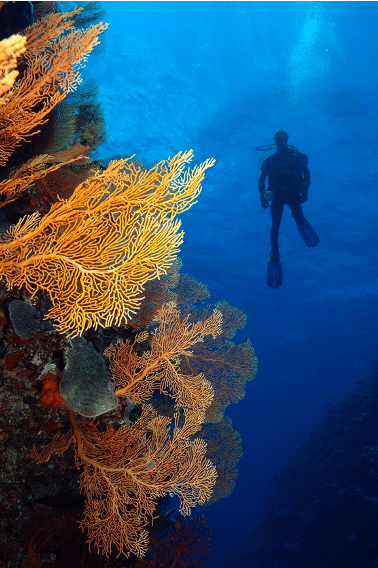
A scientific diver on the Global Reef Expedition mission to New Caledonia. 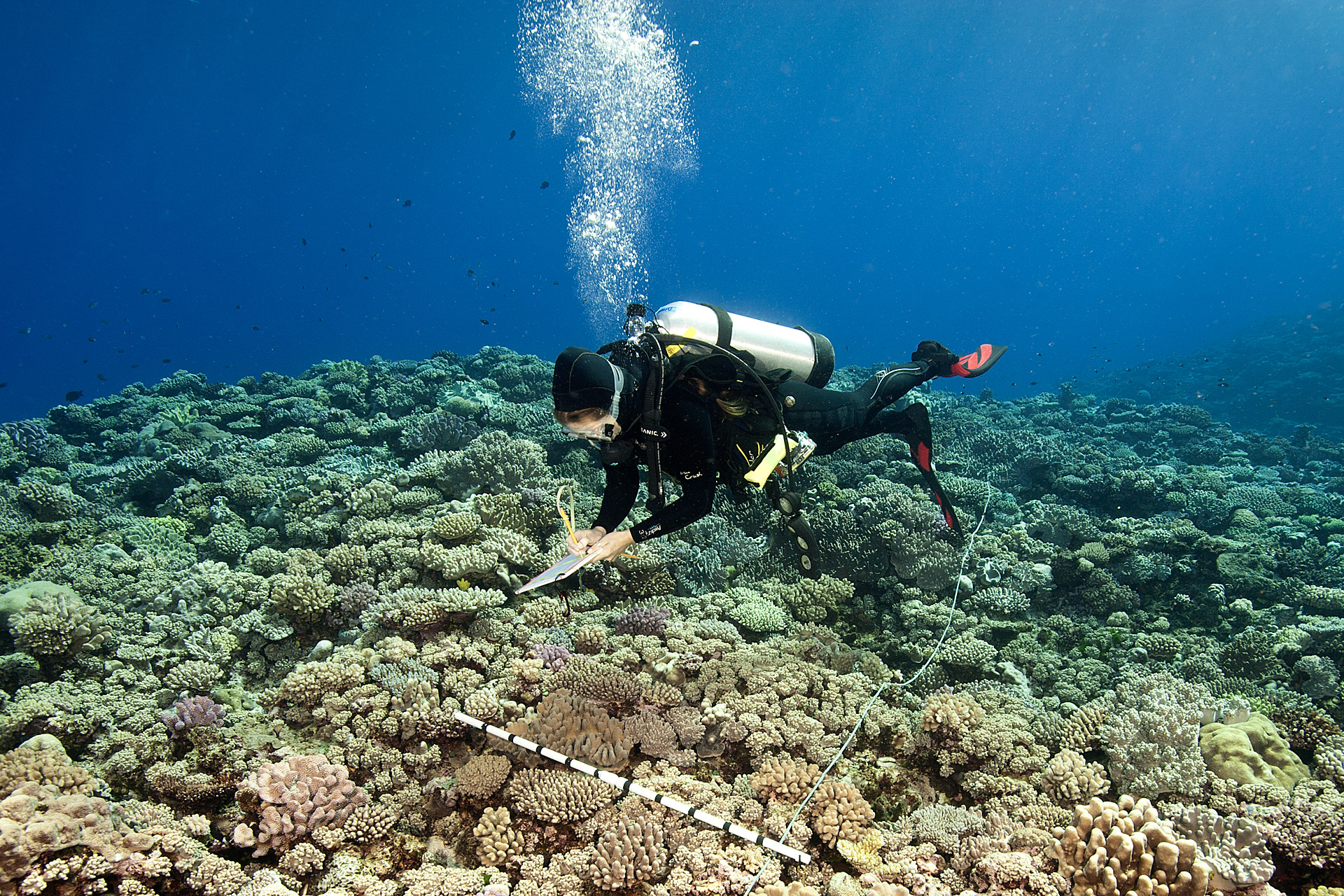
A scientist on the Global Reef Expedition conducts a benthic survey of a healthy coral reef in Tonga. 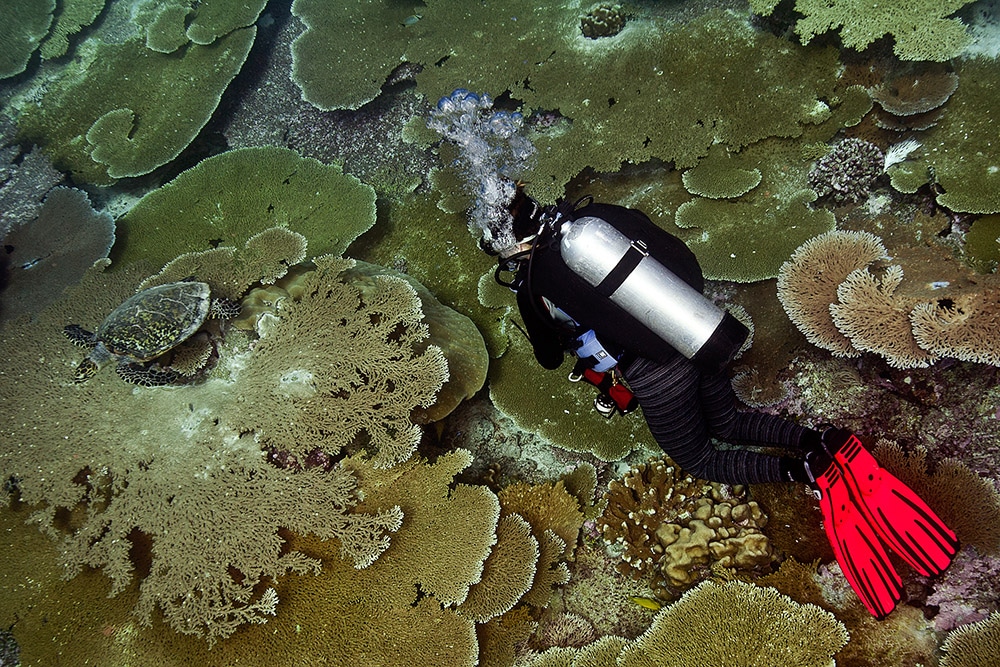
A scientist on the Global Reef Expedition mission to the Chagos Archipelago.
With the completion of the GRE and the curation of this massive dataset, the IUCN presentation outlined key lessons learned including:
- Collecting global baseline data is critical for addressing the decline and recovery of coral reefs as they suffer from climate change and human stressors.
- The most remote and undisturbed reefs generally had the healthiest reef systems, but still showed signs of coral cover loss due to climate change and coral predation.
- Globally, low fish biomass was alarming, as overfishing pressure is outpacing the ability for fish to recover, even in remote areas.
- Stark gaps in ocean literacy were observed among communities that heavily rely on coral reefs for their livelihoods.
- Coral reef protection and conservation needs to become a priority to ensure that the reefs that are left do not disappear.
The global standardized surveys from the GRE captured what we refer to as “reef ecosystem metrics” which give insight to the status and condition of the reef. Specifically, macroalgae, coral cover, and fish biomass are reliable indicators for reef health, but also can give insight into the resilience of the reef to be able to recover from disturbances and stressors. The GRE presentation gave a high-level overview of the results from these surveys, which showed that remote reefs tended to be in better shape, but signs of overfishing, bleaching, and damage from outbreaks of Crown-of-Thorns were impacting even the most remote reefs on Earth. There was nowhere left for corals to hide, and nearly every country surveyed on the GRE showed signs of overfishing.
The Congress showcased the successes of international leaders and organizations working towards safeguarding habitats and species that are in peril. In addition to the foundation presenting our findings at the IUCN World Conservation Congress, His Royal Highness Prince Khaled bin Sultan announced the conclusion of the Global Reef Expedition there, and highlighted some of the major successes from the GRE. The successes and findings from the Global Reef Expedition were well poised to be presented at this prominent event as to urgently call attention to the need of coral reef protection.
The GRE successfully captured baseline data for coral reefs, but the coral reef crisis has only intensified since the Expedition began. We hope that with the dissemination of our findings, they can be used as a steppingstone for conservation. And will encourage other organizations, government entities, local stakeholders, and managers to join forces to help save the world’s coral reefs.