Between 26 October 2013 and 26 November 2013, the Khaled bin Sultan Living Oceans Foundation conducted a research mission to New Caledonia as part of the Global Reef Expedition. The research focused on coral reefs in four locations, Ile des Pins, Prony Bay, Cook Reef, and the atolls of Guilbert, Huon, Merite, Neulka, Pelotas, Portail, and Surprise.
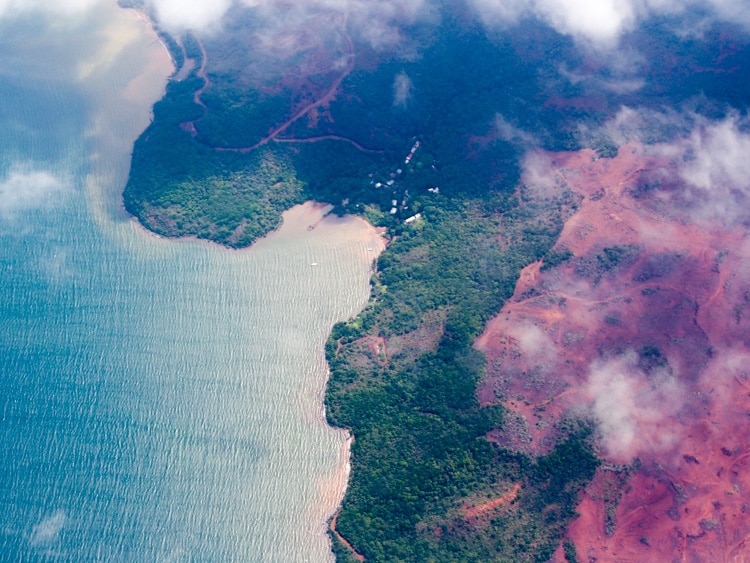
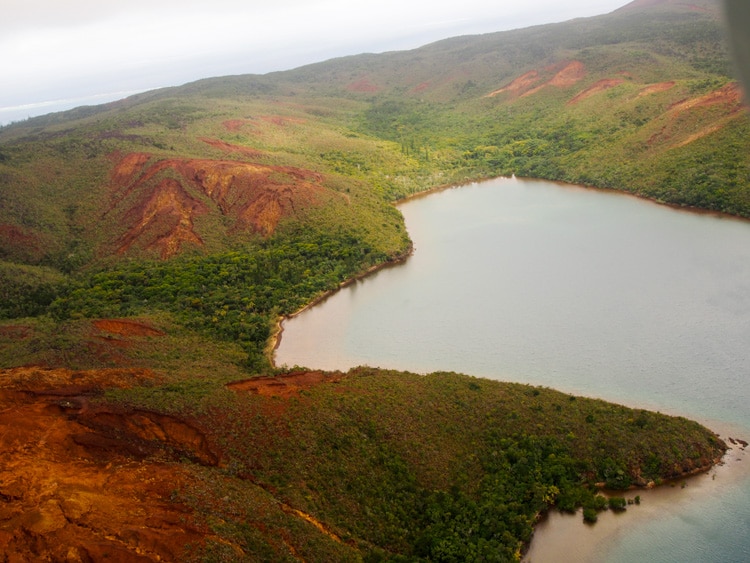
One of the most interesting locations we visited in New Caledonia was Prony Bay. Prony Bay is located at the southern end of Grande Terre at the base of a large nickel mining operation. The towering red-tinged mountains in the background were just the beginning of the intriguing research site of Prony Bay. The visibility was very low because of fine reddish silt that formed a cloud every time a fin kick was a bit too close to the bottom. Therefore, the scientific divers had to be very careful with their buoyancy control. High turbidity, low salinity, and sedimentation run-off are poor environmental conditions for corals to be able to successfully live—let alone thrive. But a robust and diverse coral community is exactly what we found.
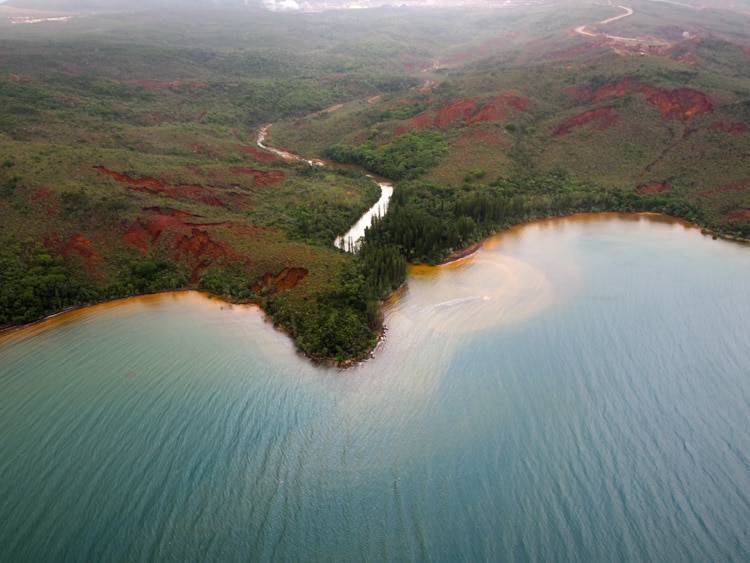
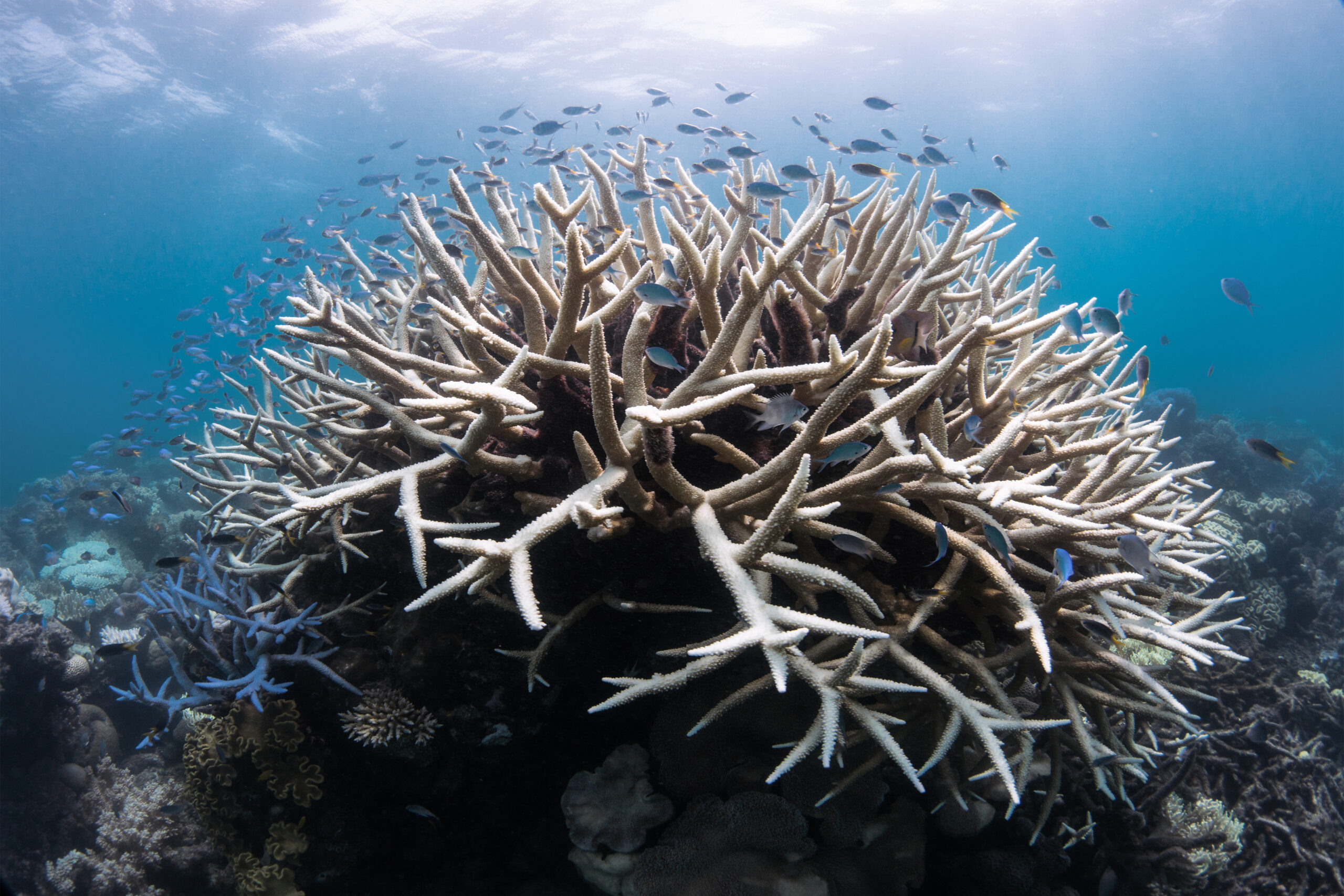
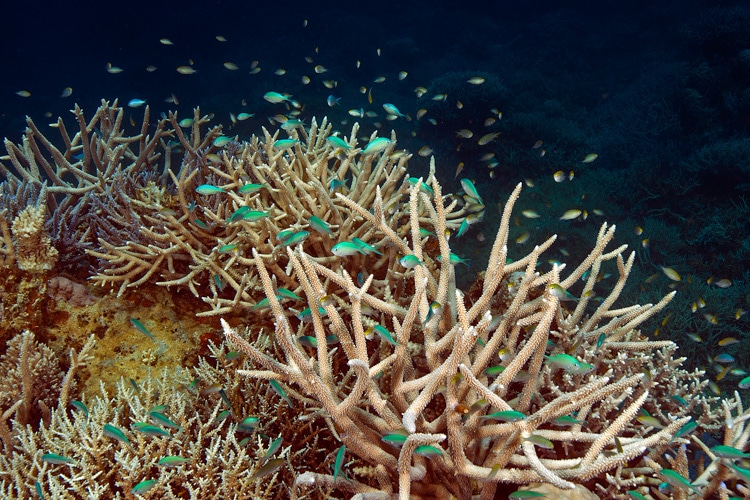
All of the fringing reefs scientists dove on in Prony Bay had incredible and flourishing coral communities. This suggests these reefs are well adapted to the harsh environment. The thin layer of burnt orange silt that covered the majority of the seascape, which in theory would smother corals, seemed to have little effect on the live coral cover and diversity. Some of these corals of the red reefs were small and uncommon such as the trumpet coral, open brain coral, and the endemic mushroom coral that is only found in this region. Others formed large thickets of entangled branches, such as the bottlebrush and staghorn corals. These types of corals are often tolerant of high levels of sedimentation and have evolved to adapt to sediment-rich environments. The deeper corals were comprised of species assemblages that had foliaceous and plating morphologies. These coral plates are fragile and tend to grow in areas of low wave energy. Their plating morphology is also an adaptation to maximize exposure to light. Around the mid-depths of 30 ft, we found the highest diversity of species and growth forms, with a mix of species that occurred in deeper water and those found in shallow water, such as elaborate branching, hemispherical mounds, tabular forms, and leaf-like plates.
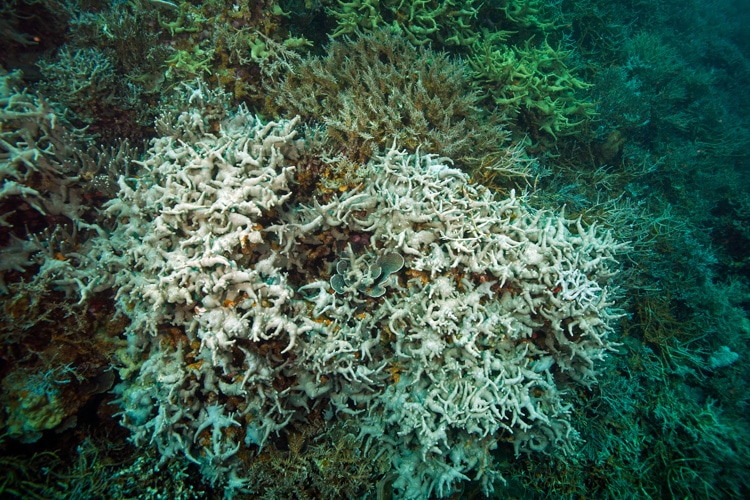
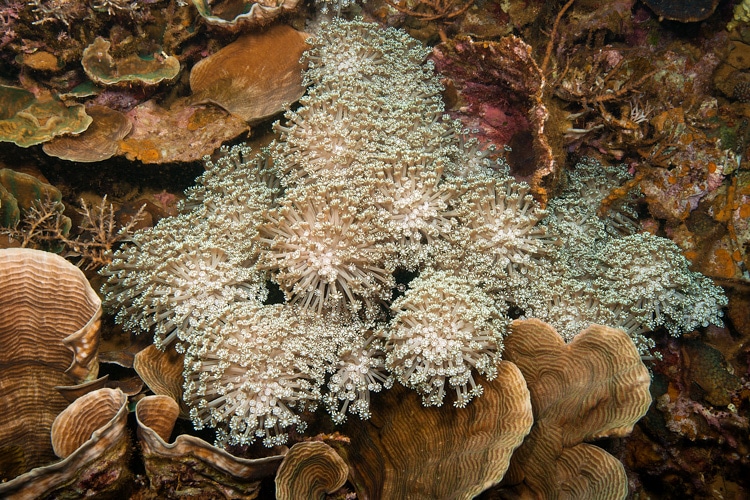
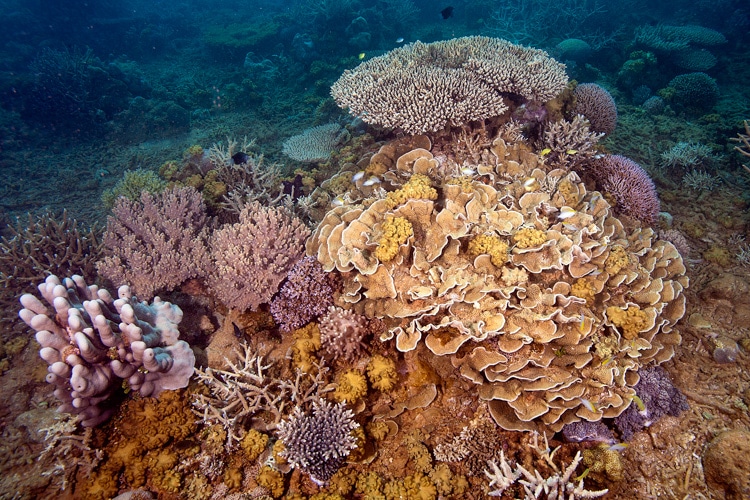
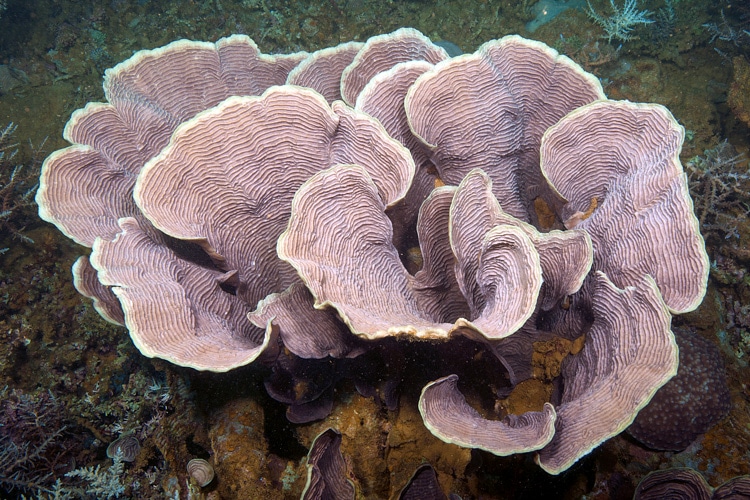
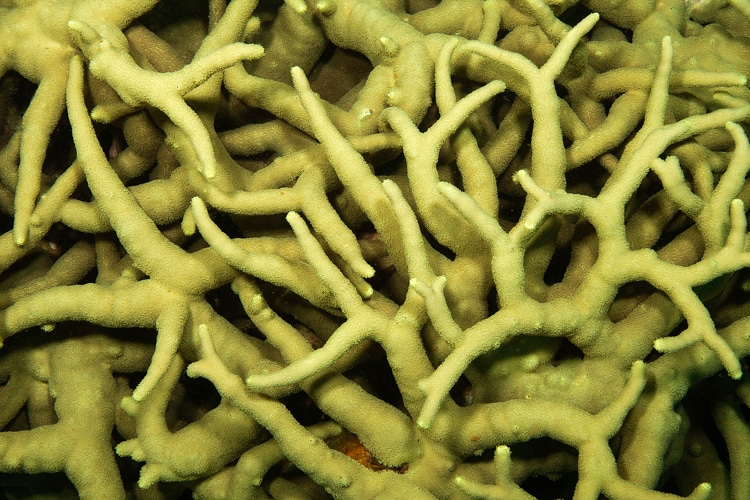
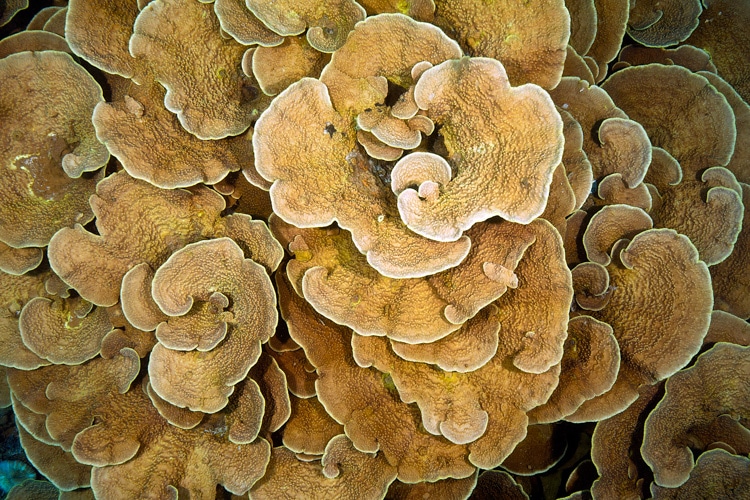
The reefs we visited in Prony Bay had some of the most diverse coral communities we’ve seen on the GRE. With the unusual location at the base of a nickel mining operations, to the red-stained reefscape, it was a pleasant surprise to see the high biodiversity and flourishing reef community. This location truly was one of the hidden gems on the GRE.
Learn More
For more detailed information on our work on coral reefs in New Caledonia, read our latest publication, the Global Reef Expedition: New Caledonia Final Report.