search-icon
The Reef through Different Lenses

Mention coral reefs and most people think of sweeping landscapes of corals, sponges, and fish. While those do exist in Hao Atoll, researchers are also seeing the reef through different lenses.

Satellite Imagery for Reef Habitats and Geomorphology of Coral Reef Ecosystems

Jeremy Kerr, research assistant at the National Coral Reef Institute, uses satellite imaging to get a sense of the spatial distribution of reef habitats and their geomorphology (the study of land forms and the processes that made them). As he states, “The bird’s eye view provided by satellite imaging compliments the divers’ view. By combining the two perspectives, we better understand the underlying processes shaping these coral reef ecosystems.”
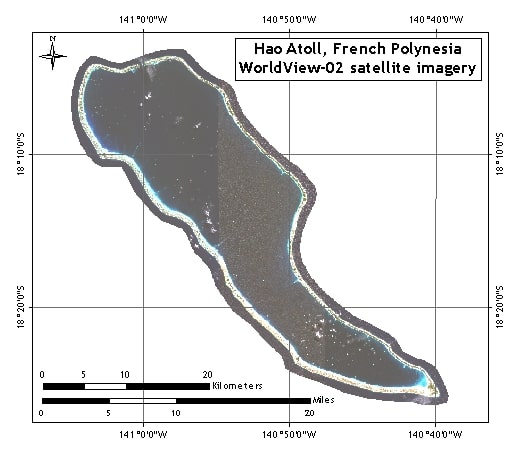
Satellite imaging of Hao Atoll

Overflight views of the reefs allow the researchers to see specific features and details of the reef habitats to help determine important areas for surveying by the survey teams.
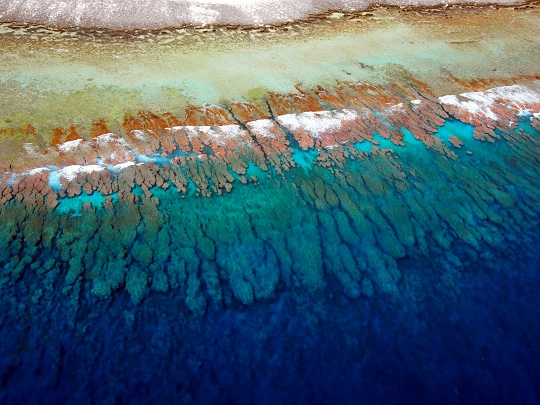
Overflight view of Hao showing the fore reef.

Dissecting Microscope for Micro Invertebrates, Biodiversity, Reef Ecology

On the other end of the field of view is the work of Jenna Moore from the Scripps Institution of Oceanography. She uses a dissecting microscope to view the reef at the macro level. By identifying invertebrates too small to be seen by the survey teams, she helps determine the full breadth of the reef’s biodiversity. Invertebrates are the most numerous and diverse group of animals on the reef forming an important part of the reef’s ecology.
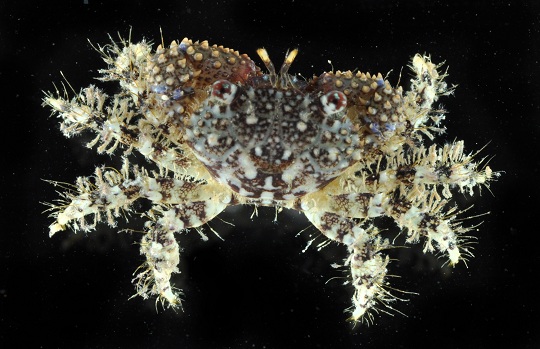
Micro Invertebrates: Reef crab (1 cm wide), genus Pilodius, as seen through dissecting microscope.

 (Photos by: Image 1 Jeremy Kerr, 2 Dr. Andrew Bruckner, 3 Jenna Moore)
Related Posts

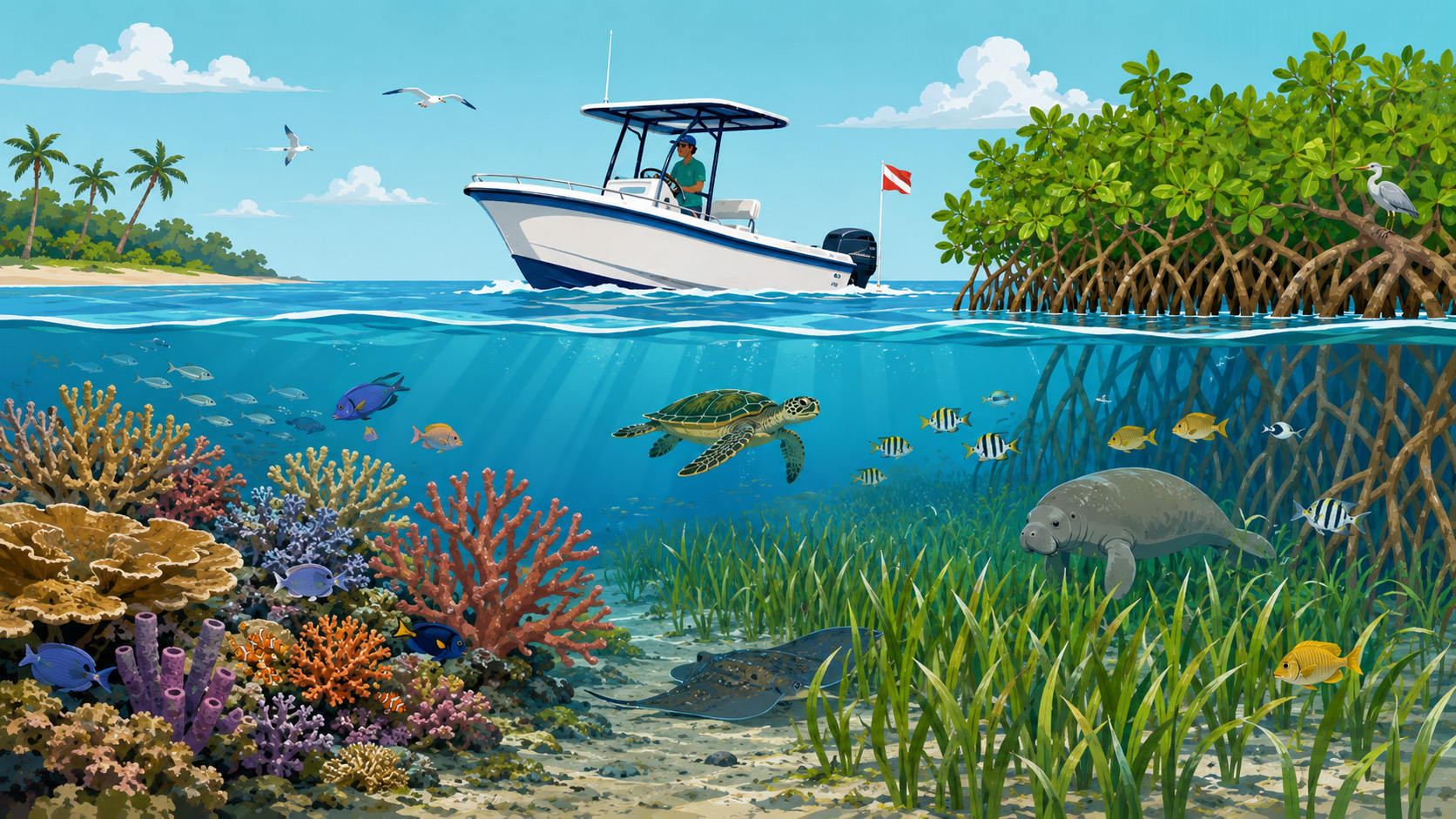
Friend or Foe? Part 1: Meet the Underwater Meadows

You’re swimming in the glistening, turquoise ocean, feeling totally at peace as the water cools you under the beaming sun. Hang on—what’s that? A slippery, slimy, twisty thing brushing your foot? Ew! Argh.

That’s seagrass! And believe it or not, we love it. You don’t need to be afraid. It’s actually one of the most important ecosystems in the ocean, and it definitely won’t hurt you. Let me tell you more…

Read More
Privacy Overview

This website uses cookies so that we can provide you with the best user experience possible. Cookie information is stored in your browser and performs functions such as recognising you when you return to our website and helping our team to understand which sections of the website you find most interesting and useful.  You can view our complete Privacy Policy here.

Strictly Necessary Cookies

Most of our cookies are used to improve website security and reduce spam. These cookies should be enabled at all times. They also enable us to save your preferences for cookie settings.

3rd Party Cookies

This website uses Google Analytics to collect anonymous information such as the number of visitors to the site, and the most popular pages. Keeping this cookie enabled helps us to improve our website.