Expedition Log: Maldives – Day 5
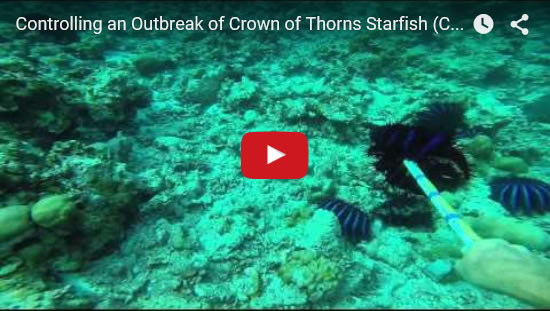
The Living Oceans Foundation SCAR (Starfish Control and Removal) team is working at the Gili Lankanfushi atoll with other marine biologists from the Gili Lankanfushi resort. They have asked for our help removing and sampling crown of thorns starfish (COTS) that have recently reached outbreak proportions on their surrounding reefs.
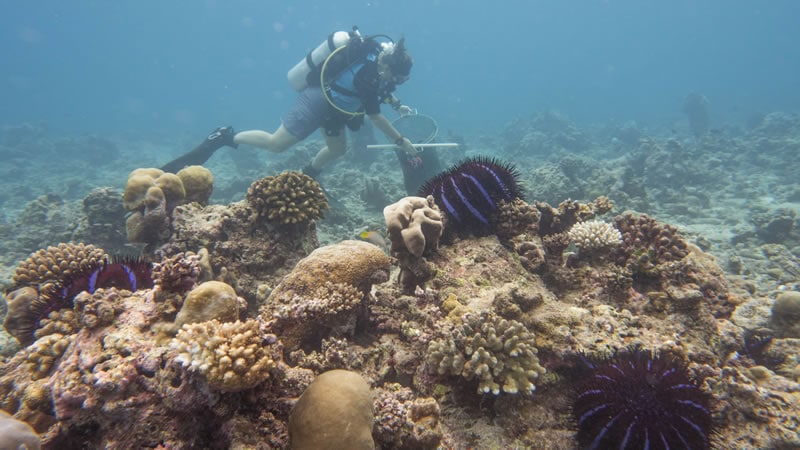
SCAR Team diver searches the reef for crown-of-thorns starfish.
Our day begins before sunrise. We are staying in rooms on the island Hulhumale which is a ten-minute boat ride to Male, the capital city of the Maldives. We have to take a bus at 5:30am to the boat terminal to catch the 6:00am ferry to Male. Next we must board another ferry around 6:45am to take us to the Gili Lankanfushi resort. The ferry ride to the resort is about an hour and gives me time to catch up on data entry and sample processing from the previous day. Writing field notes, labeling and inventorying samples, and keeping track of dive coordinates are just some of the everyday tasks I have to do. I also double check the number of crown of thorns starfish we have collected as well as the data we have collected on the starfish’s maximum length and what reef they came from.
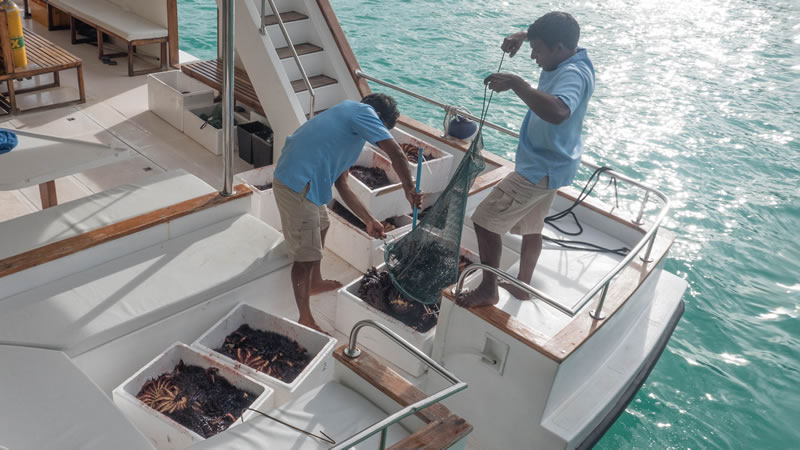
SCAR Team divers organize their COTS catch on the dive boat.
As soon as we dock at Gili we are met by Deborah Burn, the resort marine biologist who debriefs us on our plan of action for the day. We look at the reef structures from satellite imagery, discuss where the starfish are believed to be, and formulate a strategy of where we should start collecting.
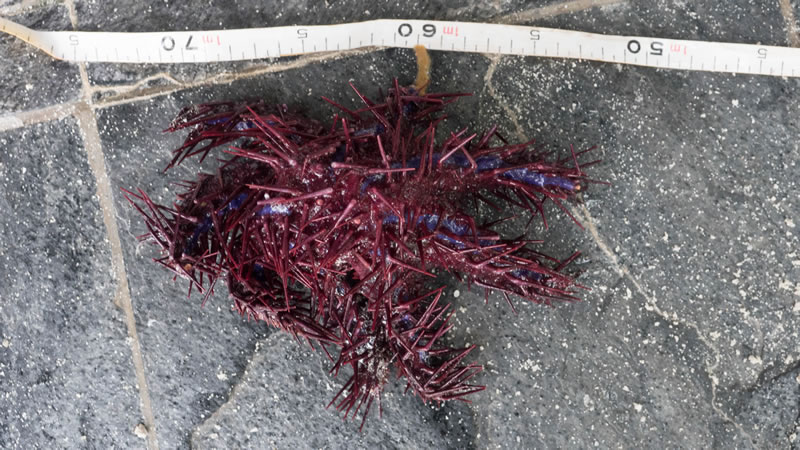
Measurements taken of a crown-of-thorns starfish before it is buried on the beach.
After a short breakfast we load up the boat with scuba gear and collection kits to head out to our first dive spot for the day. I quickly take a GPS coordinate so I can track our search patterns to ensure we covered most of the reef in our search for crown of thorns starfish.
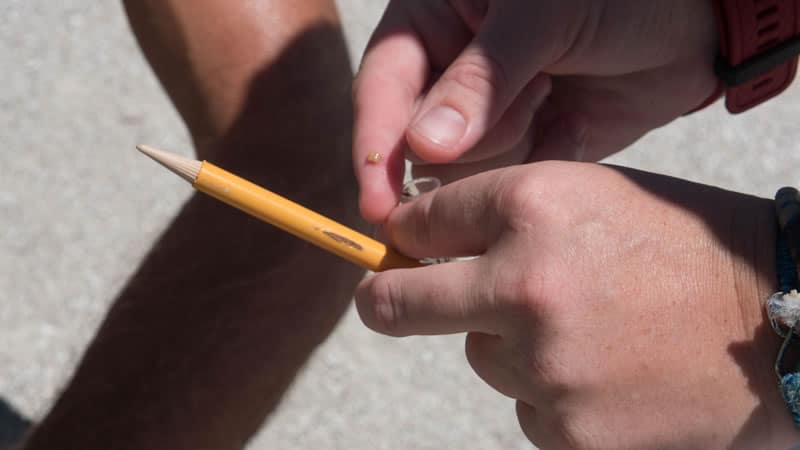
Alex Dempsey collects tubefeet for genetic analysis.
After our first dive we haul the collection bags full of starfish back to Gili where we count the starfish, measure them, and sample tubefeet for genetic analysis. Once the starfish are sampled and counted, we burry the animals in a deep hole on the beach. We go through this process every time we come back from a collection dive. Once the starfish are buried, we are ready to head out for another dive to collect more starfish. Our only break in the day is a stop for a quick lunch before we get back out on the reef for two more dives in the afternoon. On average the SCAR team completes four dives a day, which doesn’t include the two or three snorkels to scout the reef for evidence of damage from crown of thorns starfish.
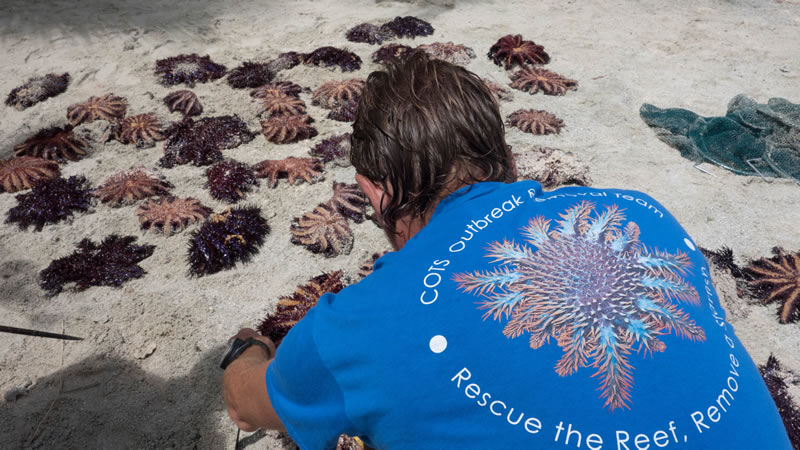
LOF Chief Scientist Dr. Andy Bruckner reviews COTS catch on the beach.
We work until we lose daylight around 6:30pm and head to mess hall for dinner. It isn’t until 8:00pm that we can take the staff ferry back to Male. This boat ride takes around an hour, just in time to catch the second ferry at 9:00pm back to Hulhumale. Finally, we have to rush to catch the last bus at 10:00pm to get back to our hotel at 10:30pm.
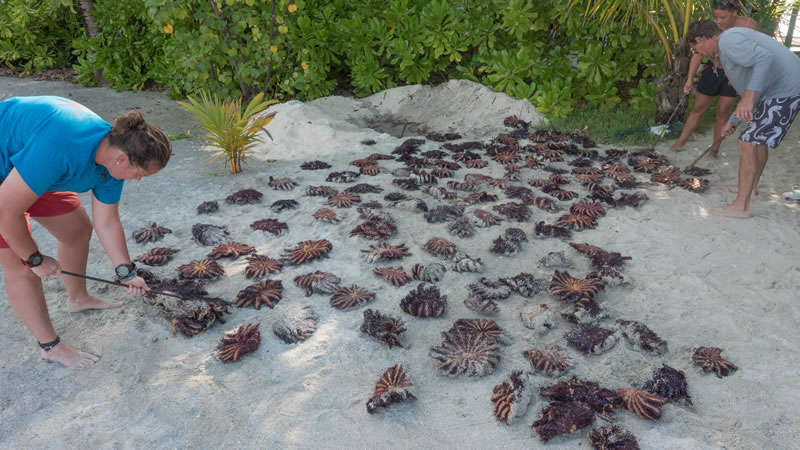
SCAR team counts and disposes of starfish in a hole dug out in the sand.
It is hard work from sun up to sundown here in the Maldives, but we are conducting important work to help control the growing problem of the voracious coral predator, the crown of thorns starfish.