An estimated 500 million people depend on coral reefs for their lives and livelihoods. They provide ecosystem services such as food resources, tourism opportunities, and coastal protection. Coral reefs also provide habitat for 25% of the species found in, on, and around the reef system. However, many of these once beautiful coral reefs that were teeming with life, are being turned into barren rubble fields.
Climate change and rising ocean temperatures are taking an astonishing toll on coral reefs by causing heat stress that leads to mass bleaching events. And stressors like pollution, overfishing, and coastal developments are also killing coral reefs world-wide. To better understand the plight of coral reefs, The Khaled bin Sultan Living Oceans Foundation (KSLOF) launched the Global Reef Expedition (GRE), a 10-year research mission that circumnavigated the globe to address the coral reef crisis. And while the GRE trek covered over 53,000 km, perhaps the most impressive number is the hundreds of scientists, community leaders, government officials, educators, documentary filmmakers, and photographers who surveyed, mapped, and documented over 1,000 reefs in the Atlantic, Pacific, and Indian Ocean as well as the Red Sea.
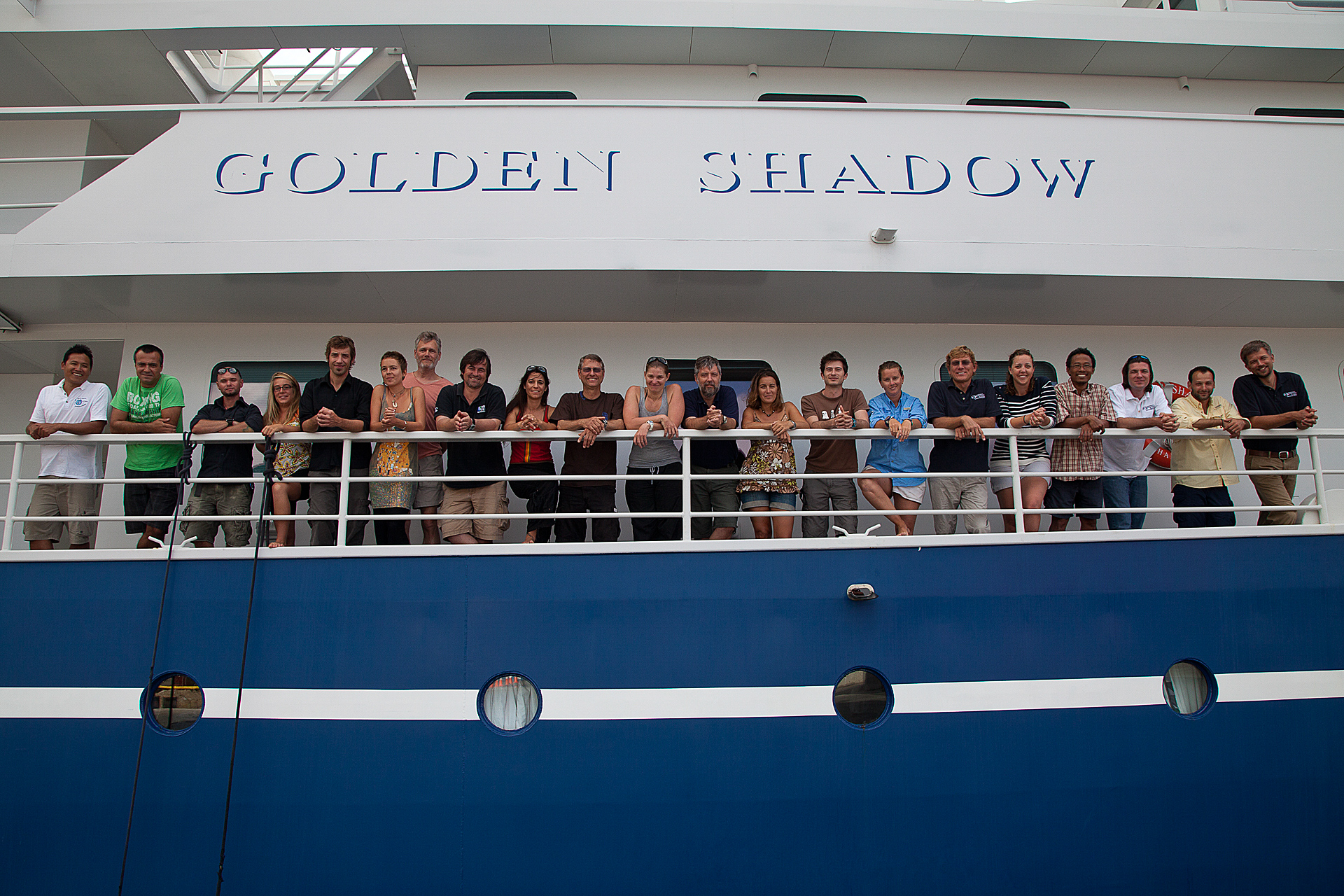
The GRE also embodied the philosophy of Science Without Borders. In each country we were invited to work in, we brought an international team of scientists together with local leaders, conservationists, government officials, and subject matter experts to assess the state of the reefs. These local representatives provided invaluable knowledge and helped us share our findings with local communities. This philosophy allowed us to leverage the resources, commitment, and ideas necessary to make substantial progress to protect and preserve coral reefs. The need for ocean literacy and community buy-in for conservation efforts is pivotal, and without the partnerships forged on the GRE, our work could not have been completed.
On the Global Reef Expedition, the Khaled bin Sultan Living Oceans Foundation partnered with hundreds of people from organizations around the world, including:
- The Atlantic and Gulf Rapid Reef Assessment,
- Bahamas National Trust,
- Centre National de la Recherche Scientifique,
- Centre de Recherches Insulaires et Observatoire de l’Environnement (CRIOBE),
- Cook Islands Marine Park Steering Committee,
- CORALINA,
- Department of Fisheries–Solomon Islands,
- Direction des Resources Marines–French Polynesia,
- International League of Conservation Photographers (iLCP),
- IUCN Global Marine Program,
- James Cook University,
- King Abdul-Aziz University,
- Michigan State University,
- Ministry of Agriculture Forestry and Fisheries–Tonga,
- Ministry of Sustainable Development–St. Kitts and Nevis,
- National Commission for Wildlife Conservation and Development–Saudi Arabia,
- Pacific Blue Foundation,
- Palau International Coral Reef Center (PICRC),
- REEF Check,
- Smithsonian Institution,
- The Nature Conservancy,
- US National Oceanic and Atmospheric Administration (NOAA),
- Université de Polynésie Française,
- University of Miami,
- University of Queensland,
- University of the West Indies,
- University of Wellington,
- Vava’u Environmental Protection Association (VEPA),
- Woods Hole Oceanographic Institution, and others.
These organizations were instrumental in completing the GRE and without their dedication in each location we visited, this work could not have been achieved.
The thousands of hours our partners spent underwater collecting data, the thousands of people reached during outreach seminars, and all the efforts undertaken to document the GRE were critical in the successful outcomes of the global initiative.
Global Reef Expedition Final Report
For the full list of all of the scientists and partners who participated in the Global Reef Expedition, see Appendix 3: Participant List in the Global Reef Expedition Final Report.
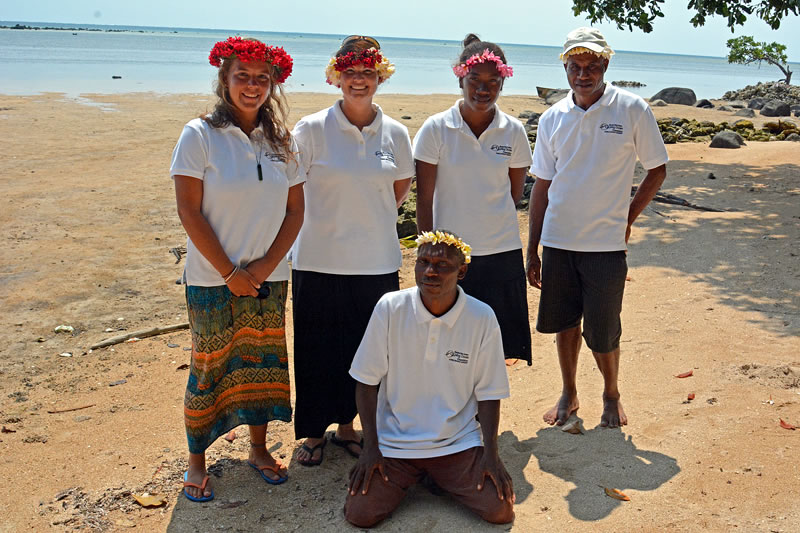
LOF Education Team at Solomon Islands 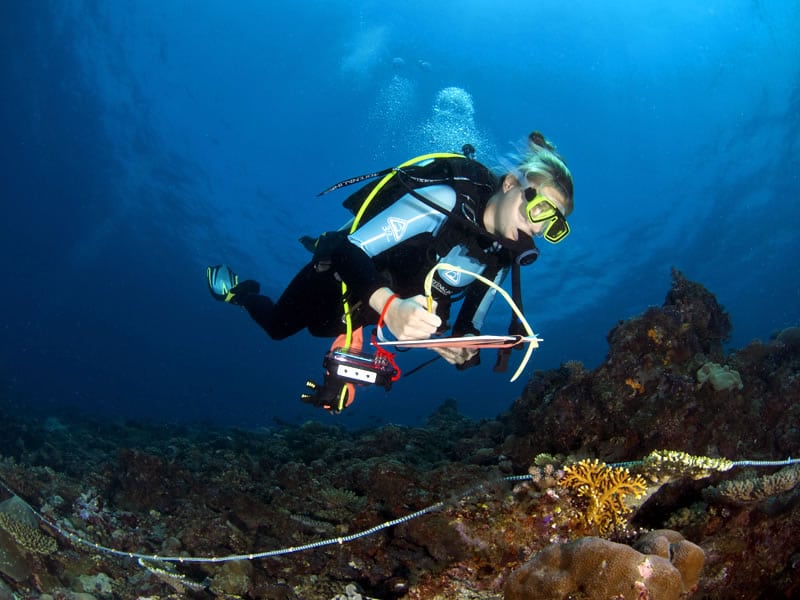
Scientific diver conducting benthic reef survey at Solomon Islands 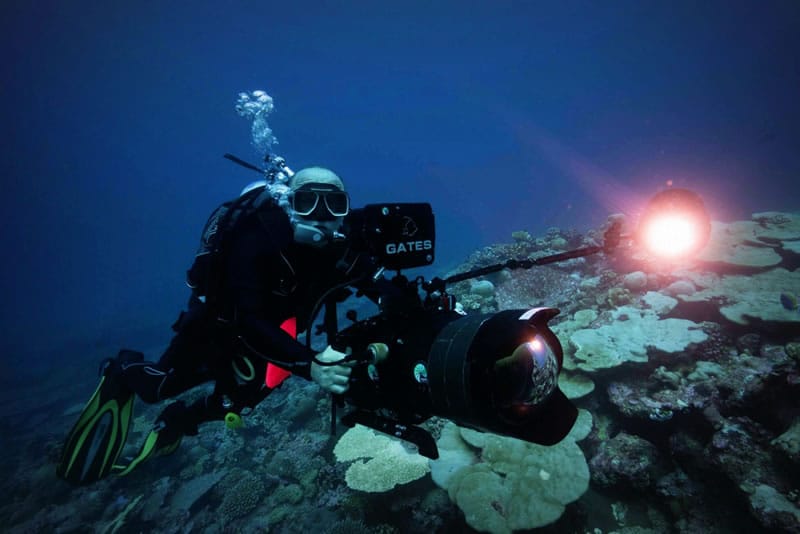
Cameraman Doug Allan filming in BIOT 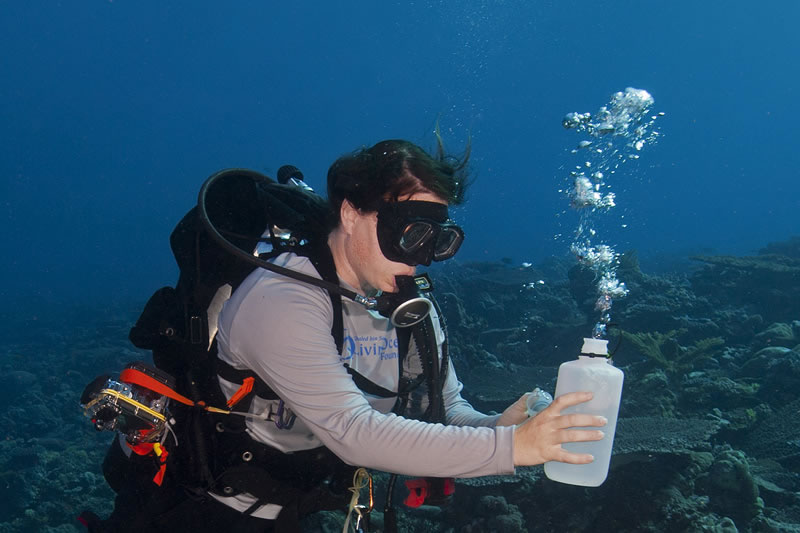
Science diver taking water samples underwater 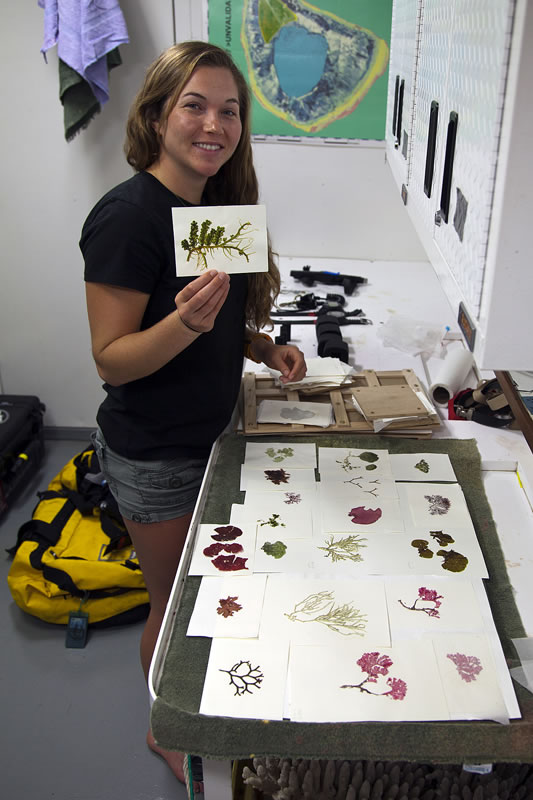
Samantha organizes algal pressings from the Global Reef Expedition’s herbarium. 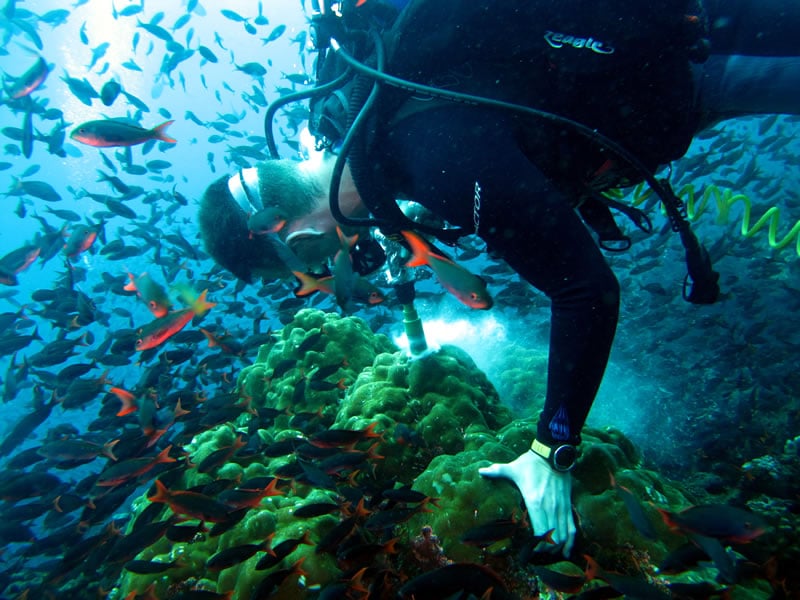
Research diver collects a coral sample near Darwin Island Galapagos 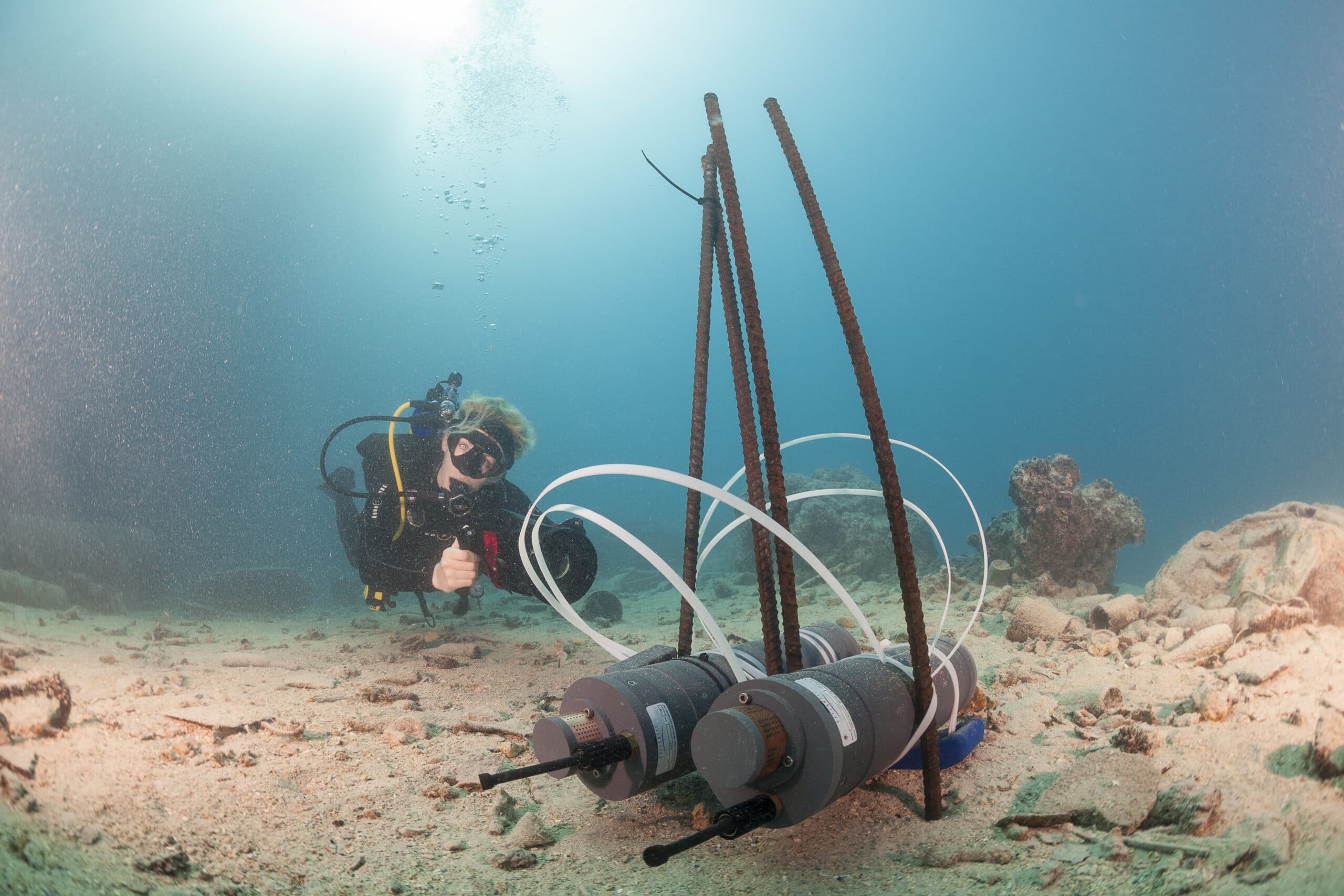
MR diver working with underwater research equipment. 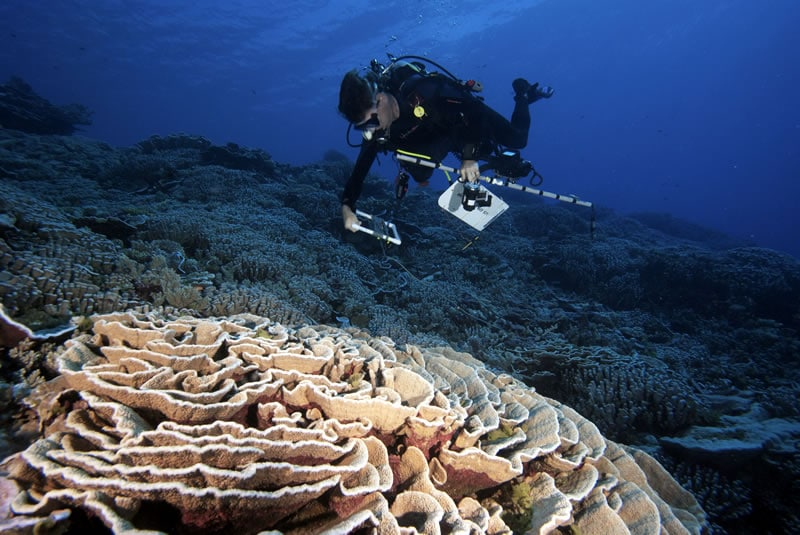
Diver surveys Great Barrier Reef 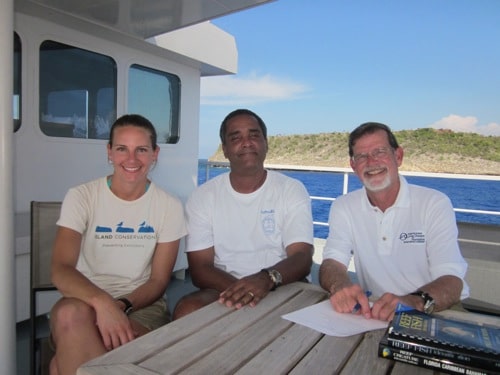
Aurora Alifano (left), Island Conservation, Jean Wiener (middle), Foundation for the Protection of Marine Biodiversity, and Mike Trimble (right), CREW