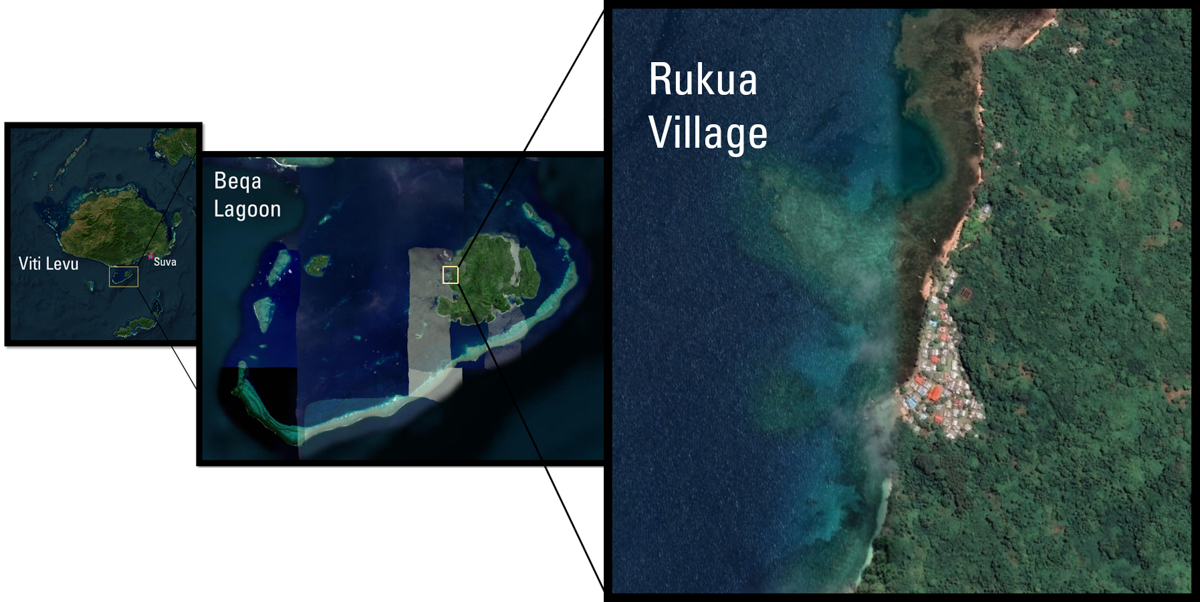
The reefs surrounding the Beqa Lagoon in Fiji have endured many events that threaten their ability to survive, including bleaching events, crown-of-thorns outbreaks, and cyclone damage. These reefs are incredibly important to the people of the region, and to save them, the surrounding villages and communities want to have a pulse on the health of their marine resources. To help manage these threats and monitor locally managed marine areas, or tabu,the Khaled bin Sultan Living Oceans Foundation is working with Mila Matairakula, a master’s student and Pacific Blue Foundation’s Environmental Officer. Her project, Small Scale Assessment of Changes in Coral Genus Using the Machine Learning Tool, CoralNet: A Case Study in Rukua Village, Beqa, will focus on streamlining in-water survey protocols to develop a more accurate and cost-effective method for coral reef monitoring.
One of the first test sites in Beqa Lagoon is Rukua Village, which has several traditional protection areas (tabu) and designated fishing grounds (qoliqoli). These areas have historically been managed locally by community members to help keep fishing pressure and coral reef damage to a minimum. However, there have not been sufficient monitoring protocols to evaluate how these managed areas are faring. If the coral reef ecosystem is stressed and overfished, it greatly affects the lives and food security of the village.
The Rukua village case study is aligned to the United Nations Sustainable Development Goal 14 – Life Below Water and is also an important component of the Foundation’s UN Ocean Decade Project, Science Without Borders®: Conserving the Tropics. This program works closely with communities in small island nations and least developed states to protect them and manage their coral reefs and connected marine ecosystems. The program is addressing a critical need to sustainably protect and manage these ecosystems, especially in low-lying coastal areas that greatly depend on the ocean for coastal protection and their overall livelihoods.
As coral reefs are on a precipitous decline, rapid and scalable measurements of how benthic ecosystems are responding to these changes are critically important. Differences in survey protocols and assessment metrics to evaluate the condition of coral reefs can often veil broad-scale analysis of the ecosystem. The need to have standardized methods of data collection and analysis easily available is critical. To add another layer of complexity to traditional rapid reef surveys, proper data collection and assessment has historically required coral reef scientists, which is costly, can be inefficient, and takes away from community ownership over their marine resources.
To combat these challenges, the Foundation is working together with Mila and the Pacific Blue Foundation on the first monitoring pilot study in Beqa using diver surveys based on the collection of imagery as a cost-effective monitoring technique for rapidly measuring the state of coral reefs at larger scales. CoralNet, a free cloud-based tool developed by our partners at the University of California San Diego, uses advanced machine learning technology to analyze coral photo transects efficiently and effectively.
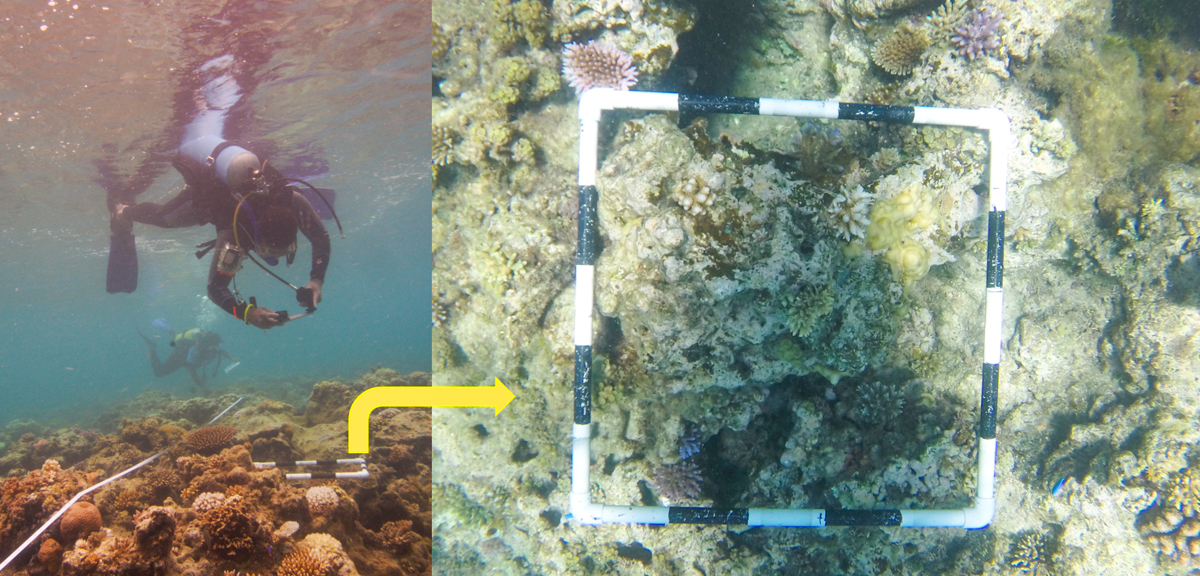
This tool can also be used to assess the changes and provide dataset for the changes and health of the benthic community for effective management decisions. The goal of the program is to create traditional, locally managed marine areas, or tabu, and supply participants with the training and skills necessary to develop a robust, science-based adaptive management plan.
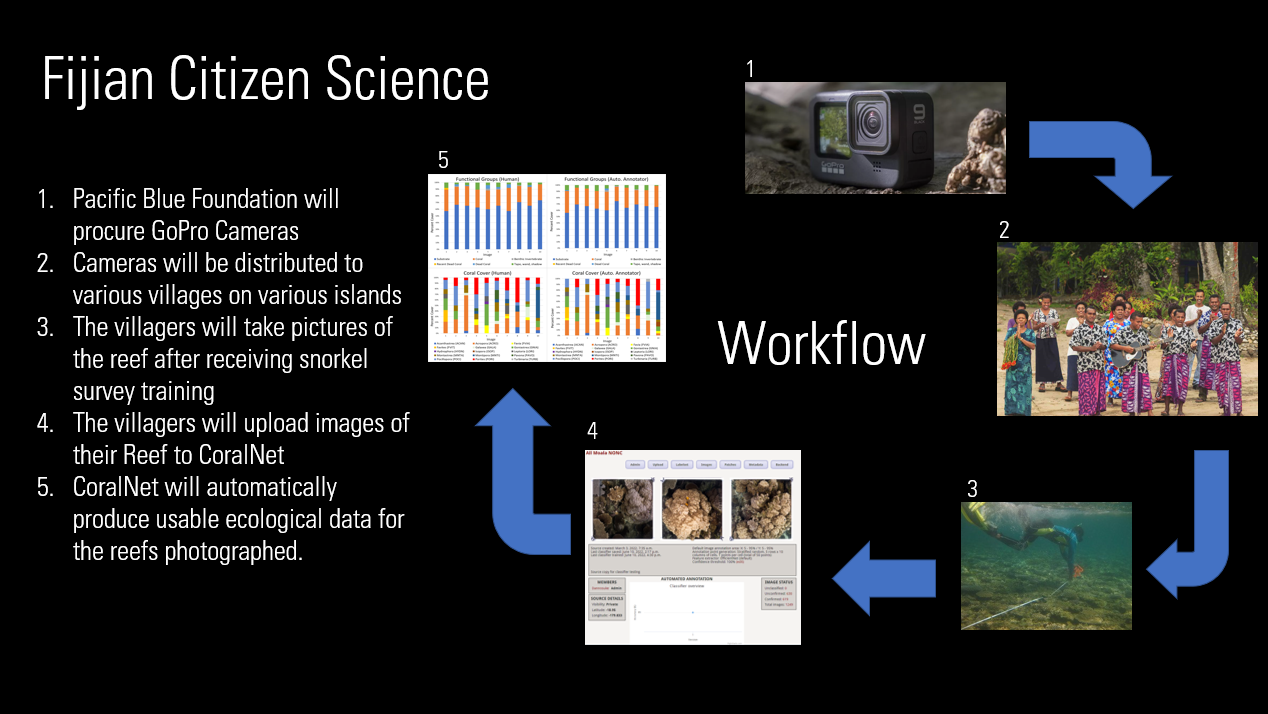
Throughout every phase of the program, we will establish quantifiable benchmarks and perform surveys to evaluate engagement and retention across various facets of the program. With support, the results of this project will help Fijian communities meet sustainable development goals and protect their marine resources for future generations. This project will also demonstrate, at the scale of 10 island villages in Fiji, the merit of the methods we envision can be scaled extensively to small island communities throughout the South Pacific.