search-icon

Author: Expedition Scientist

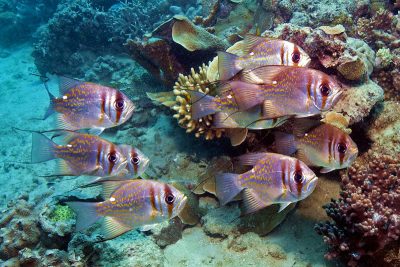
School of Humpback Snapper

Stories of a Fish Surveyor

Marine parks have been introduced worldwide to preserve biodiversity and protect important underwater habitats. Protected zones serve as baselines for undisturbed, natural ecosystems that can be used to measure the effects of human activities in other areas, and thereby help
Read More »
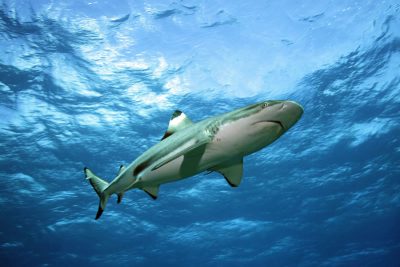
Blacktip Reef Shark

Sharks!

Sharks are a natural component of coral reef ecosystems, where they occupy the role of top-order predators. Reef sharks are important to the overall health of the coral reef assemblage, and their presence is generally an indication of a coral

Read More »
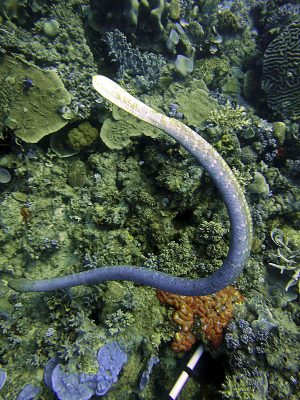
Olive sea snake hunts in crevices on the Great Barrier Reef.

Surprise Encounter with an Olive Sea Snake

Let me tell you about yesterday’s wonderful (seriously) sea snake encounter while it’s still fresh in my mind. First of all, up here in the northern Great Barrier Reef we’re getting close to saltwater crocodile territory.  They can grow to

Read More »
Threadfin Pearl Perch

Threadfin Pearl Perch: A Gem of a Fish

As we travel across the Pacific Ocean during the course of the Global Reef Expedition we encounter many species of fishes on our survey dives. Many are widespread species that we see in most of the countries we visit though

Read More »
Measuring Reef Rugosity of the Great Barrier Reef

Rugged Reefs

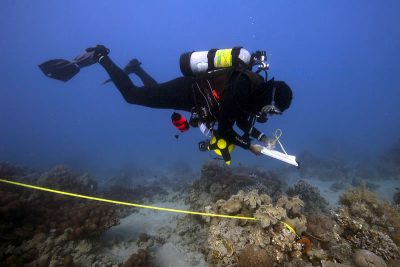
Sitting at 25 m (82 ft) wrapped in a completely tangled metallic chain that would make Mr. T envious, I often ask, “What have I gotten myself into?” Indeed, one may wonder why anyone would want to take a long,

Read More »
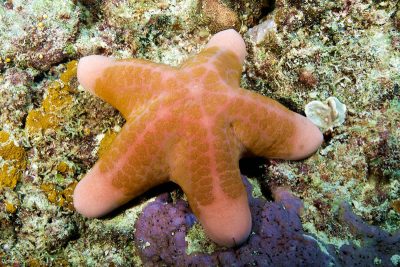
Granular Sea Star, Choriaster granulatus

Stars of the Reef

The most familiar members of the phylum Echinodermata are the sea stars (aka starfish). Also contained within this phylum are diverse members such as sea cucumbers, crinoids, brittle stars, and sea urchins. Echinoderms possess an interesting body shape known as

Read More »
Fish Surveys of the Great Barrier Reef

Finding Fabulous Fish!

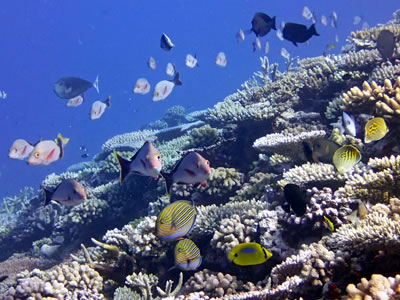
As fish surveyors, our job is to identify, count, and size all the fish we see within 30m x 4 m transect lines. To do this, we drop one end of our transect tapes at 10m depth, and swim slowly

Read More »
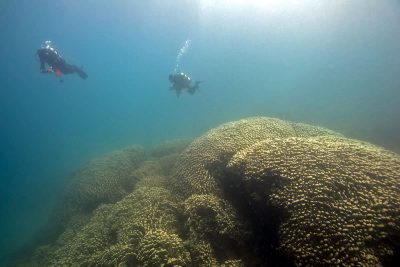
Giant pavona clavus sized against two scientific divers.

Encounter with the Amazing

Humans have long been in the habit of naming exceptional trees. The General Sherman sequoia, the Methuselah bristlecone pine, and a certain specimen of Ficus religiosa better known as the Bodhi Tree are three such notable individuals. Humans don’t live

Read More »
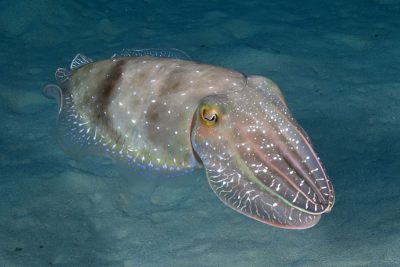
Cuttlefish of the Great Barrier Reef

Hiding in Plain Sight

The Broadclub Cuttlefish (Sepia latimanus)—the second largest species of cuttlefish (to 50 cm)—is the most commonly seen species of cuttlefish on tropical reefs. Though it ranges from the Andaman Sea in the west to as far east as Fiji, this

Read More »
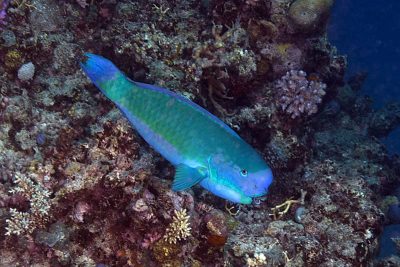
Steephead Parrotfish Chlorurus microrhinos.

Portraying the Life History of Parrotfishes

Parrotfishes represent one of the most conspicuous members of the Indo-Pacific coral reef fauna. They are ideal study subjects for addressing questions regarding population and community ecology for several reasons, including their high diversity and abundance, complex reproductive life histories

Read More »