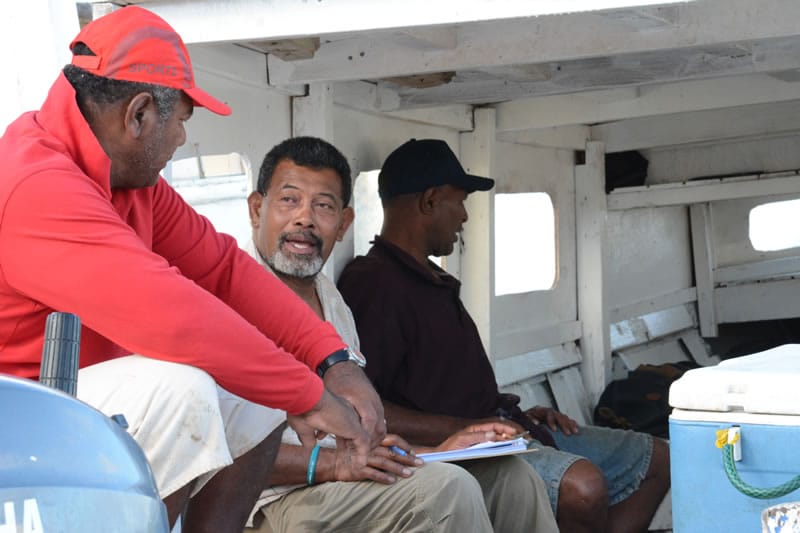
This past month, we’ve been having a lot of conversations with fishermen in Tonga. Here is a short summary of what we’ve been hearing.
Fishing in Tonga targets reef fish and pelagic fish species, as well as other reef organisms like lobster, shellfish, octopus and sea cucumbers. The techniques that are used to harvest animals include free diving with a spear for reef fish, using hook and line for deeper fishing (primarily targeting larger grouper and snapper species), using gill nets (typically near the shore for species like mullet), trolling in a boat for pelagic fish like tuna, and collecting organisms on the reef by hand during low tide (called “reef cleaning”).
Among the various fishing techniques, there are very specific gender roles. Men typically are the ones who fish from a boat, either free diving or using hook and line, while women are primarily the ones who walk out on the reef collecting organisms during low tide. Nearly all of the fishing from a boat is done at night, while “reef cleaning” is typically done during the day.
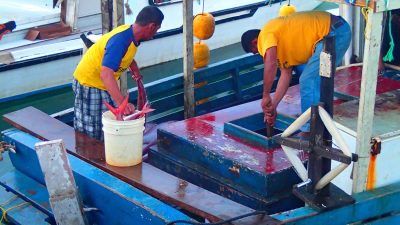
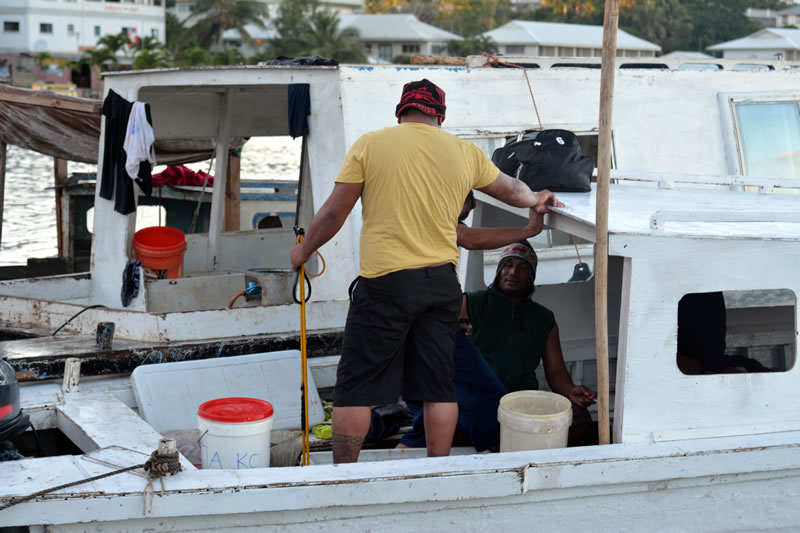
Fishing boats that go out may travel 15-20 kilometers to find suitable fishing grounds. The trip is often dangerous due to the small size of the fishing boats (on average about 20 feet in length, with small 15-20 horsepower engines) and the exposed sections of the churning South Pacific Ocean that they need to cross to get to their fishing grounds. Many fishermen report that they have had to travel further and further in recent years to find fish. Some have even died in pursuit of their livelihood. Fishing boats will stay out for between one and three days, and then return from fishing at dawn to sell their catch in the morning at the fish market.
Although there are areas of coral reef closer to the communities of Vava’u, many of these reefs have been over exploited. Some efforts are underway by local communities on the outer islands to establish specially managed areas and restore fish populations to their local reefs.
We are hoping that the information we are collecting will help the Tongan government and local communities determine the best management measures to enact in order to achieve this goal. This information is an invaluable piece of the puzzle when trying to understand the resilience of a coral reef ecosystem. As the top predators on a coral reef, humans play an important role in the ecological interactions within the system. At the present time, our research suggests that the reefs of Tonga are at a critical point. In general, the coral communities are very healthy however the reefs are missing many of the fish populations that play an integral role in maintaining coral health. One such fish family is the parrotfish, which acts like a lawn mower keeping algae populations in check. Continued unsustainable harvest of this fish species could lead to an overgrowth of algae on the reef and a smothering of coral populations. Ultimately, ensuring the harvest of marine organisms is occurring sustainably is good for both the resilience of the coral reefs and the long term food security of the people in Tonga.
Photos by Stefan Andrews.