search-icon
Education Newsletter: New Coral Reef Ecology Curriculum Units – Food Webs
Figure 16-1

Dear Educators,

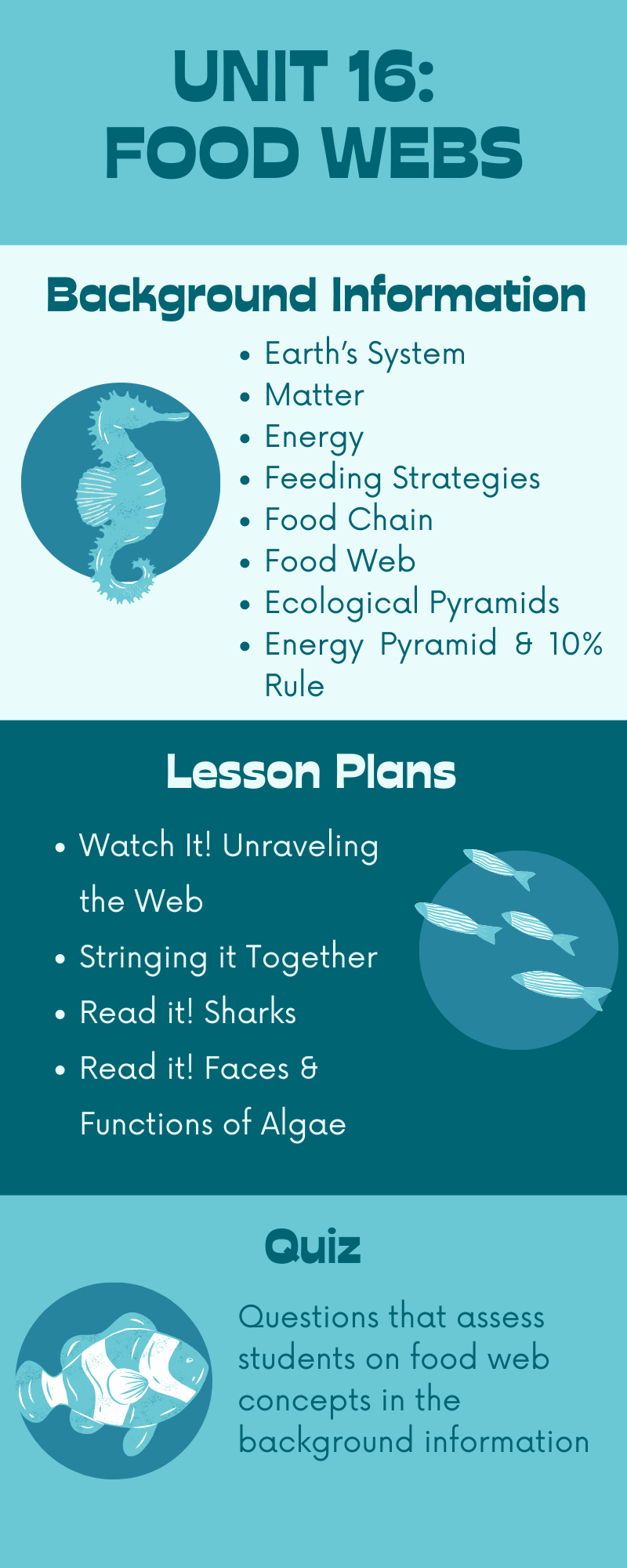
We are excited to announce that we have two new Coral Reef Ecology Curriculum units – Unit 16: Food Webs and Unit 22: Conservation. These two units can be a great resource to include in your science classes.

In the food webs unit, start off your class with an engaging short video about the coral reef food web and make sure to use the accompanying Watch It! worksheet. For students who are hearing impaired or need further assistance, you’ll notice that all our Watch It! worksheets now include video scripts.  

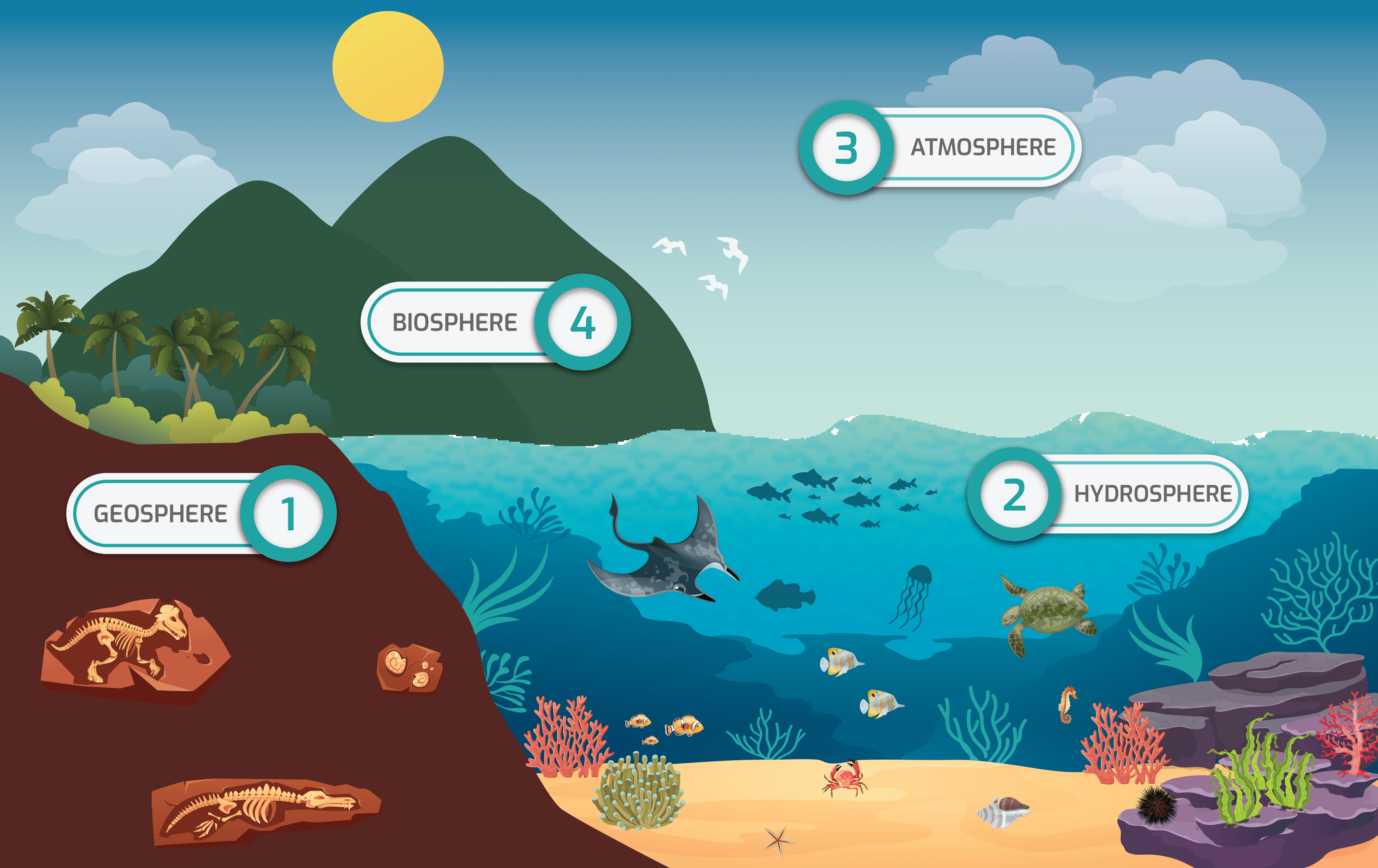
Using the background information provided, teach your students about how matter is recycled and energy is transferred in the living parts of a coral reef ecosystem. Remember that there are images, graphics, and vocabulary in in the background information to help your students learn about these concepts.

To aid in solidifying food web concepts, conduct a hands-on activity called Lesson 1: Stringing it Together. Your students can explore the feeding relationships between organisms in a coral reef ecosystem and model how matter is cycled and energy flows through it. At the end of the lesson, students will also learn about disruptions that threaten the stability of the coral reef food web. Students will form a food web out string and determine what happens when the web is out of balance. 

Incorporate English Language Arts into your science classes by using our custom Read It! worksheets that accompany our field blogs. Students will read and analyze a blog written by a scientist on one of our research expeditions. In Watch It! Sharks, Dr. Will Robbins discusses the predatory role of sharks in a coral reef food web and what recent studies have revealed in Australia.  At the opposite end of the food chain, learn about producers by completing Watch It! Faces & Functions of Algae. Researcher Samantha Clements describes the role of algae or “seaweed” in the coral reef food web and how it can become detrimental to the ecosystem. 

Finally, assess your students’ knowledge about food webs using our online quiz. After logging in, create a class and send the code to your students so that they can track your students’ quiz scores. 

Stay tuned for more information about the Conservation unit.

Amy Heemsoth
Director of Education
Related Posts

2025-2026 B.A.M. Student Voices

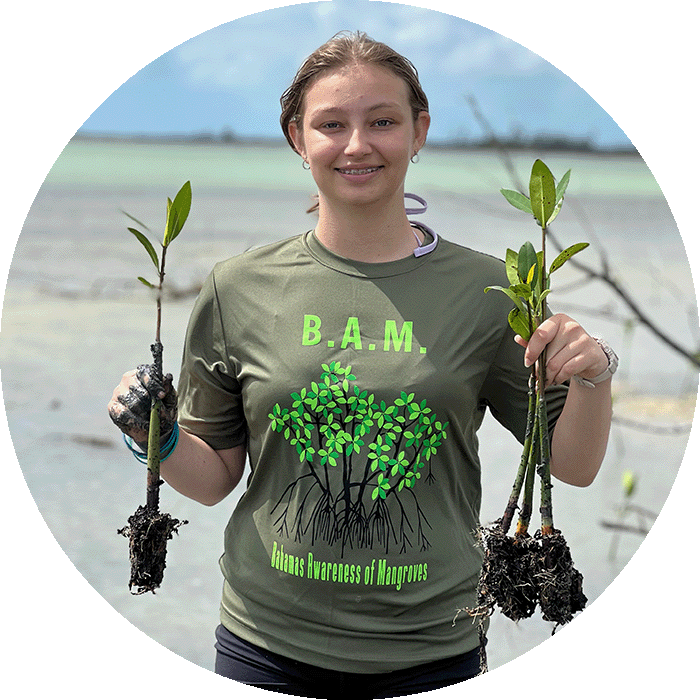
Throughout the Bahamas Awareness of Mangroves (B.A.M.) and Jamaica Awareness of Mangroves in Nature (J.A.M.I.N.) programs, we evaluate each phase of the mangrove education and restoration process to better understand how students are learning, growing, and connecting with their coastal environments.

Before the programs begin, students share what they already know about mangroves and how they feel about them. As the program progresses, we continue to gather feedback to see how their knowledge evolves from identifying mangrove species and understanding food webs to recognizing the role mangroves play in coastal protection and climate change mitigation.

But the surveys go beyond science content.

We also ask students…

Read More

Ten Years of B.A.M.: Rooted in Partnership, Growing in Purpose

Ten years ago, the Bahamas Awareness of Mangroves (B.A.M.) program began with a simple but meaningful commitment: to connect Bahamian students with the mangrove ecosystems that shape and protect their island home.

Since 2015, B.A.M. has been implemented in partnership with Friends of the Environment, whose dedication to environmental stewardship in Abaco has made this program possible year after year. Together, we have worked alongside Patrick J. Bethel High School and Forest Heights Academy to bring hands-on mangrove science into classrooms and out into the field.

What makes ten years remarkable is not just longevity — it is consistency…

Read More
Privacy Overview

This website uses cookies so that we can provide you with the best user experience possible. Cookie information is stored in your browser and performs functions such as recognising you when you return to our website and helping our team to understand which sections of the website you find most interesting and useful.  You can view our complete Privacy Policy here.

Strictly Necessary Cookies

Most of our cookies are used to improve website security and reduce spam. These cookies should be enabled at all times. They also enable us to save your preferences for cookie settings.

3rd Party Cookies

This website uses Google Analytics to collect anonymous information such as the number of visitors to the site, and the most popular pages. Keeping this cookie enabled helps us to improve our website.